World

The stakes for Europe are even higher than in 1938

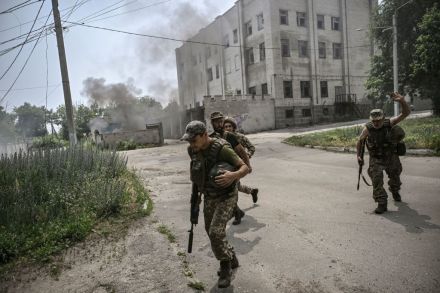
Any analysis of the Ukraine situation risks lagging behind the news. As of the time this article was published, Russia had conquered the former Chernobyl nuclear power plant. Its forces are only about sixty miles away from Ukraine’s capital, Kyiv, which has already experienced shelling. Russians have also attempted to capture Antonov International Airport, just fifteen minutes away from the capital’s ring road. Meanwhile, European leaders are resorting to the usual responses: “concerned,” “strongly condemning." There is even a Twitter account mocking the EU’s approach to all major crises, called “Is EU Concerned?” The response to the invasion of Ukraine is not spared from similar mockery. Here in Europe, it feels like 1938 all over again.

ukraine

Let Russia choke on Ukraine

At least for the moment, it looks like Russian president Vladimir Putin is intent on conquering Ukraine, a nation he's never believed has the right to exist. While the fog of war always limits accurate real-time military analysis, it seems for now that Russia has committed to annexing at least large sections of Ukraine and is winning the day militarily with ease. Of course, the media has predictably gone into overdrive, warning of World War Three, gas prices that will stay high for years and perhaps even Putin attacking NATO and nuclear war. But let’s put away the hysterics for a moment and think about the here and now. Russia’s goal in Ukraine has always been clear and does not involve war on NATO or even conquering Ukraine in its entirety.

Biden’s weak words on the Russian invasion

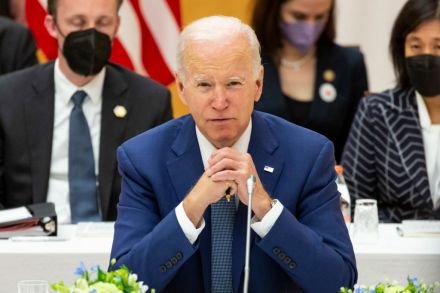
Vladimir Putin has invaded Ukraine, a chilling moment that cries out for a tough response. Thankfully, the president of the United States has deployed his usual silver tongue. "The world will hold Russia accountable," Joe Biden said last night. "I will be monitoring the situation from the White House this evening and will continue to get regular updates from my national security team." Cue Cockburn nearly collapsing from the sheer rhetorical power of that statement. It's a wonder the Russian tanks didn't screech into reverse and roll back over the border. Cockburn understands this is a dangerous situation that calls for delicacy and forethought. But were such bland bromides really the best the leader of the free world could do?

rape

Was Russia’s ‘rape’ of Ukraine inevitable?

In a press conference earlier this month, Vladimir Putin noted that the Ukrainian government does not like the Minsk agreement and then added: "Like it or not, it's your duty, my beauty." The saying has well-known sexual connotations: Putin appeared to be quoting from “Sleeping Beauty in a Coffin” by the Soviet-era punk rock group Red Mold: “Sleeping beauty in a coffin, I crept up and fucked her. Like it, or dislike it, sleep my beauty.” Although the Kremlin press representative claimed that Putin referred to an old folkloric expression, reference to Ukraine as an object of necrophilia and rape is clear.

Home is where the racism is

My sophomore year of college, I studied abroad in Ireland. I had pretty high expectations: my mother’s side of the family is almost entirely of Irish descent, and I suppose in some inchoate way I yearned to “go home,” as it were, even though the last of my Irish ancestors had arrived on American soil more than 150 years ago. Still, the Emerald Isle seemed to call to me (admittedly I was listening to a lot of The Chieftains). Boy, was I disappointed. It wasn’t that the Irish aren’t welcoming (they are), or that the adult beverages weren't delicious (they are). It was that Ireland was definitely not my home — not culturally, culinarily, or familialy.

racism

Joe Biden is no Jack Kennedy

As the Ukraine situation heats up, you can already picture the insider account Vice President Kamala Harris will publish one day in her 2025 bestseller Thirty-One Days in February. But then, as any survivor of the Cuban Missile Crisis is bound to tell President Joe Biden, “I knew Jack Kennedy, Jack Kennedy was a friend of mine, and you, Joe Biden, are no Jack Kennedy.” One of the clichés if not the myths about the Cuban Missile Crisis was that President Kennedy and Soviet leader Nikita Khrushchev were playing chicken and Khrushchev “blinked." Under threat of potential nuclear war, he then decided to withdraw the Soviet nuclear missiles from Cuba. We now know that what really happened was more complicated than the initial reports made it appear.

The Ukraine debacle showcases Joe Biden’s many failures

Snap quiz: who was president when Vladimir Putin gobbled up Crimea? If you said Barack Obama, go to the head of the class. What countries did Putin invade while Donald Trump was president? If you said “None,” you get to stay at the head of the class. This is a harder one: who was president when Putin once again violated Ukraine’s borders, sending in Russian troops to two breakaway regions in Eastern Ukraine? I say that this is harder because the obvious answer — “Joe Biden” — is not really, or not wholly, correct. Joe Biden is an empty shell. On good days, he looks like a mannequin. Really, though, he is a puppet, a creature controlled by others. I have called those others “The Committee.

biden ukraine

Biden exploits the Russia conflict for political gain

President Joe Biden is preparing to buck responsibility no matter the outcome of the brewing conflict between Russia and Ukraine. Biden's statements about Russia have been anything but cohesive. One day he is giving up the game by stating publicly that he has no appetite for war and would allow a "minor incursion"; the next he's focusing exclusively on diplomatic channels; the next he's warning of force if Putin makes another move. All the while, White House officials have planted news stories and touted vague "intelligence" warning of an imminent Russian invasion. The message is this: war with Russia is inevitable, unless it isn't, in which case Biden gets all the credit. So who gets the blame if Putin does invade Ukraine and the US responds with military force?

U.S. President Joe Biden and Russian President Vladimir Putin (Getty Images)

Diplomacy is Ukraine’s last hope

Amid a pile of Russian disinformation, a mass evacuation of civilians from the self-proclaimed separatist republic and reports that Russian commanders are preparing to execute an invasion order, diplomacy (or at least the hope of it) reared its beautiful head late Sunday night. After a frantic series of calls orchestrated by French president Emmanuel Macron, the White House released a statement confirming President Biden’s openness to a direct meeting with Russian president Vladimir Putin. Whether or not the leader-to-leader discussions happen, however, won’t be fully up to Biden or Macron. It takes two to tango, as the hackneyed phrase goes. And right now, Moscow has been habitually cryptic about its intentions.

ukraine

Time to retire the ‘Munich’ analogy?

The Ukraine crisis signaled to Western officials and pundits to once again begin recycling the historical analogy of the 1938 Munich Agreement, which handed Nazi Germany parts of Czechoslovakia in a failed bid to head off major conflict in Europe. This was expected. Such comparisons are usually followed by the predictable warnings about the danger of Western “appeasement.” Hence British defense secretary Ben Wallace has recently compared Western diplomatic efforts to head off a Russian invasion of Ukraine to the appeasement of Nazi Germany ahead of World War Two, suggesting that unnamed Western countries were not being tough enough with Moscow.

The US and India in a new world

The world’s center of gravity is shifting to the Indo-Pacific. The new global order will be shaped by developments in a sprawling region where interstate rivalries and tensions are sharpening geopolitical risks. Building a stable balance of power in the Indo-Pacific has become more important than ever, but China’s territorial and maritime revisionism, and its heavy-handed use of economic and military power, are causing instability and undercutting international norms. Against this background, the expanding strategic partnership between the world’s most powerful and most populous democracies — the United States and India — has become pivotal to equilibrium in the Indo-Pacific.

india
india

Can the India-US relationship last?

India and the United States have rediscovered each other after the cordial hostility of the Cold War. Those years of isolation have made India’s political and financial elites susceptible to flattery. America’s courtship of India, lubricated by the economics of globalization and the post-9/11 zeal to spread democracy, is now being consummated in the American search for a democratic counterweight to China. But India is a chaotic democracy in a volatile neighborhood. Can it hitch itself to America without forfeiting its autonomy? Foreign strategic experts exhort India, which is non-interventionist to its marrow, to act like a global power.

Greenwald

Why Glenn Greenwald backs Putin

Few things are sure in life: death, taxes and Glenn Greenwald advocating whatever position happens to be in the interests of Vladimir Putin. The self-styled civil libertarian rose to prominence during the George W. Bush administration for his withering attacks on American counterterrorism policies. Later, he won a Pulitzer Prize for his role in facilitating Edward Snowden’s leak of government documents. Always a rancorous figure who bristled at attempts to place him in a partisan box, Greenwald started to upset his confederates on the left and develop a fan base on the right during the Trump years. Greenwald was one of the most vocal critics of the narrative positing that the new American president was a pawn of the Russian one.

‘Xi Jinping Thought’ is taking over China’s classrooms

From last fall, in an extension of a personality cult not seen since Mao Zedong, “Xi Jinping Thought” is being incorporated into China’s national curriculum. School textbooks are emblazoned with Xi’s smiling face, together with heartwarming slogans telling readers as young as six that their leader is watching over them. “Grandpa Xi Jinping is very busy with work, but no matter how busy he is, he still joins in our activities and cares about our growth,” reads one. “Xi Jinping Thought” must be taught at all levels of education, from elementary school to graduate programs, and there is special emphasis on capturing the minds of the youngest children.

china climate xi jinping thought

Biden’s looming energy crunch

Oil and gas prices have soared since Joe Biden took office and skyrocketed further as Russian troops surround Ukraine. Prices will get worse — much worse — if Putin invades. President Biden has promised “swift, sharp sanctions” on Russia and an end to the Nord Stream II pipeline, which will supply Germany with much-needed Russian natural gas when it’s completed. The German chancellor has said little about ending the pipeline but has not publicly contradicted Biden’s threat to stop it. European analysts are confident Germany will go along with American energy sanctions, including those on Nord Stream II. In any case, the US can stop the pipeline, if it chooses.

energy

As with Iraq, so with Russia

Against the backdrop of the Ukraine crisis, we have been bombarded with many historical analogies. Leading the list are the 1961 Berlin standoff and the 1962 Cuban Missile crisis. And then there is that all-time favorite, the 1938 Munich Agreement. Those crises should certainly not be regarded as ancient history. But then why go back 60 or 80 years when you can walk down memory lane? Like, say, when an American president was trying to rally the public and mobilize international support in the name of using military force against an alleged bloodthirsty dictator who was supposedly threatening Western geostrategic interests and challenging its liberal democratic values?

ukraine

NATO won’t bleed for Ukraine

Ask three different people whether Russian President Vladimir Putin will approve an invasion of Ukraine, and you are likely to get three different answers. Yes, a Russian land, air, and sea blitz is inevitable and will come in fairly short order, likely without warning. Yes, a Russian invasion is possible, but could still be averted with some shrewd diplomacy. Or, no, surely Putin understands an invasion would be a disaster for his legacy and his country’s economy. In the midst of all of this comes wild speculation about what Putin is thinking at any given moment, how the weather may factor into his calculations, and what the Russian government’s end goal really is. What can be said for certain, however, is that diplomacy has picked up significantly over the past week.

Is this Biden’s Munich moment?

When it is 1938 in Washington, it is already past midnight in Moscow. The clock is ticking and the map of Europe is being redrawn, but this is not a Munich moment. We are now past that, and past the time when the leader of a Western democracy might have the honesty to admit to his public, as Neville Chamberlain did in 1938, that he doesn’t want to fight a war over “a quarrel in a faraway country between people of which we know little.” The shadow of Munich shames and intimidates the leaders of the Western democracies, and not without reason. But if there is a Munich moment in the latest Ukraine crisis, then it happened nearly seven years ago — in 2015, when the Obama administration backed the Minsk II accords and the dismemberment of Ukraine.

energy munich

Why does Germany look so weak on Russia?

A recent survey of Germans done by Forsa, amongst the most reputable polling institutions in that country, shows that at least in one way, the Cold War has not quite ended. A majority of West German respondents (52 percent) blame Russia for escalating the conflict with Ukraine, while a plurality of East German participants (43 percent) blame the United States. All respondents, meanwhile, plead for peace in the region and expressed fear of a looming war between Europe and Russia. The political repercussions here are very real. The generation born in the late 1960s, having been completely educated in the East German communist dictatorship, currently constitutes the most significant single voting block in the East.