World

When migrants come, their culture does too

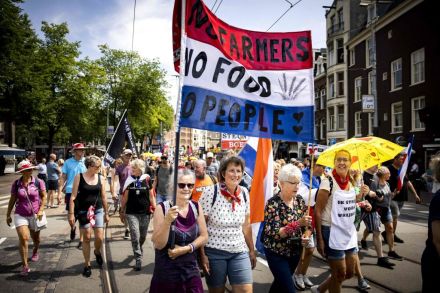
The challenge of integrating immigrants from the non-western world is not new to Europe. But a large influx of new migrants over the last decade, and a significant increase in harassment and sexual assault against women across multiple European countries, make it one that Europe can no longer avoid addressing. This story has its origins in the decades of economic recovery after World War Two, when many European countries faced a growing worker shortage for industry work. ‘Guest worker’ programs were created, notably in Germany, on the assumption that such workers would return home. But many workers preferred to stay in Europe and pursued family reunification. Jobs and welfare entitlements made Germany preferable to Turkey, France preferable to Algeria.

migrants

Novak Djokovic is right to challenge state-mandated quarantine

The world’s Number One tennis player Novak Djokovic made headlines this week as he called for liberty in the face of Australian bureaucratic hysteria. As the planet’s best tennis players prepare for the Australian Open tournament, 72 of them are subject to punitive quarantine conditions after four — yes, four — new arrivals into Melbourne tested positive for coronavirus. It is thought that none of the tennis players themselves were infected, but that the positive tests were from individuals on charter flights arriving in the city. The solution adopted by the Australian government is to impound all tennis players — and presumably their teams of coaches, managers, nutritionists and whomsoever else they travel with — in solitary confinement for 14 days.

novak djokovic

Biden, Blinken and the Blob

Regarding America’s role in the world, Joe Biden’s ascent to the presidency offers this bit of prospective good news: the random flailing about of the Trump era will end. No more diplomacy conducted via Twitter. A modicum of consistency and predictability might once more become emblems of American statecraft. Some version of normalcy will be restored. While all this will be welcome, it prompts a fundamental question: will a return to pre-Trump normalcy suffice as a response to the challenges that Biden is about to inherit? After all, the post-Cold War version of normalcy — the policies as pursued by presidents Bill Clinton, George W. Bush and Barack Obama — created the conditions that gave rise to Donald Trump in the first place.

biden blinken blob war syria iran ukraine hamas

No to policing the world

What will a Joe Biden foreign policy look like? It’s difficult to say. There is, after all, no Biden Doctrine, no voluminous body of work hashing out the Biden sensibility. Biden might have served as vice president, but he never seemed anywhere near the center of the policymaking apparatus. He was a fixture on the Foreign Relations Committee, but he was never one of the Senate’s bright international thinkers the way his friend John McCain was. So what then? About the best you can say about Biden’s foreign policy positions is that they’ve been scattershot.

policing biden foreign policy
free speech

EXCLUSIVE: Trump slashed aid to China by 52 percent

President Trump cut foreign aid to China in half in just one year, according to an Office of Management and Budget report obtained exclusively by The Spectator. The report, which provides a full accounting of US spending on China and is the first of its kind, revealed several key trends that are sure to thrill China hawks. Direct aid to China fell from $62 million in Fiscal Year 2019 to $30 million in Fiscal Year 2020, a decrease of 52 percent. Spending on strategic competition with China jumped from $42.4 billion to $47.5 billion, a 12 percent increase. The US also imposed $60 billion worth of duties on imported Chinese goods.  Multiple China support programs saw major reductions in spending or were ceased entirely under the Trump administration.

A honeymoon in Berlin

In December 2019, I arrived in Berlin by train. I was just married and on honeymoon. The most precious item in my luggage was my Interrail ticket. My husband and I hoped to visit as much of the Continent as we could in three weeks. We did not know that soon such a trip would be impossible, thanks to the infamous virus from China. We were keen to see what remained of the Berlin Wall. One of the longest still standing parts is on Niederkirchnerstrasse, next to the site of the former headquarters of the SS and the Gestapo, now home to the Topography of Terror, an indoor and outdoor museum dedicated to the Nazi era.

berlin

Biden should embrace Britain’s new Indo-Pacific strategy

While final negotiations on the UK’s relationship with the EU continue to drag, No. 10 is moving rapidly to expand Britain’s role in the Indo-Pacific, returning ‘east of Suez’ after a half-century absence. Tied to this goal, Prime Minister Boris Johnson unveiled a modest, yet real, increase in Britain’s defense spending last month, totaling some $21.25 billion and pledging to once again make Great Britain the foremost naval power in Europe. Johnson’s budget announcement sets the stage for implementation of London’s long-awaited ‘Integrated Review’, which is touted as the most significant strategic reassessment of the UK’s diplomatic and security policies since the end of the Cold War.

indo-pacific

What my father-in-law’s death taught me about COVID

It’s been a beast of a year, hasn’t it? Yesterday morning my father-in-law died of COVID in Pristina, and it’s only when it comes right home to you that you’re reminded how real and immediate the threat from that spiteful little virus is.The reason I’m writing about this personal loss is that I worry that the whole COVID situation has been politicized, even while the vaccine is finally coming into play.As lots of people have already observed, it’s turned into a left-right issue, with many liberals wanting to close things down and many conservatives wanting to allow the economy to function relatively normally, on the basis that lost livelihoods matter as well as lost lives.Fair enough.

covid father

What if the virus that causes COVID was man-made?

The idea that SARS-CoV-2 — the virus which causes COVID-19 — could have man-made origins has been rejected by many scientists, dismissed by some as nothing more than a conspiracy theory. A different view, however, has been put forward by Rossana Segreto of the University of Innsbruck in association with Yuri Deigin of Canadian genetics company Youthereum Genetics. In a paper published on Wiley Online, they have again raised the possibility that SARS-CoV-2 could indeed be a man-made virus, and that its passage into the human population could be the result of a laboratory accident. 'The artificial creation of SARS-CoV-2 is not a baseless conspiracy theory that is to be condemned,' they write.

man-made

What is the Great Reset?

The phrase has shot throughout the fringes of Right-Wing Twitter like a virus through a karaoke bar. According to Pauline Hanson of the Australian party One Nation it is an attempt to establish a 'socialist left Marxist view of the world’. James Delingpole describes it as a 'global communist takeover plan’. This might sound like something cooked up in the lizard-stalked imagination of a nut but it refers to a real phenomenon. The World Economic Forum, which organizes the annual conference Davos, has launched an initiative called, yes, 'the Great Reset’. It has its own website. So, it is not just a feature of hot-headed conspiratorial fantasies. It exists. But as what?

great reset

The US is coming out of COVID no worse than any European country

It has become a received wisdom in recent months that the US has failed where the EU had succeeded. On June 22, for example, CNN viewers were shown a graph of COVID cases in the US, which had seemed to flatten at around 25,000 cases a day, compared with those in the EU which had fallen away from an April peak to fewer than 5,000 cases a day. ‘Look at the EU,’ viewers were told. ‘That’s where we should be.’ Roll on four months, however, and it is looking a little different. While cases in the US fell away, then returned in what is beginning to look like a bit of a third wave, Europe has been consumed in a rapidly-growing second wave.

covid

Britain clambers aboard the BLM bandwagon

Middlesbrough, United Kingdom Gareth Southgate, the unctuous, horse-faced manager of the England soccer team, insisted that his players take the knee before their game against Denmark in the Nations League last month. They were at it before the match against Iceland, too, and the Icelanders joined in, bless them, despite the fact that there is only one black person in all of Iceland and he probably ended up there by mistake. It was important, Southgate ventured, to show support for Black Lives Matter. And so down they all went, as Portland burned and the looters, bullies, thugs and professional agitators ran amok across the US.

blm

Can China be trusted on climate change?

Xi Jinping was widely praised on Tuesday after he told the United Nations General Assembly via videolink that China would ‘achieve carbon neutrality before 2060’. Environmental activists, academics and government leaders in the West hailed the move as a big deal, a significant step toward addressing climate change. The New York Times couldn’t resist framing this story as a ‘pointed message to the US’ which under Trump has increasingly diverged from the growing scientific and political consensus on climate change. President Trump, famously, initiated the process of withdrawing the country from the 2015 Paris Climate Accords.

china climate xi jinping thought

Will Turkey and Greece clash over a tiny island?

An obscure Mediterranean flashpoint may soon come to a crisis; that would be the minuscule and remote Greek island of Kastellorizo (or Megisti; Meis in Turkish). Like many other Greek islands, it lies much closer to the Turkish than the Greek mainland (1 mile vs. 357 miles). Unlike other small Greek islands, its location between Rhodes and Cyprus bestows outsized military and economic importance on it.Were Kastellorizo, with a population of under 500, to enjoy the full rights bestowed on it by the 1982 UN Convention on the Law of the Sea, Greece can claim a 200-nautical mile exclusive economic zone (EEZ) that leaves Turkey with a cramped EEZ along its shores; take away Kastellorizo and the Turkish EEZ more than doubles in size.

kastellorizo

The thinning of the Spanish monarchy

Juan Carlos, ex-King of Spain, behaved foolishly in relation to money and sex, and so his decision to leave Spain is sad, but justified. That seems to be the view of most moderate people outside Spain who are not ill-disposed to the monarchy. But is it right? Certainly Juan Carlos’s foolishness was real, but his imposed exile (it is not really voluntary) to the Dominican Republic is not a punishment for a crime: there has never been any legal process. It is a partisan political act which is bad for the unity of Spain. Juan Carlos’s exile was forced on the current King, his son Felipe VI, by a weak prime minister, the Socialist Pedro Sanchez.

spanish monarchy

How liberal globalism went bankrupt

When future historians chronicle the period after the Cold War, the rise of China will dominate their accounts. Beginning in the 2000s, China unleashed a flood of state-sponsored manufactures, many of them produced by western multinational corporations using Chinese labor on Chinese soil. This impoverished much of the already pressured industrial working class in the US and Europe, triggering populist revolts in rustbelts like the American Midwest, the north of England and eastern Germany. The recycling of profits from China’s chronic trade surpluses through the global financial system enriched western financial interests and helped to inflate bubbles in the real estate and stock markets. These burst in 2008, causing the Great Recession.

china

It’s not all good news on Huawei

As with any cell phone contract, the devil is in the small print – and that perhaps is the case with the UK government’s announcement today on Huawei. On the face it is, Tuesday’s ban is very good news. Huawei, the Chinese telecoms giants whose detractors claim is a front for the Chinese Communist party’s desire to dominate UK and global advanced telecoms, needs to be out of the UK’s 5G network by later this decade — 2027 — while no new Huawei kit will be sold into the 5G network after the end of this year. However, the small print is critical and there is a catch — or two. BT and other major vendors can still put Huawei kit bought this year into the network until 2026.

huawei

Farewell, dear Hong Kong

There was no way to know that the last trip I took to Hong Kong just a few years ago would likely be my last. I assumed we still had another 27 years before Hong Kong and China’s ‘one country, two systems’ framework reached its end, but Beijing had other plans. Increasingly emboldened in its domestic social control and assertive in its foreign policy, the Chinese government broke its promise when it sidestepped Hong Kong’s legislature to pass a sweeping national security law targeting ‘secession’, ‘subversion’ and ‘collusion’. These concepts are so broadly-defined as to be easily weaponized against even a nominal critic of the CCP, with a possibility of life in prison as punishment.

Hong Kong skyline

How do you like US now?

It’s that time again when newspapers tell us that America’s standing in the world has substantially declined under Donald Trump. It’s no coincidence that we’re always told this when a Republican resides in the White House. You must wonder why it is that 'the world' (i.e., elite European leaders and media) oscillates in its view of American leadership directly in tune with America’s presidential election outcomes. Since 1980, the message has boiled down to this: Republican presidents are narrow-minded and dimwitted warmongers (Ronald Reagan and George W. Bush) or isolationist (Trump), whereas Democratic presidents are nuanced and deep-thinking internationalists (Bill Clinton and Barack Obama).

standing

Fact check: has Sweden really just renounced its anti-lockdown strategy?

Has the great Swedish mea culpa finally arrived? Anders Tegnell, Sweden’s state epidemiologist, is quoted by the Financial Times saying that his country ‘should have imposed more restrictions to avoid having such a high death toll’. His 'admission', continues the FT, 'is striking as for months he has criticized other countries’ lockdowns'. The Guardian goes just as hard on the story. 'Man Behind Sweden’s Controversial Virus Strategy Admits Mistakes,' screams Bloomberg. But turn to Wednesday's Swedish press and there’s something strange: they seem to have missed the scoop entirely. All the stranger, seeing that Tegnell's remarks were made to Swedish radio. So was something lost — or, rather, added — in translation?

sweden