Israel

Hamas has made the same fatal mistake as the IRA

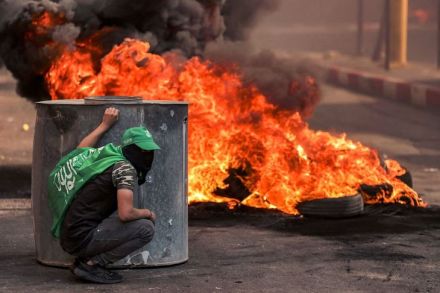
As Israel releases body cam footage showing the stark reality of Hamas terrorists’ brutal attacks on civilians during their assault on 7 October – and as its forces begin launching limited raids into Gaza to prepare the ground for a full-scale offensive by land, sea and air – the severity of Hamas’s situation is finally dawning on its militants. The mood amongst its members in the labyrinthine tunnels beneath Gaza is likely to have darkened dramatically. Despite Hamas’s delusional boasting of bravely fighting to the death and ‘saving Palestine’, the penny is beginning to drop that these are the final days, both for the terrorists, and for Hamas as an
Invading Gaza will cost Israel more than just lives

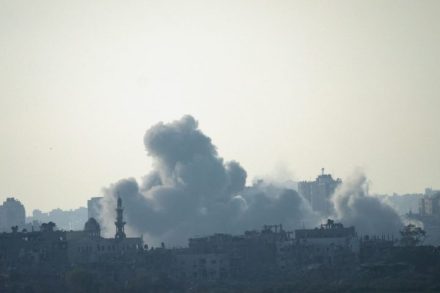
In an address to soldiers on Saturday, Israel’s chief of staff Lieutenant General Herzi Halevi outlined the aims of the country’s looming ground incursion into Gaza. ‘Our task is to destroy Hamas activists and their infrastructure’. But, he added, this will not be ‘an easy task’.  That’s an understatement, to say the least. Despite the bravado and masochism expressed by Israeli generals, the war has so far caused the death of more than 1,400 Israeli civilians and troops and the kidnapping of 222 hostages (among them 30 children). Another 200 are missing. The ground invasion of Gaza will likely be even more costly in terms of lives lost. The war

Where is the empathy for innocent Israelis?

This open letter, signed by Simon Sebag Montefiore and others, was first published in the ‘Chronicle for Higher Education’. It has been reproduced in full below. Every Tisha B’av, the national day of communal mourning, Jews read liturgy recounting the horrors of our slaughtered ancestors throughout history and around the world. Every year, our blood runs cold rereading accounts of those nightmares. This year those nightmares became real. Earlier this month, the slaughter in southern Israel has matched the brutality of that liturgy: 1,400 people murdered at a concert, in their cars, in their homes, and nearly 200 taken as hostages. These are scenes we never thought we would see.

Keep your politics à la carte

It’s a truism that the Anglosphere has developed a ‘tribalism’ that rivals the divisions between the Kikuyu and Luhya in Kenya. One pernicious aspect of mutually hostile groupsterism is prix fixe politics. Your side shares a rigid, prescribed collection of beliefs, and joining the club entails embracing every single one, while despising a compulsory roster of enemies and backing the folks on your team – whatever friend or foe may say, whatever friend or foe may do. As in French restaurants, there are no substitutions. Letting go of indefensible positions your gang is ‘supposed’ to maintain is a relief Rarely has set-menu morality been put on more vivid display than

The Gaza hospital strike changes everything

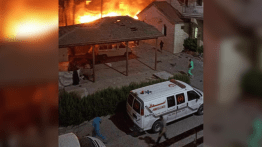
The explosion that killed hundreds in the al-Ahli hospital in Gaza has created a critical moment that may change the course of the war. Hamas claims that an Israeli air strike was behind the explosion. Israel, on the other hand, claims that the explosion was a misfired missile from the terror group Palestinian Islamic Jihad. Israel has not fought a war on two fronts since 1973. While it is prepared for such scenario, it will be difficult, dangerous and costly Israel has released evidence today to support their claim, including a radar image showing that near the time of the explosion, Hamas and Islamic Jihad were firing missiles into Israel, and that

What Israel can learn from the battle for Mosul

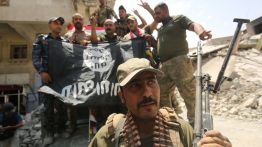
Israel’s fight against Hamas has been compared to the war against Isis between 2015 and 2019. That war was largely waged in Iraq and Syria, and one of the most important battles was the struggle to retake Mosul from the Islamists in 2017. The city and its outlying areas were home to two million people when Isis conquered it in the summer of 2014, and Isis had embedded itself within the local population. Around two million people live in Gaza today. It’s hard to distinguish Hamas from civilians. When the Iraqi offensive against Isis in Mosul began in October 2016, there were warnings about the threat to the civilians in the city. I covered

‘It’s a necessity that the Middle East fears us’

Micah Goodman is done being nice and even-handed. He became a best-selling philosopher by telling Israelis that the Palestinians needed more freedom. He said if the West Bank had better roads and an airport and more land and fewer checkpoints, relations between Israelis and Palestinians would improve. There was a way through the stalemate, if only people worked together. But now he wants war. Goodman is rageful about what Hamas did to his Israeli brothers and sisters ‘It’s a necessity that the Middle East fears us’, Goodman says, calling from Jerusalem. ‘That Hezbollah gets a panic attack when it pronounces the word Israel. That in Iran they have a panic attack from the thought of a military interaction

Calling a terrorist a terrorist

Last night, after a suspected Islamist fanatic gunned down two Swedish football fans in Brussels to ‘avenge Muslims’, the BBC ran a headline calling it a ‘terror’ attack. This should seem entirely unremarkable. After all, it was a terror attack, so the language had the benefit of being accurate. The problem, of course, is that the corporation has a policy of refusing to describe the butchers of Hamas in the same terms.  It is true that the BBC amended the headline pretty quickly after realising its error. The broadcaster has insisted in its guidelines that its journalists should use descriptive terms like ‘bomber’, ‘attacker’, ‘gunman’, ‘kidnapper’, ‘insurgent’ and ‘militant’ by default. As John

Netanyahu’s greatest failure

Over the weekend, the IDF confirmed that it killed the Hamas terrorist who commanded the attack on Israel a week earlier. It was later disclosed that the terrorist was arrested by Israel in 2005 for abducting and killing Israelis. He was released in 2011 by Netanyahu’s government in return for a captive Israeli soldier abducted in 2006 as part of a prisoner exchange deal. Netanyahu knew that Hamas received money, weapons and training from Iran The deal included the release of over 1,000 prisoners, many of them dangerous terrorists who returned to Gaza and rose through the ranks of Hamas. This controversial agreement exemplifies Netanyahu’s failed policy of containment and

Israel is trapped in a dilemma

Hamas’s attack was designed to massacre as many civilians as possible, while also striking at Israeli military posts along the Gaza border. Hamas knew that 7 October was going to be the biggest attack in its history, even if it didn’t know that it would be able to lay waste to 20 border communities, causing 50,000 to evacuate and leading to the deaths of 1,300. As the war grows and Iranian-backed groups begin to threaten a wider conflict, it’s worth looking at what might come next. To understand that we need to know how Hamas got to this point and what are its plans for the region.   If Israel

Sunday shows round-up: Israel defends the Gaza siege

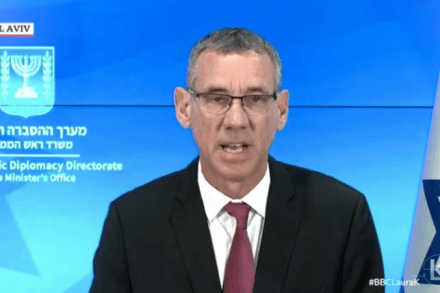
This week’s political shows were dominated by the Israel-Palestine conflict, as Israel prepares for a land, sea and air assault on Gaza. Israel has said it will not supply water, fuel or electricity to the region unless Hamas releases its hostages and has instructed the people of Gaza to head south to avoid the imminent attack. A humanitarian disaster looms in an already densely populated area, and Victoria Derbyshire asked Israeli government adviser Mark Regev to respond to allegations that the actions of Israel could be breaking international humanitarian law and even amount to war crimes. Regev denied the allegations but he implied that Israel would target civilian zones because

An Israeli ground assault would be devastating for Gaza

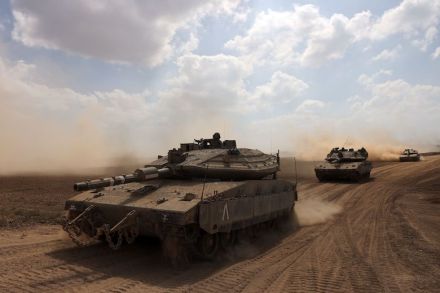
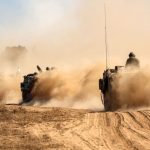
On a patch of scrubland outside the Zikim kibbutz earlier this week, I came across a platoon of Merkava 4 tanks positioned among the trees. One of the tank commanders recognised my colleague and we exchanged a few words. ‘This is our Yom Kippur,’ he told us. ‘We haven’t even begun to grasp the implications of this.’ Yom Kippur, in this context, isn’t a reference to the annual Jewish day of atonement. Rather, it recalls October 1973, when Israel was surprised by an attack on two fronts from the forces of Egypt and Syria. The Hamas assault on Israeli Jewish communities around the Gaza Strip came exactly 50 years and a day after what Israelis

Paul Wood, James Heale and Robin Ashenden

23 min listen

This week Paul Wood delves into the complex background of the Middle East and asks if Iran might have been behind the Hamas attacks on Israel, and what might come next (01:11), James Heale ponders the great Tory tax debate by asking what is the point of the Tories if they don’t lower taxes (13:04) and Robin Ashenden on how he plans to introduce his half Russian daughter to the delights of red buses, Beefeaters and a proper full English (18:36). Produced and presented by Linden Kemkaran

Netanyahu must go – for Israel's own good

Israelis were turning against the country’s prime minister Benjamin Netanyahu even before Hamas’s invasion. Over the past six months, tens of thousands of people have taken to the streets against Netanyahu’s government and its controversial judicial reforms. Israel has been hit by strikes and road blocks and ministers have been heckled in the streets. In an unprecedented move, resistance even reached the army: some reservists vowed to refuse to serve in the Israeli army if the reform passed. Since the atrocity of last weekend, fury at the Israeli government has become even more widespread. When the war broke out, it was clear that Israel was caught napping. This caused an

Sinn Fein's troubling 'solidarity' with Palestinians

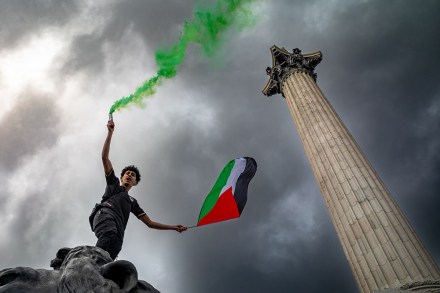
Black Mountain, which looms above West Belfast, acts as a blank canvas for Irish republicans to plaster their thoughts across. Over the years, banners covering a range of subjects, from Irish unity to Brexit, have been draped across it. In recent days, a Palestinian flag was placed there by a group styling itself Gael Force Art, claiming it was in ‘solidarity with the Palestinian people who launched their biggest operation in fifty years against the rogue state of Israel’. Gerry Adams shared a picture of the flag on Twitter/ X. ‘The Mountain Speaks! Free Palestine,’ he wrote. Irish republicanism has always been a reliable well-spring of support for their Palestinian equivalents. In

How Britain can save Israel – and Gaza – from bloodshed

The world changed on Saturday morning with Hamas’s attack on army bases and civilian communities in Israel. What began as a Palestinian military triumph became, within minutes, the greatest single atrocity of the entire conflict to date, by either party.  Every assumption of the status quo ante has been swept aside, including much of the international etiquette around calls for restraint: Israel appears to be hours away from launching the most overwhelming assault on a modern city since Vladimir Putin’s attack on Grozny, with unreserved Western blessing. This will likely unleash every rocket in Hamas’s arsenal onto Israeli cities, and might well drag other parties into the fray, from external actors like

An invasion of Gaza is hugely risky for Israel

In a sign that the Israeli Defence Forces (IDF) is planning to ramp up the war in Gaza, Israel has called for evacuation of 1.1 million Palestinian civilians from the northern area of the Gaza Strip. The UN quickly condemned Israel’s announcement, claiming that an evacuation within the 24-hour timeframe given is ‘impossible’, and have called on Israel to rescind its order. The war, which started on Saturday following a surprise attack by Hamas, saw the biggest single massacre of Jews since the Holocaust. The horrific details of what ensued included the murder of babies, the rape and murder of women and girls, and people being burned alive. Civilians, including

How Hamas fooled Israel – and the West

How to explain Israel’s intelligence and military failure? The obvious comparison – one Israelis themselves are making – is with the 1973 October War, when the country was sucker-punched by Egyptian and Syrian forces on Yom Kippur, the Day of Repentance. That became known as a failing of the konzeptzia, the Hebrew term for the way we frame the world with all its attendant risks. It seems to have happened again. In the West, Israel is generally seen as either admirably or reprehensibly tough-minded, taking the hardest line against its enemies whatever the circumstances and punching back twice as hard. The trouble is, it’s not at all clear that this is true

Is Israel’s siege of Gaza illegal?

In retaliation to over a thousand Israeli dead, the country’s defence minister, Yoav Gallant, has vowed to besiege Gaza. In a statement earlier this week, he said: ‘We are putting a complete siege on Gaza… No electricity, no food, no water, no gas – it’s all closed.’ Israel has been as good as its word, even stopping medicine from entering the Palestinian enclave.   Israel is obliged under international law to minimise injury to Palestinian civilians Shutting off supplies to an area of 2.3 million people, nearly all of them civilians, raises grave questions about the legality of Israel’s action under international law. While international law generally accepts the blockade of enemy

Why should British Jews take their skullcaps off?

I was proud when my son, then aged three, wore his kippa (Jewish skullcap) for the first time. We placed the kippa on his head and told him what it meant to be a Jew. ‘Mazel tov!’ we said as we hugged each other, prayed, and sung. We wondered hopefully what he might become – a rabbi, a doctor, an accountant – and we laughed and sung some more. A blessing on your head, mazel tov, mazel tov! He’s now 17, and for the first time in his life was asked this week to cover his kippa up. An email from his school in London suggested that, in light of