Europe

Save Ukraine by admitting Georgia into NATO

As the Ukraine crisis continues to develop, it has become impossible to avoid mentioning Georgia and its relations with the West. This is not only due to the similarities in the two countries' geopolitical circumstances, but also because Georgia is explicitly mentioned with Ukraine in President Putin's demands to the West to forego any future NATO expansion. Like Ukraine, for years, Georgia has sat in the uncomfortable position of being pro-Western without enjoying the protections afforded by membership in both NATO and the European Union. Yet a country that was once a staunch Western ally has become mired in accusations of authoritarianism, behind-the-scenes governance, and covert pro-Russian sentiment. Georgia and Ukraine have occupied a unique position in the post-Soviet space.

vladimir putin alexei navalny

Trump was tougher on Russia than Biden

Vladimir Putin’s new year is off to quite a start. The Russian autocrat isn't just massing troops on the Ukraine border, kicking off a diplomatic panic in European capitals and in Washington. In recent days he's also backed a refugee stand-off with Poland, helped Kazakhstan's strongman squelch pro-democracy protests, maintained a presence in Assad’s Syria, established new footholds in Mali and Central African Republic, cozied up to communist China, and, in a nod to Khrushchev, hinted he might build military infrastructure in Cuba and Venezuela. What's remarkable about this geographically expansive, chaos-inducing, dangerous spectacle is that it was entirely avoidable. Mr. Putin is no cipher.

Don’t go to war with Russia over Ukraine

With shocking speed, talk in Washington has shifted from disunity among the Democrats and Joe Biden’s unhappy first year to possible war in Europe. The Putin government is reinforcing units poised to invade Ukraine. Washington is sending weapons to Kyiv. The United States and United Kingdom have begun to evacuate embassy personnel. President Biden is considering sending additional troops to garrison NATO member states. But for what? Why is the United States so thoroughly entangled in a conflict not its own? Not for reasons of history Throughout most of America’s relatively short existence, Ukraine was part of either the Russian Empire or Soviet Union.

ukraine

Russia may very well invade Ukraine

The United States is doing what it can to deter Russian President Vladimir Putin from ordering another invasion of Ukraine. Despite the cool and collected persona that Ukrainian President Volodymyr Zelensky is trying to present to his people, the White House still believes Russian military action is "imminent.” The Biden administration recently put 8,500 American troops on alert for deployment to Eastern Europe. Washington has spent the last several weeks trying to convince the Kremlin that any incursion into its neighbor would be costly. On Tuesday, the US sent a third shipment of lethal equipment to the Ukrainian military, including 300 additional Javelin anti-tank missiles. This comes on top of the 200,000 pounds of lethal aid that had already been provided by Washington.

Russia is the lost great power

Lost in the endless debate about whether Russia will invade Ukraine is the real reason that Moscow — armed with nuclear weapons and one of the most advanced militaries on the planet — feels so threatened by its neighbors, the NATO alliance, and ultimately the United States. While the expansion of NATO in the 1990s plays a big role, it is Russia’s everlasting internal debate about its place in the world that is the real source of tension. It's a historical black hole no one wants to get sucked into, but unless resolved it has the potential to be a source of armed conflict the likes of which Europe has not witnessed since World War II. Geography and history are both a blessing and a curse for Russia.

The other Camus

Nearly two-thirds of French citizens say they fear that Muslim immigrants threaten white Christians with “extinction.” That bodes well for Éric Zemmour, France’s ubiquitous right-wing polemicist, candidate for its presidency — and prominent popularizer of the concept of le grand remplacement, the conspiracy theory that a cabal of Jews and globalist elites are conniving to “replace” Europe’s native population with Africans and Arabs. This paranoid thesis has inspired white supremacists across the world, and is an increasingly popular import on the American right. The man who coined le grand remplacement is the seventy-five-year-old novelist and travel writer Renaud Camus — no relation to Albert, but a kind of philosopher nevertheless.

camus

What does Russia hope to achieve in Ukraine?

President Biden said this week that a “minor incursion” of Russian troops into Ukrainian territory would not bring about the severe economic sanctions the White House threatened in response to a “significant invasion.” His counterpart in the Kremlin can probably hardly believe his luck. Effectively, Vladimir Putin has been given carte blanche by the West to launch military operations against Ukraine. Of course, the fact that there is no definition of what constitutes a “minor incursion” gifts the White House a preemptive get-out clause from having to truly confront Moscow.

ukraine

Europeans are still free-riding off American security

Remember how Washington’s foreign policy establishment and their media echo chamber bashed the “isolationist” President Donald Trump for abusing, humiliating and making life miserable for our close European allies, in the process obliterating the “liberal international order”? Remember how some of the Europeans responded? Germany’s Angela Merkel declared “a new chapter” in US-European relations, saying that Europe “really must take our fate into our own hands.” France’s Emanuel Macron stated that Europeans need to stop “being naïve,” and assert their strategic independence from the US. What happened? Nothing. Here we are, three decades after the end of the Cold War, and it is déjà vu all over again between Washington and Moscow.

angela merkel

Biden must encourage Ukraine to negotiate

President Joe Biden spoke with Russian President Vladimir Putin today via video conference for just over two hours, the second time in six months that the two leaders have engaged in a face-to-face conversation. For Biden, the message he sought to deliver was strict and to the point: if you, Mr. Putin, go ahead and order a second invasion of Ukraine in nearly eight years, you can expect a raft of economic penalties that will negatively effect everything from Russia’s access to the SWIFT payment system to the ability of Russian banks to convert rubles into dollars. For the security-minded Putin, the meeting was an opportunity to press Biden on his principal demand: a written legal guarantee from Washington and the rest of NATO that Ukraine will not be invited into the alliance.

Is Prince Charles the royal racist?

It has been a mystery that would have baffled Perry Mason or Ellery Queen. Since Meghan Markle and Prince Harry informed a shocked Oprah Winfrey in their bombshell interview that "there were concerns and conversations" about "how dark" the skin color of their first child-to-be was likely to be, the couple have slowly dripped information into the public domain. It's been made clear that it was a "senior royal" who expressed the opinion, albeit neither the Queen nor the Duke of Edinburgh. Although given the latter’s public remarks on race and nationality, it might have been easiest if the soon-to-be-late Prince Philip had simply claimed responsibility. Now, the "senior royal" has finally been fingered, and the alleged guilty party is Prince Charles.

charles

Have Americans got George III all wrong?

Americans are rarely accused of underestimating themselves, but might they in fact be a greater people than they think? That thought has regularly occurred to me over the past three years while I was researching and writing my new biography of their last king, George III, and especially when I read Richard Brookhiser’s insightful comment in his recent book Give Me Liberty, where he points out that Britain’s thirteen American colonies in the 1760s and early 1770s were among “the freest societies in the world.

George iii
florence

Florence with Dante

The trouble with Florence, says Ricardo, a local journalist, is that we’re just living off our past glories. “Aren’t we all?” I reply. Florence could perhaps be forgiven when it has accumulated such vast cultural and physical capital, built up over centuries. Signs remind you that it’s 700 years since the death of its most famous son, Dante, father of the Italian language. I must admit I’ve always been too intimidated to read his epic, The Divine Comedy, which T.S. Eliot said was “as great as poetry ever gets.” To prepare for my assault on the summit, I have been reading about Dante himself. I hadn’t known he had no more than a passing acquaintance with his great love, Beatrice.

Stop pretending Ukraine will ever be in NATO

Russian President Vladimir Putin is once again making the West nervous. And unlike his previous display of military might near the border with Ukraine last spring, Washington is concerned enough that it's sent CIA director (and former US ambassador to Russia) William Burns to Moscow for talks earlier this month. If Burns’s trip was meant to scare the Kremlin into halting additional military formations near the Russia-Ukraine border, then the confab didn’t work as planned. The Ukrainian government estimates that up to 100,000 Russian forces are now camped out in the area. American and European officials are sharing information with one another about various scenarios the Russians could be contemplating, the most dramatic being a second invasion of Ukraine in seven years.

ukraine

The dictator behind Europe’s next migrant crisis

Belarus, the former Soviet satellite state, isn’t exactly a global heavyweight. Alexander Lukashenko, the country’s authoritarian president, is an international pariah who is better at concocting conspiracy theories than he is at running a country. At $60 billion, the Belarusian economy is about the size of Rhode Island’s. Other than petroleum, cheese and dump trucks, Belarus doesn’t offer much in the way of exports. A once promising information technology sector is now gutted, as Lukashenko’s crackdown on dissent forces highly educated talent to flee the country for the Baltics. Lukashenko, however, is smarter than he looks.

lukashenko

Kamala in Paris

Ah, the French. Is there any other people Americans so love to antagonize? Recall that after France (rightly) decided to abstain from the Iraq war in 2003, we didn't just express our discontent; we introduced the term "cheese-eating surrender monkeys" into the Kissingerian lexicon. We then canceled French fries, which are Belgian. Call it a sibling rivalry between children of the Enlightenment; call it a clash between social democracy and rugged individualism. Whatever you call it, just don't go canceling a submarine agreement at the last minute for the love of God. That's what Joe Biden did last month when Australia suddenly nixed a plan to purchase subs from the French in favor of American and British vessels. And stop the presses! A conspiracy of the Anglophones was afoot!

The Grand Old Duke of York attacks an Epstein victim

If one was to look up the dictionary definition of "brass neck," it should come with a picture of the Grand Old Duke of York, grinning inanely and posing in his regimental finery. Obstinacy has been a steady feature of his life, but one only brought into full public view since his entanglement with Jeffrey Epstein. Prince Andrew seems incapable of listening to anyone who is neither extremely wealthy nor a member of the British royal family — and judging by his recent antics, both of those sectors of society are given short shrift, too.

andrew

What’s wrong with Queen Elizabeth?

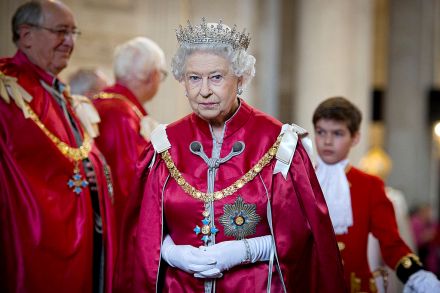
Is Queen Elizabeth II unwell? Rumors have been circulating through the British and American media for over two weeks, and the British public are worried. First came the ninety-five-year-old’s unprecedented use of a walking stick public. Then came an overnight hospital stay, which royal retainers tried to cover up. And now she has canceled her appearance at the COP26 climate summit in Glasgow on her doctors’ orders, and will be sending a recorded video message instead. Buckingham Palace has released a photograph showing the queen in her usual good spirits. Yet the frailty of the recently-widowed queen and her Glasgow no-show send a worrying message. Queen Elizabeth is dedicated to her duty.

queen elizabeth ii

Scotland by sleeper

Traveling internationally these days is a bit like how Dicky Umfraville, a character in Anthony Powell’s Dance to the Music of Time, describes aging: being punished for a crime one hasn’t committed. After taking my pre-departure COVID test, alerting the British government to my whereabouts for the next week (no small undertaking given I’d be in a different bed every night), and proving all this plus my vaccination status to the British Airways check-in desk at JFK, I finally settled in my seat and supplemented my mandatory mouth-muzzle with an eye mask as though bound for Gitmo, not Heathrow. An hour into the flight, the woman in front of me started bawling: a panic attack brought on by mild turbulence.

scotland

Greta Thunberg didn’t win the German elections

Greta Thunberg is back in business. Previously slowed down by European pandemic restrictions, the Fridays For Future movement has now hit the streets, starting in Berlin. 'We must not give up, there is no going back now,' Thunberg told thousands of local protesters. The appeals and influence of her movement have translated, at least somewhat, into a stronger climate-focused youth vote in last month's German elections. The Green party has made significant advances in Parliament, becoming one of the kingmakers in upcoming coalition talks. Yet Germany’s environmentalists aren’t the only ones who outperformed their previous results. The liberal-democrat FDP scored 23 percent of Germany’s first-time voters, the same amount as the Greens.

greta

Ticking off the French was strategic genius

In December 2020, in the aftermath of the presidential election, Jake Sullivan, President-elect Joe Biden’s national security adviser, urged European officials to delay a European Union vote on a proposed economic agreement with China, called the Comprehensive Agreement on Investment. Sullivan, communicating with French and German officials, explained that the incoming Biden administration wanted to have 'early consultation' with the Europeans on China, and urged them to hold off until Biden took office to devise a common approach toward Beijing. Resisting the pressure from Biden, the European Commission announced that the agreement was concluded in principle, pending approval by the European Parliament.

french