Europe

Meet the Tories battling for Boris Johnson’s job

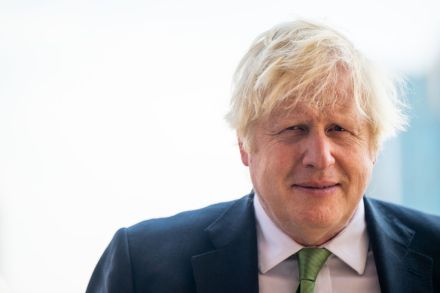
Boris Johnson’s departure has left a vacancy at the top of British politics. For so long, he seemed to be the "teflon Tory" who could get away with anything; now a raft of scandals have brought him back down to earth. His resignation earlier this month triggered a leadership election among his Conservative party colleagues in the House of Commons. After a week of ballots, just two now remain: Rishi Sunak and Liz Truss. That pair of names will go to the party’s 160,000 members in constituencies across the country to decide which one will be Britain’s next prime minister. The former would be Britain’s first Asian premier; the latter its third female one.

Why Putin still might shut off Europe’s gas

There was a time in the not-so-distant past when Europe and Russia had a mutually beneficial relationship with each other — at least in the energy field. Europe, a major oil consumer, received reliable supplies of crude and natural gas from Moscow, while the Russians received tens of billions of dollars in return. The European Union imported 155 billion cubic meters of natural gas from Russia last year, equivalent to about 45 percent of its total gas imports. There was an ingrained assumption in European capitals that, even if relations with the Russians were thorny, fossil fuels would continue to head west. War, however, can change things in a flash. European and Russian officials now talk past each other, and sometimes they leave the room when the other is speaking.

sanctions putin russia davos oligarch

Dutch farmers are fighting for freedom

Dutch farmers have had enough of government overreach. And they’re taking to the streets as only farmers can. The government of the Netherlands, in order to fight climate change, recently proposed a 50 percent cut in ammonia and nitrous oxide emissions by 2030 — which will disproportionately impact the agricultural industry. Small farms are thus faced with two choices: shutter entirely or face poverty after culling their livestock. The Dutch government is not sympathetic to these concerns. In their words, “The honest message...is that not all farmers can continue their business.

Why we’ll all miss Boris

I think that Thomas Babington Macaulay had the last word about Boris Johnson’s forced resignation as prime minister of the UK: “We know no spectacle so ridiculous,” Macaulay wrote, “as the British public in one of its periodical fits of morality.” Macaulay’s line needs to be slightly adjusted, it is true, because, ridiculous though public displays of puritanical moralism are, in this case it was mostly Boris’s colleagues in Parliament, not the public at large, that suffered that unbecoming fit of morality. Indeed, throughout it all, Boris — a politician with more élan than any prime minister since Margaret Thatcher — remained popular with the public. He was especially popular, I think, with the American public. And why not?

boris johnson trade

Boris Johnson and the return of ‘Pestminster’

You might be wondering why Britain's government has rolled from crisis to crisis since the pandemic began, culminating today in the resignations of two leading ministers, and with the threat of more hanging overhead. Some would blame the character of 2020 and the pestilential years since; others the nature of Boris Johnson, the prime minister: his "colorful" personal life (a hard-working euphemism); his lack of focus; his indifference to the truth. I would look a little broader. Britain's political life is the product of the people who fill its parliament. And very many of them are deeply substandard people. The straw that apparently broke the camel's back this week was the government's former deputy chief whip, a man called Chris Pincher.

Boris gaffes, Russia laughs

Cockburn woke up this morning to a good laugh over his coffee when he saw that British prime minister Boris Johnson had attributed Putin’s invasion of Ukraine to “toxic masculinity.” Johnson, the Conservative PM of the UK, told German broadcaster ZDF, “If Putin was a woman, which he obviously isn't, but if he were, I really don't think he would've embarked on a crazy, macho war of invasion and violence in the way that he has." He proceeded to say that the war is a “perfect example of toxic masculinity,” urging more countries to have “more women in positions of power.” While Putin’s bare chest on horseback may be the source of endless memes, Cockburn believes Johnson is focusing on the wrong things here.

Defending Ukraine should be a European project

NATO gatherings at the head-of-state level are ordinarily placid, even boring affairs. But this week’s three-day NATO summit in Madrid will be quite different. For the first time in twenty-three years, the alliance is meeting as a war churns on European soil. Russian President Vladimir Putin’s invasion of Ukraine has been an electric shock to the continent’s defense establishment, at least if their rhetoric is any indication. European officials have finally come around to noticing that Europe isn’t an exceptional zone of peace and tranquility, but a region no more immune to armed conflict than any other. NATO, which was straying out of theater in a desperate attempt to stay relevant, is now back to performing the defensive mission it was meant to do.

What happens to US fighters captured in Ukraine?

Alex Drueke and Andy Huynh are two former American military members now in Russian custody, captured by the Russians in Ukraine, where they were fighting for the Ukrainian government. What is going to happen to them? The most likely thing is that both men will eventually be traded to the US in return for captured Russians. Prisoners are very valuable and rarely wasted in executions unless those carry much more value than the prisoners held by the other side. The deal may be public or secret, and the US can expect to pay a premium. Israel usually releases ten or more Palestinian prisoners in exchange for one of its captured troops.

Russia slogs through the Donbas

A brutal artillery battle: that’s what the latest phase of Russia’s war on Ukraine has become. Vladimir Putin failed in his original goal of seizing the entire country swiftly, beginning with the capital of Kyiv, and installing a puppet government. When Ukrainian resistance prevented that, Putin shifted to a smaller, more achievable objective: establishing complete control over two eastern provinces, Luhansk and Donetsk, which border Russia and are jointly known as the Donbas region. That’s where the war is being fought now, with an uncertain outcome. Victory will depend on who wins the artillery battle. Russia has more blunt firepower; Ukraine has more precise, longer-range weapons — or at least it will have them when more NATO supplies reach the frontlines.

artillery

Boris Johnson saved by his hollow party

Boris Johnson has survived the attempt by some in Britain's Conservative party to remove him as prime minister. The margin not quite close. But by being so publicly called into question, both the prime minister and his party have been weakened. Dogged by real and performative public disapproval, Johnson will have difficulty remaining in power for the rest of the parliamentary term, and more performing to do in the next election to remain in office after it. In the fabled axioms of British politics, two things are meant to be clear. One is that the Conservative party is the natural party of government. The country is slightly right-of-center, the logic goes, and it is a rare Labour challenge which can defeat this innate advantage.

The failure of Marine Le Pen

Following her second-round loss to Emmanuel Macron in France’s presidential elections last month (it was her third loss on the national stage), Marine Le Pen has announced her candidacy for the National Assembly. She hopes to win Pas-de-Calais’ eleventh constituency in June — a seat she won in 2017 — to oppose Macron’s policies in the French parliament, along with her National Rally (RN) colleagues. But she is unlikely to have much leverage. In the last parliamentary elections, the National Rally (then the National Front) won eight seats out of 577. The latest poll by Harris Interactive has them winning 65 to 95 seats this year, compared to 338 to 378 seats for Macron’s re-branded Renaissance party, which would give Macron an absolute majority.

Is NATO about to get even bigger?

The last time NATO inducted a new member was in 2019. The alliance agreed to accept North Macedonia’s request for membership. The small Balkan country was an odd choice to become the alliance’s thirtieth member state. At roughly 7,500 troops, North Macedonia’s military was smaller than the Los Angeles Police Department. Its entire population was smaller than Brooklyn's and its economy was one fifth the size of North Dakota’s. Three years later, NATO is set to become even bigger. Finland and Sweden, two Nordic nations with a decades-long policy of military neutrality between the West and Russia, will very likely submit their own membership bids as early as next month. Before Russia’s invasion of Ukraine, neither power was especially interested in becoming full-fledged members.

Emmanuel Macron’s fleeting win

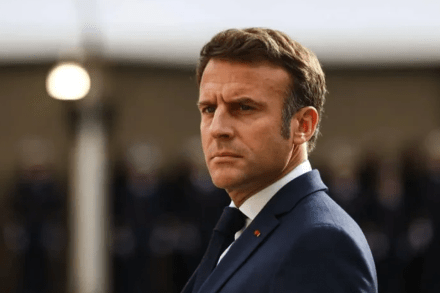
In France’s presidential runoff vote on Sunday, incumbent Emmanuel Macron defeated nationalist contender Marine Le Pen. This makes the center-left Macron the first president since 2002 to get a second term, though he is also one of the least popular politicians in French history. Compared to 2017, Macron dropped by more than seven percentage points from 66 percent to just 58 percent. In turn, contender Marine Le Pen upped her score from 34 percent to 41.5 percent. Meanwhile, the abstention rate is the highest it’s been in more than 50 years, at 28 percent, higher than in the runoff vote compared to the first round. This explains why Macron lost a lot of the lead he had five years ago, and why Le Pen’s National Rally party registered its strongest support to date.

Marine Le Pen takes on the king of Europe

Last Sunday marked the beginning of the French presidential vote; the runoff election will take place on April 24, and incumbent president Emmanuel Macron winning again is no sure thing. If she plays her cards right, challenger Marine Le Pen has a legitimate shot at becoming the next president of France. Macron emerged victorious in the first round with 27 percent of the vote, followed by Le Pen with 23 percent. For the nationalist Le Pen, it is the second time she has qualified for the runoff, and thus the second time she is running against Macron. In 2017, she lost to Macron 66 percent to 33 percent, crushing once again the ambitions of her National Rally party. This year, however, will be a much closer call.

Is France set for another Le Pen-Macron showdown?

The first round of voting in the French presidential election will happen Sunday — and despite expectations of the last few years, the run-up appears increasingly anti-climactic. But not all is said and done in the campaign. Over the last few weeks, Emmanuel Macron has extended his lead in the opinion polls, bolstered by the uncertainty of the war in Ukraine. The most recent poll has Macron ahead at 28 percent, in front of far-right candidate Marine Le Pen at 23 percent, and far-left contender Jean-Luc Mélenchon. Far-right independent hopeful Éric Zemmour (9 percent) and Republican nominee Valérie Pécresse (8 percent) had experienced boosts in the campaign’s early stages, which have both since died down.

Don’t blame the West for its Ukraine hesitance

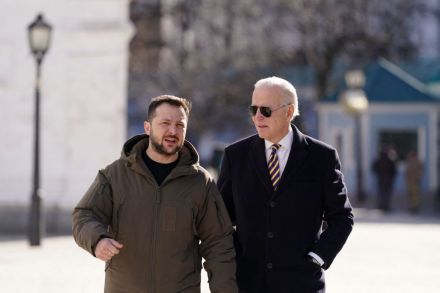
As Ukrainian President Volodymyr Zelensky addressed the UN Security Council today with all the anguish you would expect from a wartime commander-in-chief, he could nonetheless be relatively pleased about several things. Sure, Zelensky and his advisers are constantly making the point that Ukraine needs bigger and better weapons to resist Russia’s invasion, but the West has been quite responsive to Kyiv’s requests. The Biden administration’s latest weapons shipment, announced last week, adds to the $1.6 billion in military aid the US has sent to the Ukrainian military since the war broke out on February 24.

How many refugees can Eastern Europe take?

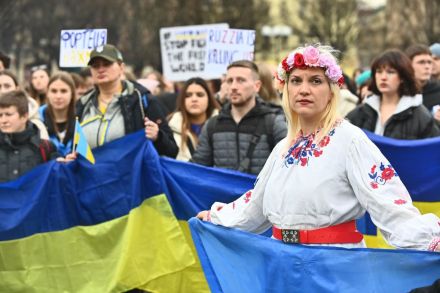
Hundreds of thousands of Ukrainian refugees have already streamed into Slovakia, Hungary and the Czech Republic. Head north to Poland, and the numbers go from the unprecedented to the jaw-dropping: two and a half million refugees have entered the country with a total population of 38 million since the war in Ukraine began. In the Czech Republic, where I live, official estimates put the current number of refugees at over 300,000, a figure expected to rise to between 500,000 and 600,000 in the coming months. In a country of less than eleven million, that’s five percent of the population. In Poland, a proportion closer to ten percent is possible. At the moment, most of the Czech Republic’s refugees are concentrated in Prague.

Hungary’s Orbán remains a thorn in everyone’s side

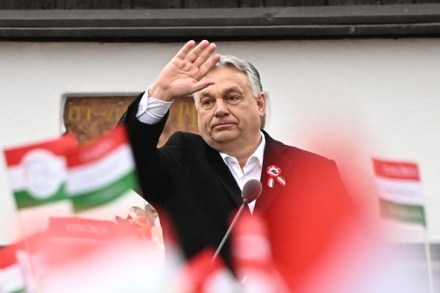
Viktor Orbán has just won another election. The Hungarian prime minister has secured a hefty majority in his country’s legislative elections, and in his victory speech, Orbán revealed once again that he is a thorn: in the side of Europe most obviously but, if need be, in the side of all. I’ll leave for others the discussion of Hungarian democracy — whether Orbán has so manipulated national life that his continued electoral successes are unimpressive, even fraudulent. But Orbán, in his own mind, thought an “overwhelming force” ranged against him. “We never had so many opponents,” Orbán said.

No more dithering over Ukraine

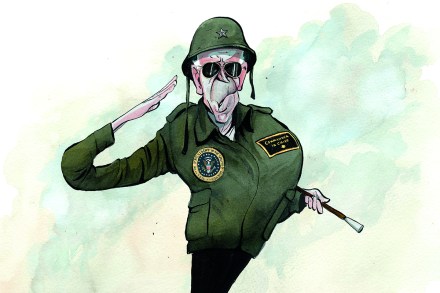
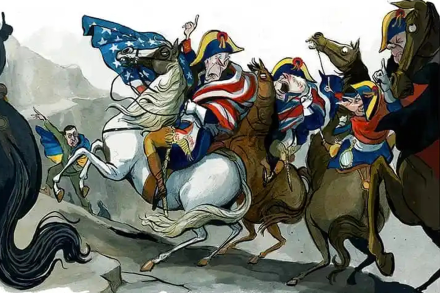
The extraordinary skill, courage and effectiveness of Ukraine’s fighting forces have given the US and NATO an extraordinary opportunity to reestablish military deterrence in Europe and show the Kremlin that unprovoked military aggression will be repelled and ultimately defeated. But President Biden and NATO leaders are dithering. They are simply not acting with the urgency needed to fully support Ukraine’s military. It’s the same failure they displayed for the year prior to the invasion, when Putin was building up tens of thousands of troops along Ukraine’s border. Even now, the US and NATO are hesitating to provide the full complement of essential weapons to Ukraine, including air-defense systems, MIG fighters and a lot more drones, anti-tank and anti-ship weapons.

ukraine
warsaw

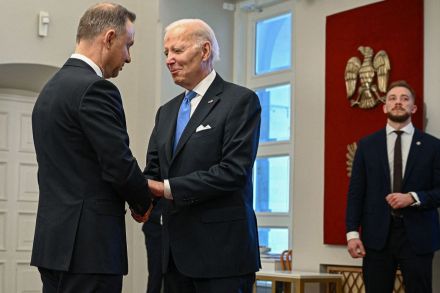
Biden’s Warsaw speech was both baffling and moving

Poland “Biden fell asleep.” Perhaps a thousand jokesters posted this and similar jibes in the livestream comments as we waited for the president to speak from Warsaw. Thousands of Poles, and doubtless many Ukrainian refugees, were gathered around the Royal Castle in the center of the Polish capital to wait. Biden trotted out — old but amiable and very much awake. In fact, after spending two days meeting refugees, Ukrainian representatives and Polish politicians, he looked surprisingly sprightly. God help me for saying this but I have a soft spot for the president.