China

Geopolitical jockeying in a time of pandemic

You might think a global pandemic and the worst crisis since World War Two would lead to a welcome, if temporary tamping down of military activity in already tense and contested environments. Yet even as the novel coronavirus ravages the world, old fashioned geopolitical jousting continues in Asia, reminding us that the passing phase of COVID-19 will simply return much of the world to the status quo ante of great power competition. In a strange way, the ongoing military activities and geopolitical jockeying of China and the United States in Asia’s vital waterways is almost comforting.

south china sea

Italy gave China PPE to help with coronavirus — then China made them buy it back

China has tried to restore its image after lying to the world about the seriousness of its coronavirus outbreak, but its attempts at humanitarianism have turned out to be as slippery as its wet markets. After COVID-19 made its way to Italy, decimating the country's significant elderly population, China told the world it would donate Personal Protective Equipment (PPE) to help Italy stop its spread. Reports later indicated that China had actually sold, not donated, the PPE to Italy. A senior Trump administration official tells The Spectator that it is much worse than that: China forced Italy to buy back the PPE supply that it gave to China during the initial coronavirus outbreak.

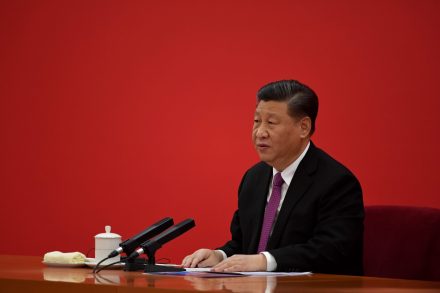
Chinese President Xi Jinping

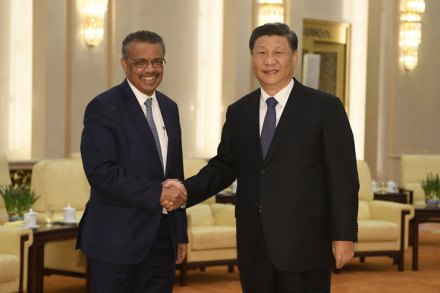
The best message the State Department could send Beijing and the WHO

A troubling pattern has emerged at the World Health Organization. In the wake of this global pandemic, it appears China has been misdirecting and misleading the rest of us about confirmed cases in their own country, with the help of their close financial partner, the WHO.As the WHO and parts of the American media laud China’s response to the pandemic, with NBC News even hailing them as a global leader as the US falls behind, several countries reported massive problems with faulty equipment and supplies.Shortly after China expelled American journalists from its borders, they stopped reporting new cases of COVID-19 altogether, despite Wuhan once again closing down its movie theaters.

taiwan

Beijing’s attempts to elude blame for the Wuhan virus will backfire

Facing harsh criticism for allowing the novel coronavirus to spread, Beijing has settled on an international communications strategy: smearing the United States by claiming the virus originated with American soldiers visiting China. This strategy, based on obvious lies, will not work out well.Nobody outside China’s state broadcasters and some information-starved viewers could possibly believe it. For good reason: it’s bunk, and vile bunk at that. An infected unicorn is more likely to have started the virus in Wuhan than the US military. Yet that is the story the Chinese Communist party (CCP) is trying to peddle.

wuhan

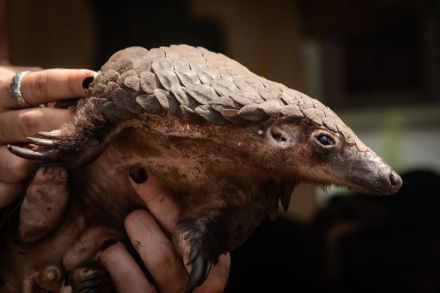
Time to ban wet markets

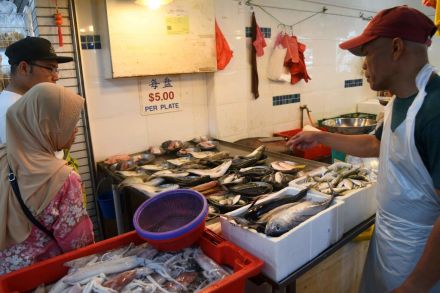
There’s a recurring flashback from my childhood that never fails to induce a blood-curdling shiver down my spine. My mother’s request for company on her monthly shopping trips to the wet market was always a Hobson’s choice, one I deeply resented because the experience was awful. Deep in the bowels of Singapore’s Chinatown complex was a large open-air market that stood in stark contrast to the surrounding glitzy skyscrapers and immaculate streets. The place was a veritable not-so-little shop of horrors and till today, those horrors remain firmly etched in my memory.A distinctly fetid stench greets you long before entering the market; soon it becomes apparent why they’re referred to as ‘wet’.

wet markets singapore

We’re all Chinese now

I didn’t know this was what they meant by ‘cancel culture’. Sports events, theatre shows, plane flights, weddings, funerals: everyone is in a mad rush to cancel everything. Governments are ordering citizens to remain indoors, with Spanish police even deploying drones to catch miscreants. I don’t know whether it is the best way of tackling coronavirus — the UK government, which has gone to greater lengths than others to explain the scientific modeling behind its decision-making, has come to the conclusion that banning things and forcing the entire population into lockdown will have minimal effect and may even be counter-productive, at least at this stage. But it is going to cause a global recession, if not depression.

chinese

Coronavirus is a metaphor for Britain’s vulnerability over Huawei

Monday night’s House of Commons rebellion over Huawei was on a surprisingly serious scale for a new government with a big mandate. The problem for the UK government is not just the actual danger of our security being breached by Huawei, real though that is. It is also strategic. The government is not treating the subject this way, but sees it as merely a matter for the Department for Digital, Culture, Media and Sport. This is a bad mistake. We have achieved Brexit. We are making our own way in the world. Our closest allies in terms of trust, language, cultural links, democratic values and shared interests are our four partner nations in the ‘Five Eyes’ deep intelligence partnership — the United States, Canada, Australia and New Zealand.

huawei

Coronavirus is a chance to buy cheaper — but it comes with a health warning

If anything, stock markets have been slow to respond to the spreading coronavirus outbreak. Stories of Chinese supply interruptions, from JCB digger components to plastic toys, have been circulating since mid-February, while hedge funds have been hard at work short-selling cruise-operator shares: Royal Caribbean and Carnival are both down 30 percent. Now airlines have taken a pasting too, with easyJet and Ryanair among the big fallers in Monday’s sell-off of European stocks, following news of a cluster of virus cases in northern Italy. Meanwhile, a turning point may or may not have been reached in the rate of reported cases in Wuhan, where the outbreak began.

coronavirus
coronavirus

How the clever people got coronavirus wrong

Anyone who remembers Sars or Ebola will recall a feeling of mounting anxiety which subsided into a sort of embarrassed relief. What had we been so worried about? Sure, they might have killed some people — yes, I know that is a callous way of putting it but that is how we think — but seasonal flu kills hundreds of thousands of people every year and we don’t get very agitated about that.Fighting real and potential pandemics has costs. Supply lines are broken. Productivity slumps. Borders are closed. Money is spent on containment and healthcare. We should not overreact to the threat of pandemics. But people who are performatively notoverreacting to coronavirus are not just doing so because of these costs.

In coronavirus quarantine

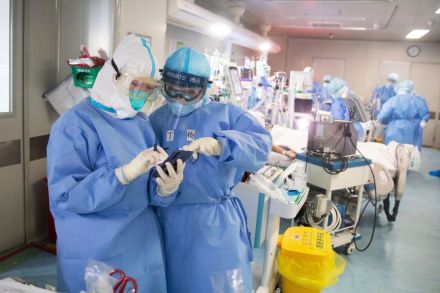
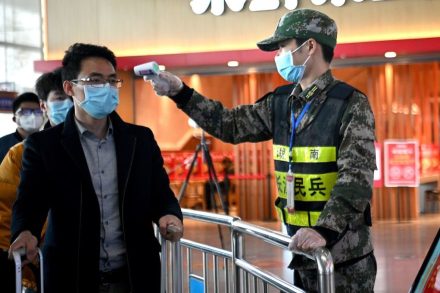
This article is in The Spectator’s March 2020 US edition. Subscribe here. I’ve been quarantined, like millions of others in China. It was bound to happen sooner or later. I traveled all the way from Beijing to the third-tier city of Jining in Shandong province, where anyone arriving from another region must be detained for 14 days. There’s no kind way to deliver the news, so a Chinese colleague broke it to me over WeChat in a gentle but firm tone. It felt like being fired or dumped. It could be worse. I’m free to leave my building, but not the walled housing compound surrounding it.

coronavirus

Why does the Chinese Communist party want my credit history?

I was one of them.One of the 147 million Americans who had their information compromised in the epic 2017 Equifax data breach. It was one of the largest hacks in history, leaking the names, social security numbers, addresses, and credit history of over a third of the country.At first, we were led to believe it was the result of sloppy cybersecurity and greedy hackers who wanted credit card data.But now, according to last week’s indictment from the Justice Department, we know it was the handiwork of four members of China’s military.To think it was a few renegade black hat hackers with expensive tastes was upsetting enough, but now to learn it was the long arm of the Chinese Communist party? This is serious.What do the Chinese communists want with my credit history?

equifax

Is China hiding how bad the coronavirus is?

The Chinese government would have the world believe that the coronavirus is under control and the risks of it spreading to the rest of us is minimal. But foreign governments and intelligence agencies believe that China has been lying about the extent of the epidemic and continues to deny the truth about the numbers of dead and infected.Judging by leaked videos on social media that purpotedly show the dead lying untended in the street, bodies wrapped in sheets lying on benches and crematoriums working 24/7 with bodies unceremoniously stuffed into ovens with no burial rites, millions of Chinese people appear to agree with the foreign assessments.

coronavirus

Xi’s dictatorship is a tragedy, not a farce

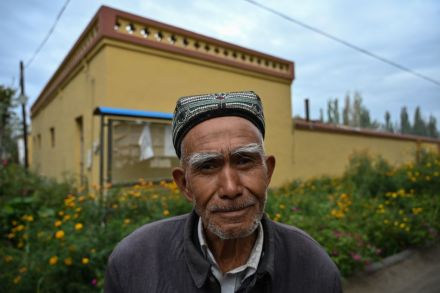
A successful dictator has to have ruthlessness, control, influence and competence. So how does China’s leader, Xi Jinping, rate as a dictator? Xi has been in power since 2012 and thus has enough of a track record to judge.On ruthlessness, he ranks highly. The concentration camps he has created for China’s Muslim minority in Xinjiang and the suppression of the movement in Hong Kong — in violation of the 1984 agreement with the UK — are the most tangible examples. The November 2019 leak of the 'Xinjiang Papers', more than 400 pages of internal Chinese documents, to The New York Times provided an unprecedented documentation of the origins and implementation of crackdown against Muslims of Xinjiang.

xi

China and Russia win from America’s wars

I woke up late on Friday, so missed the livestreamed assassination of Franz Ferdinand and the rolling barrage of tweet-commentary about the super-judicial martyrdom of Hassan Thingy and the start of World War Three. It was all over by lunchtime, bar the shooting, because there could only be one winner. Or was that two?The first winner, as always when it comes to American foreign policy, is Xi’s China. Anything that ties the United States into the open-ended shambles of the Middle East distracts the energies of the United States, and the eyes of America’s allies and clients, from China’s surreptitious campaigns to replace the United States as global patron. In war as in online shopping, China emerges as hegemon not despite American efforts, but because of them.

china

Michael Bloomberg’s Chinese appeasement

Michael Bloomberg’s entry into the race for the Democratic nomination for president has been underwhelming so far. As the race tightens, one of myriad problems for the candidate will be his close ties to the major national security threat posed by the US’s strategic rival — China under the leadership of the Chinese Communist party (CCP).Bloomberg panders to the CCP and to its leader, Xi Jinping, recently labeling him 'not a dictator' but rather just a politician, like any other duly elected leader, who has to satisfy his constituents. When challenged, Bloomberg stressed the point, saying 'no government survives without the will of the majority of its people, OK?' Xi, like all leaders, 'has to deliver services'.

michael bloomberg

What will war with China look like?

Like so many wars, this one began with an accident: a US naval vessel patrolling the South China Seas and shadowing the Chinese navy made a small navigation error in rough weather. The ships collided, five Chinese sailors died and their vessel was severely damaged. Beijing saw this as an act of war, the latest in a series of perceived insults by the US administration, and the response was swift. Cyber attacks against Washington DC and the headquarters of the US Pacific Fleet at Pearl Harbor shut down power. Ironically, most of the 175 deaths in the first three hours came not from hospitals where emergency generators kicked in successfully, but from failed traffic lights and massive car pile-ups in both cities.

war china

Will China meddle in the 2020 election?

This article is in The Spectator’s inaugural US edition. Subscribe here to get yours. Vladimir Putin, as we all know, has become chief electoral strategist in the western world. When he wanted Donald Trump president, he merely set his army of trolls to action and the American public was fooled into backing a candidate who would never have got anywhere near the White House otherwise. That is what the media has been telling us since 2016, anyway. But the idea that Russia can swing a sophisticated electorate of 300 million people with the aid of a fake-news tweet factory in St Petersburg was always fantastical. Even the Mueller inquiry could not prove it — not for want of trying.

china 2020

The unease of the Chinese diaspora

‘Are you Chinese?’ It’s a question I’m frequently asked living in New York City and it almost always stumps me. The conflict naturally arises from what my questioner actually means by ‘Chinese’. Ethnically, yes. I’m Han Chinese. But nationality-wise, no. I’m a daughter of Singapore, born and bred on the South East Asian island which boasts a majority Chinese population, though I now consider the United States my home. You’d have to go back to my great-great-grandparents’ generation to find someone whose feet touched the soil in China from birth. Apart from my facial features, I have no ties to the land known as zhōngguó, the middle country, the center of the world.

chinese diaspora

I saw the violent Hong Kong protests

This weekend saw the most violent clashes yet in Hong Kong between demonstrators and riot police. On Sunday, as mass protests entered their 12th week, Hong Kong police deployed water cannons, tear gas and rubber bullets, and a policeman pointed a gun at a protester and the press. Meanwhile, dissidents threw bricks and grates that they had dug out from the street at riot police. They returned volleys of tear gas canisters with tennis rackets, threw homemade petrol bombs and Molotov cocktails, and used  lasers to thwart facial recognition cameras.

hong kong

The cosmic combination of Hong Kong, Brexit and the trade war

Over the past several months, we have witnessed remarkable courage in the streets of Hong Kong. What began as limited protest against a single act of pro-Beijing legislation now has the markings of existential struggle, if not revolution. As the people of Hong Kong understand, the city government’s proposed extradition bill — enabling removal of its citizens to mainland China for trial — was not an isolated event. It was, instead, a sign of things to come, the gradual encroachment of Beijing upon the rights and freedoms promised Hong Kong for 50 years in the 1997 Basic Law. These constitutional guarantees — negotiated with the United Kingdom before it transferred the city — have come steadily under attack as the clock ticks ineluctably towards midnight.

hong kong