China

GOP seeks answers from NBA over Chinese soft power display

House and Senate Republicans, along with a basketball star, are demanding answers from the NBA about its financial relationship with the Chinese Communist Party following an “in-your-face” display of CCP soft power in the nation’s capital. Following reporting from The Spectator, eight congressmen and four senators wrote to NBA commissioner Adam Silver to express “grave concerns about Chinese Communist Party propaganda being broadcasted and promoted at National Basketball Association games.

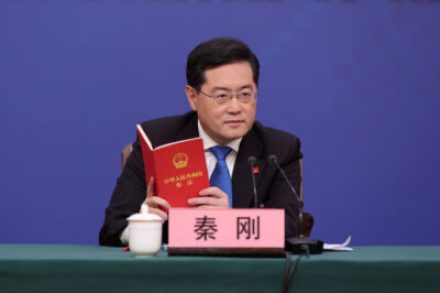
China's National People's Congress - Press Conference

TikTok may be the real test of the China Select Committee

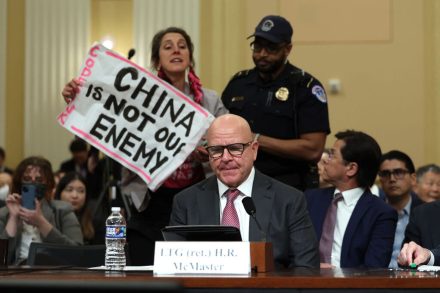
The primetime launch event for the House China Select Committee shows the bipartisan consensus that has formed in Washington on the threat represented by China. It also illustrates the priorities for members of Congress, and their divisions over the appropriate response to Chinese influence as a military, economic and cultural adversary. Witnesses, including former Trump deputy national security advisor Matthew Pottinger and retired Lieutenant General H.R. McMaster, encouraged members to take Xi's words at face value — and emphasized that for too long Washington has looked the other way while China ate America's lunch.

china select committee

China is playing the US for fools over the spy balloon

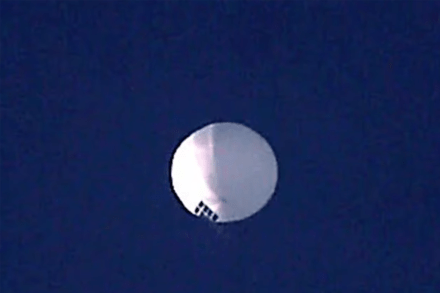
The Chinese balloon debacle has shone a light on America's security vulnerabilities, but it has also revealed just how audacious and deceptive the Chinese Communist Party is. As with their reaction to Covid-19's origins, they have brazenly lied from the day that the balloon’s presence was made public. It is abundantly clear that the craft was not a weather balloon, not least because of its uncharacteristically massive size. Yet China opted to construct a tall tale about a wandering weather balloon that somehow ended up over America. Oh, and the balloon over Latin America? That was just another errant storm tracker. Sure, China regrets the mishap, but there is no need to overreact. What makes the lie so extraordinary is that it is so easily debunked.

xi

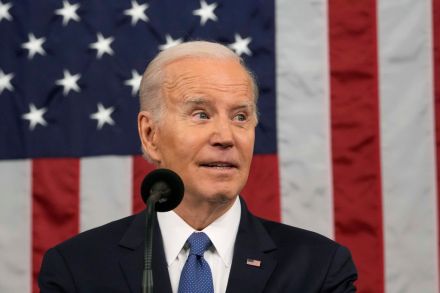
Biden’s State of the Union went quiet on China

Joe Biden's meandering State of the Union left out a great many things, as his voice toggled between insincere whisper and frail bellow. The loudest moment of the night was when, going off-script from his prepared remarks, he insisted that really — c'mon, I really mean it! — China's Xi Jinping is being isolated from the world for some reason. https://twitter.com/greg_price11/status/1623157950654078977 "Name me a world leader who would change places with Xi Jinping! Name me one! Name me one!" Biden yelled. The comment had an air of frustration given that the humiliating Chinese spy balloon was fresh in the minds of all on Capitol Hill. "I’ve made clear with President Xi that we seek competition, not conflict," Biden said in his prepared remarks.

Former defense secretary: yes, Trump would have shot down the Chinese spy balloon

Former acting secretary of defense Christopher Miller challenged several of the major claims being made about the Chinese spy ballon that recently entered US airspace during a podcast interview Monday with The Spectator World.  Miller joined The District podcast to discuss the Chinese spy balloon and his new book, Soldier Secretary: Warnings from the Battlefield and the Pentagon about America's Most Dangerous Enemies. The Biden administration shot down the balloon off the South Carolina coast on Saturday after it had been floating across the United States for nearly a week. Following its destruction, administration officials claimed that other Chinese spy balloons had entered the US "at least three times" during the Trump administration.

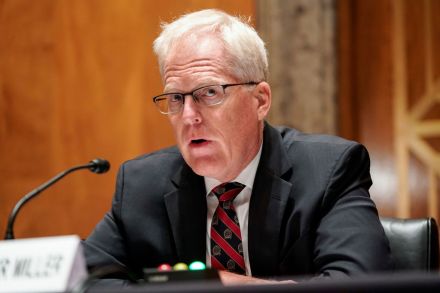
National Counterterrorism Center Director Christopher Miller testifies at a Senate Homeland Security and Governmental Affairs Committee hearing (Photo by Joshua Roberts-Pool/Getty Images)

AP stealth edits its Chinese spy balloon report

The Associated Press (AP) appeared to stealth edit a major report on the Chinese spy balloon, which was the origin of the claim that two such balloons also entered US airspace during the Trump administration. The AP first published the article on Saturday. The balloon was then shot down after floating for several days over the US. Deep into the report, the AP cited one unnamed Biden administration official who claimed that two similar incidents "happened twice during the Trump administration but [were] never made public." [caption id="attachment_45048" align="aligncenter" width="1024"] The Associated Press's first iteration of the Chinese spy balloon story (Screenshot: Internet Archive)[/caption] However, the AP article looked different on Sunday.

spy balloon

The balloon is a Chinese middle finger to the US

Military fighter jets have just shot down the Chinese Communist Party's gigantic spy balloon that had been hovering about 60,000 feet over the United States. The balloon was "taken care of," to quote President Biden, over the Atlantic Ocean, off the coast of South Carolina. Prior to the maneuver, the balloon drifted, unharmed, over our sensitive military sites and fellow citizens. It lingered there, doing what Chinese President Xi Jinping pleased, while rightfully indignant members of Congress representing those violated states took to press releases and cable TV to demand the federal government secure our sovereign airspace. All of this was no doubt churned back through the CCP's propaganda outlets, smearing America as divided, weak, and foolish.

Shoot down the balloon!

Like many of you, Cockburn has been following the developing story involving the Chinese spy balloon currently hovering over Montana. For those unaware, sometime over the last few days a spy balloon has floated over the Aleutian Islands in Alaska, across Canadian airspace and entered into Montana, where it's been for several days. It traveled at an altitude of around 50,000ft and is currently not far from the 341st Missile Wing at Malmstrom Air Force Base, which houses a portion of America's intercontinental ballistic missiles, among many other key military assets.

spy balloon

Mike Gallagher’s China challenge

Twenty-five years ago, bipartisan American consensus about China was built on hope, spin and money. Despite the trauma of Tiananmen Square and caution about China’s true economic intentions, many believed in the potential of capitalist principles to move the Chinese Communist Party into a more open, less aggressive posture. Henry Kissinger wrote books about it; pundits and think-tank scholars gave speeches about it; Republicans and Democrats alike parroted the line well into the twenty-first century. Tom Friedman even dreamed ambitiously of what the United States could accomplish if only it were willing to be “China for a day.” What followed? As Harold Macmillan put it, “Events, dear boy, events.

Gallagher china ccp confucius institutes china
china washington wizards

China woos the Washington Wizards

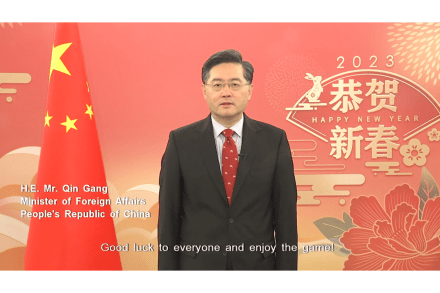
China’s new foreign minister issued his first public statement at a Washington Wizards game this weekend. “Happy Chinese New Year to DC family,” Qin Gang said, in a video blasted on the giant screens across Capital One Arena and shared by news outlets controlled by the Chinese Communist Party. https://twitter.com/cgtnamerica/status/1617008162275528711?s=42&t=IQmzS3-Fo2PbedZyvgzBIg It was a continuation of China using American sporting events as a means of exerting its soft power, and yet another stark example of the existential challenge that the United States faces in its struggle to outmaneuver the Chinese Communist Party — even in its own capital city.

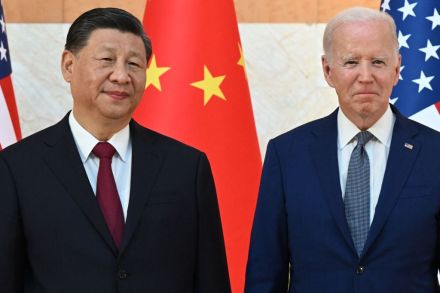
The Biden-Xi meeting was long overdue

The bilateral relationship between the United States and China is arguably the most important in the world today. The two countries make up approximately 42 percent of the world’s economic output and more than half of global military expenditure (at $801 billion, the US share of that total dwarfs China’s). The Biden administration’s recently released National Security Strategy names China as "the only competitor with both the intent to reshape the international order and, increasingly, the economic, diplomatic, military, and technological power to do it." The central objective from Washington’s standpoint is to compete vigorously with Beijing, prevent China from attaining hegemonic status in the Asia-Pacific, and ensure this competition doesn’t slide into conflict.

America’s military isn’t ready for a war with China

China’s 20th Party Congress concluded on October 23, and President Xi Jinping secured a norm-breaking third term as leader of the Chinese Communist Party (CCP). With the Politburo Standing Committee stacked with close confidants and dissent virtually wiped out, Xi is the strongest he has ever been. Xi has also redoubled the Party’s commitment to taking the island of Taiwan, by force if necessary. Secretary of State Antony Blinken recently said that China “was determined to pursue reunification on a much faster timeline.” The alarm has been repeatedly sounded by American military officials, with speculation that a Chinese invasion of Taiwan could occur as soon as 2023.

It’s time for the US to revoke China’s ‘normal trade’ status

In April 2022, six weeks after Moscow’s invasion of Ukraine, President Biden signed legislation to suspend Russia’s Permanent Normal Trade Relations (PNTR) status. “Revoking PNTR from Russia,” he said, “is going to make it harder for Russia to do business with the United States… The free world is coming together to defeat Putin.” PNTR status, also known as Most Favored Nation (MFN) status, is a designation granted among World Trade Organization members. Receiving nations are awarded all trade advantages that any other nation receives. Revoking PNTR status from Russia was a strategic move. It opened the door to deliver comprehensive economic strikes against Moscow and sent a clear signal to markets.

America’s chip war with China

There is a joke in Taipei that if China invades Taiwan the best place to shelter is in microchip factories, the only places the People’s Liberation Army can’t afford to destroy. The country that controls advanced chips controls the future of technology — and Taiwan’s chip fabrication foundries (“fabs”) are the finest in the world. Successful reunification between the mainland and its renegade province would give China a virtual monopoly over the most advanced fabs. Given that Xi Jinping has made clear his intention to take control of Taiwan by 2032, it is no wonder that the American government is worried about the concentration of cutting-edge semiconductor technology on the island.

semiconductors

What has Pelosi’s Taiwan trip wrought?

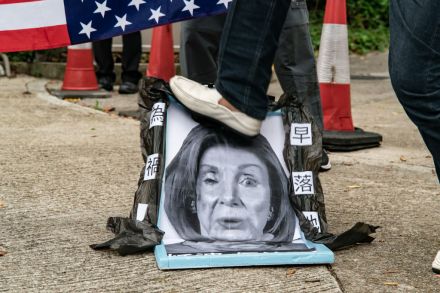
In becoming the highest-ranking American politician to visit Taiwan in a quarter-century, House Speaker Nancy Pelosi has become the dominant foreign affairs news story of the month, eclipsing, if briefly, Russia’s war in Ukraine. Yet beyond all the sound and fury, Pelosi’s trip changed nothing in the cross-Strait balance of power. What it did was to legitimize the “mission creep” bringing Taiwan and America closer together. Both supporters and critics of the trip were quick to invest Pelosi’s visit with major symbolic significance.

Pelosi is right to put China on notice

House speaker Nancy Pelosi has always had a flair for the dramatic. During the Trump presidency, for example, she ostentatiously tore up his State of the Union speech. But for sheer spectacle, it will be hard for Pelosi to top her “will she, won’t she” visit to Taiwan this week. In spite of the suspense, there was never really any doubt about it. For weeks China has issued dire warnings about the perils of her visit. So, as it happens, have several commentators, including The Spectator’s Freddy Gray, whom I debated on the Americano podcast, and who seems to have a bad case of the collywobbles about the Pelosi trip.

China delayed its 2008 financial crisis until 2022

The year 2008 was consequential by many measures. The collapse of the US investment bank Lehman Brothers sparked a worldwide financial crisis. Yet China appeared to emerge out of it relatively unscratched after Beijing introduced a massive stimulus package in the world, about three times the size of the United States government's rescue program. Thanks to this expansionary fiscal policy and the easy credit that came with it, the Chinese economy quickly returned to its robust growth by growing 8.7 percent in 2009 and 10.4 percent in 2010. After 2008, the Chinese Communist Party leaders concluded that China "escaped" the financial crisis because of its outstanding leadership and the superiority of the Chinese political system over deeply flawed western democracies.

Pelosi’s visit to Taiwan is about politics not diplomacy

The Biden administration is increasingly concerned about a trip to Taiwan next month by House Speaker Nancy Pelosi. And they should be. The visit is pointlessly provocative for little gain. Pelosi would do well to remember the Chinese proverb: "Always know if the juice is worth the squeeze." The domestic political juice is charm points for Pelosi from her large, pro-Taiwan constituency back home as she runs for reelection. A third of Pelosi’s congressional district is Asian-American and taking on Big China has long been a major part of her political identity. She, for example, made a public show out of meeting with pro-democracy protesters from Hong Kong and urging a boycott of the 2022 Winter Olympics in Beijing.

Did Hunter Biden influence Obama-era China policy?

“Fighting corruption is not just good governance,” Joe Biden once said. “It is self-defense. It is patriotism, and it’s essential to the preservation of our democracy and our future.” Going into the first term of his presidency, President Obama gave then-Vice President Biden one of the most important foreign policy portfolios: managing the US relationship with China. However, there is precious little to show for this prodigious assignment.

hunter biden

2022 Biden contradicts 2001 Biden over action in Taiwan

Cockburn is not one to point fingers (as they are often preoccupied with his cigar), but he finds himself making an exception for President Biden over his apparent U-turn on the issue of the United States using military force to help defend Taiwan against China. Tyler Cowen, an economics professor at George Mason University, just unearthed a 2001 Washington Post op-ed then-senator Joe Biden wrote dissenting from President George W. Bush’s stance that the “United States had an obligation to defend Taiwan if it was attacked by China.” Biden wrote that “words matter,” and that Bush’s extreme language had "damaged US credibility with our allies and sown confusion throughout the Pacific Rim.” Speaking of confusion...