Americano
The next chapter in American politics has begun, but is it going to be any less crazy? The Spectator’s Americano podcast delivers in-depth discussions with the best American pundits to keep you in the loop. Presented by Freddy Gray.

The next chapter in American politics has begun, but is it going to be any less crazy? The Spectator’s Americano podcast delivers in-depth discussions with the best American pundits to keep you in the loop. Presented by Freddy Gray.
32 min listen
Freddy speaks with University of Chicago international security scholar Professor Robert Pape about his book, Our Own Worst Enemies: America in the Face of Violent Populism, exploring how demographic transformations, widening wealth inequality, and the normalization of political violence across the political spectrum are intersecting to pose a profound internal threat to American democracy and global stability https://www.youtube.com/watch?
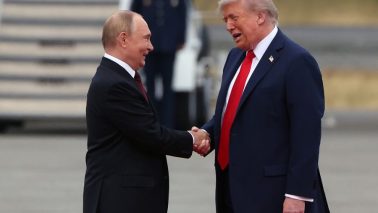
Donald Trump’s telephone call with Vladimir Putin last Friday was supposed to be about a suspected outbreak of plague in Russia, but it ended, as their conversations tend to, with a deal. Russia, the President announced, would supply America with more than 300,000 tons of diesel immediately, 500,000 tons in November, a million tons “immediately thereafter” and another three million “within a short period of time.” The Treasury issued a license exempting Russian diesel from American sanctions until April. In the same breath, Trump proclaimed another energy ceasefire between Moscow and Kyiv, the second in a month, and took another swipe at Volodymyr Zelensky, whom he would plainly like to see replaced at the ballot box.
31 min listen
Freddy speaks with Spectator columnist Christopher Caldwell about the ten-year legacy of Donald Trump since his 2016 election victory, assessing his second administration's high-water marks alongside the recent political and personal controversies that Caldwell argues have eroded voter trust, unraveled his populist appeal, and raised sharp questions about the future of the conservative movement. https://www.youtube.com/watch?
The hasty withdrawal by the United States of its 12 B-1 Bombers from Royal Air Force base Fairford, without explanation by the Pentagon, has fueled much speculation. The most obvious conclusion is that there is an ongoing security threat to the airbase in Gloucestershire, even after the foiling of last week’s attack, if that is what it was. The lesson for the UK from the sudden departure of the US bombers should be clear: we are now primarily responsible for own defense and security The US, while initially pleased with what they said was a good British reaction to that incident on September 27, seemed as bemused as many others as to why five men, who were initially arrested on suspicion of terror offenses, were subsequently released on bail.

45 min listen
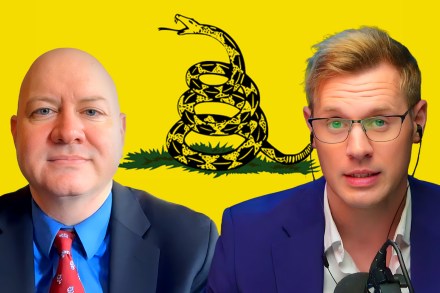
In this episode of Americano, Freddy hosts a debate between Daniel McCarthy of the Heritage Foundation and Robby Soave of Reason magazine to examine whether libertarianism has effectively died as a vital political force or remains quietly triumphant through tech deregulation, AI innovation and unprecedented levels of individual freedom. https://www.youtube.com/watch?
29 min listen
Freddy speaks with Dr. Edward Howell, an Oxford University lecturer in international relations, about the high-stakes summit between Donald Trump and Xi Jinping, examining Beijing’s strategic desire for global parity, its covert role in enabling an anti-Western alignment alongside Russia, Iran and North Korea, and the escalating geopolitical tensions surrounding Taiwan, trade and economic coercion. https://www.youtube.com/watch?
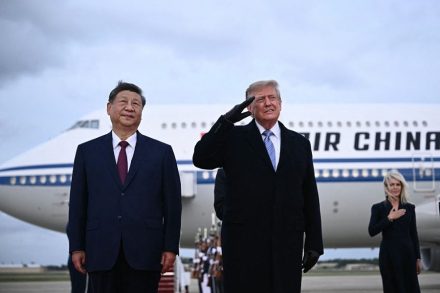
Moments before President Xi Jinping climbed down the steps of his aircraft to be greeted by Donald Trump, US marines were filmed on their hands and knees smoothing out the red carpet, Chinese officials looking down from the top of the steps. It was an uncomfortable image, ridiculed on social media for the symbolism of kowtowing to the emperor. But it set the tone for a summit which so far has been heavy on pomp and ceremony, rich in platitudes, but with very little in the way of substance. A strong diplomatic case can be made for political fawning – where the power dynamics are lopsided against you, and if there’s a chance of a reasonable payback.
When Xi Jinping arrives in Washington today for a much-anticipated summit with President Donald Trump, the Chinese leader will want to show the world that this is more than just an act of reciprocity for hosting the US president four months ago. At a time of ongoing global disputes ranging from trade to the Iran war to the ever-elusive North Korea problem, Beijing will want to give the impression of stabilized relations with the global hegemon. Beneath the surface, however, China shows few signs of altering its worldview. This not only remains fundamentally in opposition to what it calls the “anti-China” West but crucially involves its support for western adversaries, including North Korea. The last time Trump and Xi shared a tête-à-tête was in May.
44 min listen
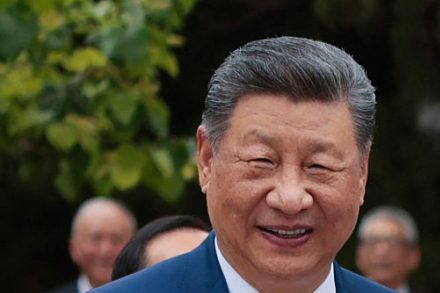
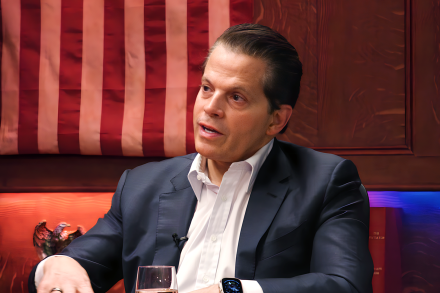
In this episode of Americano, Freddy speaks with former White House communications director Anthony Scaramucci about his new book All the Wrong Moves, breaking down the systemic failures driving American populism, the economic fallout of foreign conflicts and rising national debt and his sharp critique of Donald Trump's political strategy and economic policies. https://www.youtube.com/watch?
23 min listen
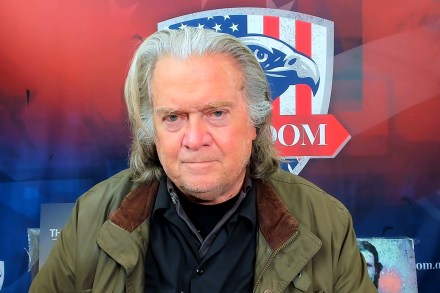
In this episode of Americano, Freddy speaks with Steve Bannon – former White House chief strategist for Donald Trump – about the ideological convergence between national populists and progressive leftists as they confront the existential risks of unbridled AI, the suppression of internal whistleblower warnings by Silicon Valley elites, and the urgent necessity of cutting off Chinese access to Western microchips and capital. https://www.youtube.com/watch?
Such is the pace of change in AI that it has been, yet again, quite a weekend. On Saturday, Dario Amodei, boss of Anthropic, published an essay, "We Must Pace the Frontier," urging his industry to slow down. Within the hour Elon Musk replied: “Dario is right.” Sam Altman, the boss of OpenAI, followed. By Sunday, Amodei was on Face the Nation, again asking everyone to apply the brakes on the grand and momentous technology of our time. None of it proves imminent superintelligence. But it is the sound of something ominous The cynical explanation is obvious. OpenAI has just shelved this year's IPO; Altman suddenly believes it unwise.

The standoff between Iran and the United States has currently reached stalemate. Iranian hopes to use control of the Strait of Hormuz as a lever to force an American climb-down show no sign of realization. The IRGC’s extension of its methods of asymmetrical warfare to the Strait was a creative and bold move. In the same way that terrorist movements seek to offset military inferiority by striking directly at an adversary’s civilian population, Iran tried to raise the costs for civilian ships seeking to transit the Strait to a level which companies and shipowners would find intolerable. In this way, Iran hoped to render US conventional naval ascendancy meaningless.
A 20-year-old Chinese researcher dressed in a red crayfish costume has become a symbol of Beijing’s ambition. At a scientific conference in Paris last fall, he explained that he was working on an important project. His plans would enable his country’s astronauts to prepare spicy crayfish soup, a Chinese favorite, on Mars. “That’s what we’re competing with. The vibe is good in Beijing,” Drew Endy, associate professor of bioengineering at Stanford University, said in evidence to a Senate hearing last month. The hearing examined whether the US is losing its innovation advantage to China. Concerned senators saw the big red crayfish as further evidence of the scale of Chinese ambition when it comes to Mars.
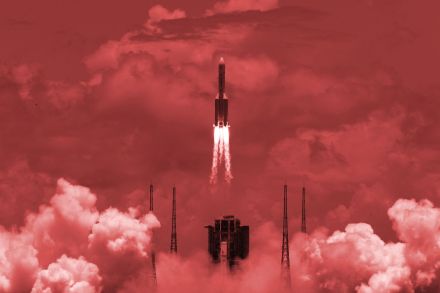
Will Trump and Kim Jong-un meet again? This is the million-dollar question after President Trump lauded his “very good relationship” with Kim and ordered a scaling back of US-South Korean military exercises earlier this week. Hours later, Trump elusively mentioned that the North Korean despot had responded “positively” to his overtures. Another rendezvous between the two leaders cannot be dismissed, especially with Kim Jong-un in a stronger position now than during the first Trump administration. But unlike during the Trump 1.0 years, which saw three meetings between Kim and the President, things are different now. Back then, neither leader had met the other before; kindling a bromance was a novelty. Now, however, it will be a case of déjà vu.
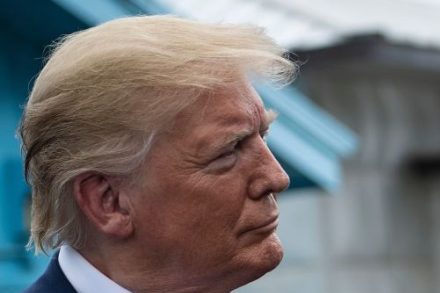
Donald Trump has instructed his Secretary of War, Pete Hegseth, to “substantially reduce” joint military exercises between the United States and South Korea. The two countries have had a bilateral defense agreement since 1953, and it was in defense of the government in Seoul that 36,500 American service personnel gave their lives during the Korean War. (It is worth noting that, despite the signing of an armistice at Panmunjom in July 1953, the conflict is technically ongoing.) Trump’s hazardous decision to downgrade military cooperation with and support for South Korea has come as a surprise.
On his very first day as Colombia’s new President, Abelardo de la Espriella received a dramatic house-warming gift: a billion dollars, courtesy of Donald Trump. Three days later, a magnitude 7.4 earthquake struck the country – but correlation is not causation. The President’s ten-figure donative arrived as aid for the militarized crackdown de la Espriella has promised against Colombia’s fearsome drug cartels and jungle guerrillas. And de la Espriella quickly showed himself eager to align with President Trump by adding Colombia to the Shield of the Americas, Trump’s signature new venture in Latin America. With this old-fashioned exchange of gifts, de la Espriella became the newest member of the eclectic global club of Trump allies. This is not a stable alliance.

One day President Trump wants to dial down hostilities with Iran. “We’re low-keying” the conflict, he said Sunday. A day later, though, he was keyed up. After Tehran demanded reparations from Washington as part of its attempt to resurrect June's Memorandum of Understanding, Trump said on Truth Social that it was the Iranians who should: Compensate America for all of the people that they have killed and gravely wounded with their roadside bombs and many conflicts, for which they are famous, as led initially by General Soleimani, including the families of those killed on the USS Cole, and thousands of others killed in combat. Now it is Trump who has become a hostage of Tehran The problem is simple. For all his bluster about staring down the mad mullahs, Trump is on the run.
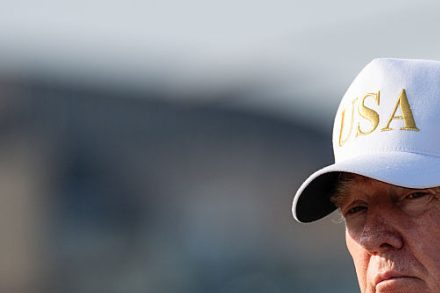
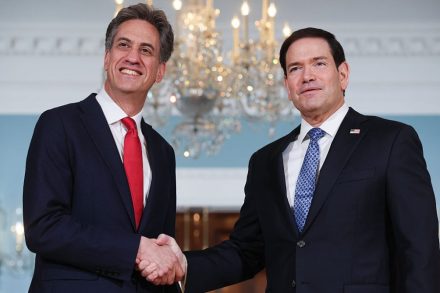
This week Ed Miliband made his first trip to Washington DC since becoming Andy Burnham’s Foreign Secretary. He is 56 now, an MP of more than 20 years’ standing in his fourth cabinet role, yet there is something both boyish and gauche about him: the eternal younger brother. How would he fare as Britain’s envoy to President Trump and the cult of MAGA? Miliband had been invited to Washington by Secretary of State Marco Rubio after the pair met at an Association of South East Asian Nations foreign ministers’ conference in the Philippines last month. It had been rumored that the Trump administration was disappointed at Burnham’s selection of Miliband as Foreign Secretary, insofar as it is possible to imagine President Trump displaying much interest in the matter at all.
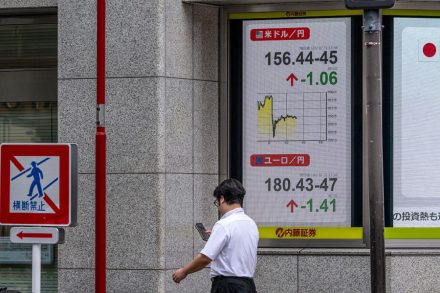
In an extremely rare bilateral move, the US and Japan have intervened to shore up the Japanese yen, which has been steadily losing value and sliding towards a 40-year low. The news was confirmed by the Japanese Finance Ministry this morning. President Trump preceded the announcement by explaining that the US was “always there to help Japan.” In truth, there wouldn’t have been much point in denying it – a Reuters photo showed a memo on US Secretary of the Treasury Scott Beasant's desk with the simple instruction “To Do – Buy Japanese Yen (JPY) 5-10 billion.” The dollar fell to 157 yen after the announcement, well down from the 164 (considered by Morgan Stanley the highest tolerable point for the Japanese government) of the previous week. This is an extraordinary move.
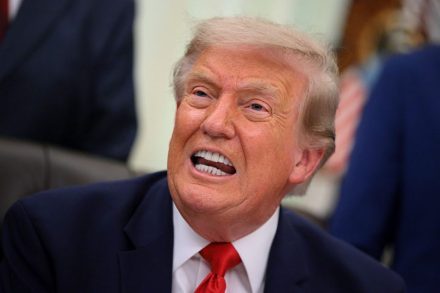
The US Senate narrowly defeated a measure yesterday intended to crimp, if not terminate, President Trump’s ability to conduct hostilities against Iran. The 50-49 vote on a war powers resolution testified to the mounting hostility toward the military campaign among American voters, two-thirds of whom regard the conflict as a futile endeavor. The result is that Trump’s own popularity rating has plummeted to 32 percent, edging out Joe Biden’s 33 percent shortly before he declared that he was exiting the presidential race in July 2024. Presumably, this is one personal record that Trump will not be inclined to tout at his MAGA rallies. What is to be done? Two diametrically opposed camps have emerged on the right to advise Trump on Iran.
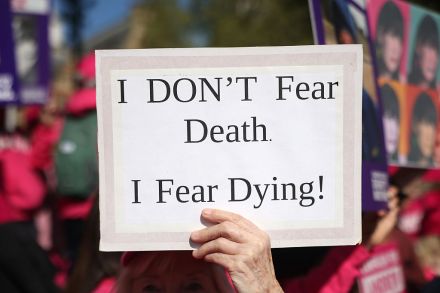
Summertime, and the living isn’t as easy as it used to be. The dying, though, is getting easier, especially if you’re in France, Canada or New York. New York’s MAID law will come into effect August 5: supposedly only for those whose deaths are expected within six months, supposedly through self-administered doses only. But the details don't matter. The important part is this: in New York, the state can now authorize the taking of innocent human life. In early July, the French Senate rejected euthanasia for the fourth time in a row. But the government invoked Article 45 of the French constitution and forced the legislation through, "creating a right" to assisted suicide (as if the state were the divine origin of rights, and could create them at the snap of a finger).