Economy

  • AAPL

    213.43 (+0.29%)

  • BARC-LN

    1205.7 (-1.46%)

  • NKE

    94.05 (+0.39%)

  • CVX

    152.67 (-1.00%)

  • CRM

    230.27 (-2.34%)

  • INTC

    30.5 (-0.87%)

  • DIS

    100.16 (-0.67%)

  • DOW

    55.79 (-0.82%)

UBI will make us miserable

It’s hard to avoid the constant prophecies of doom about how AI is going to take our jobs – with some of these already being borne out. However, AI leaders such as Elon Musk have declared that the population will be supported by Universal Basic Income (UBI) instead, in which the government will financially support everyone through the huge revenues produced by AI. “Universal HIGH INCOME via checks issued by the Federal government is the best way to deal with unemployment caused by AI,” Musk posted on X earlier this year. Musk imagines that we wouldn’t be unemployed but rather liberated – UBI would allow us to live without the mundane tasks of everyday life, like making PowerPoint presentations, writing emails or finding synergies in our deliverables.

Spotlight

Featured economics news and data.

Cutting Britain’s giant welfare bill would be an act of kindness

Does having money really matter that much? There are those, usually with quite a bit of it, who want us to care less about materialism. But, unequivocally, money really does matter – not because of any status it supposedly brings, but for the freedom it buys: freedom to choose how we live and how we look after others. Considering this, it seems that the deep disillusionment with mainstream politicians in recent years stems from a protracted and ongoing period of stagnant living standards over which they have presided. But the truth is that the average person has not got poorer since the global financial crisis. They have got a little bit richer. Employment levels are still exceptionally high. And, both historically and internationally, we are a very rich country.

The dive is alive

Last summer, Covid claimed yet another casualty. The Post Pub, tucked away under a low ceiling on L Street in Washington, was a throwback to a different age, one of noontime highballs and midnight shots on the house. Yet while the past had been swinging, the future for the little downtown watering hole was bleak, and so it announced that it would have to close. For me, the loss was personal. The Post was where I had deepened countless friendships over glasses filled and then unfilled with foamy brown. It was where, in 2018, I looked up at the TV above the bar, saw the words “fire and fury” on the same chyron as “North Korea,” and wondered for a fleeting second whether that was where I might die (it wouldn’t have been a bad end, all things considered).

dive
New York

Bring back New York

New York is back. It’s so back. It’s extra back. It’s better than ever. It’s really not. I’ve been a New York supremacist my entire life. I’ve been to your city. Your city is fine. Your city is not New York City. Your city has the one deli, the one restaurant, the one street. My city has them all. But in the time of “equity,” the best city is being brought down to size. My teen years were spent in the bad old New York. Drinking on Ludlow Street when it had one bar, going to Limelight on Wednesday nights, hanging out with squatters in Tompkins Square. New York was in peril and as I smoked weed in front of police officers on St Mark’s Place, I knew it. Everyone carried a weapon and looked out for deranged people who might push you on the tracks. That was life.

How is the new Gawker so dull?

Gawker returned in 2021 with the air of a drunk stumbling back into a party he had never been invited to. Leah Finnegan, the new editor, admitted that the brand was “toxic” but appealed to the reader to keep “an open mind and an open heart.” (What is this? Gawker or an e-celeb issuing an apology video over a sexual harassment scandal?) Me, I was biased. I hated Gawker. The original site was a hive of mean-spirited moralists. The average Gawker employee was the sort of person who would post revenge porn while lambasting people who mildly transgressed against speech codes. Their writing pioneered the sort of effortful indifference that still leads Brooklynites to claim that people are “having a normal one” and things are “like, er, yikes”.

gawker

Can protectionism bring back my father’s world?

My father was born in 1948. He’s the same age as Jackson Browne: ’65 I was 17, ’69 I was 21. His plan was to graduate from his Western Pennsylvania public high school and join the Marine Corps. The local draft board came damn close to saving him the trouble of enlisting. But near the end of his high school career, it was discovered that his girlfriend was “in a family way.” His parents briefly floated the idea of obtaining an illegal abortion. Fortunately, my 17-year-old father, his soon-to-be in-laws, and his Episcopal priest (in those days such men could be depended upon) stood firm. He and his girlfriend were married. Soon after, my half-brother was born and my father enrolled in an apprenticeship program with the International Brotherhood of Electrical Workers.

Inflation stays for the holidays

No issue has been more politicized over the last six months than the sudden reemergence of inflation. For those keeping score at home — and many of us are whenever we buy our groceries — the latest report puts the current inflation rate at 6.8 percent, the highest since 1982. How one perceives the inflation threat depends as much on one’s political beliefs as it does on economics. Many conservatives are inclined to see this inflation as a more permanent fixture of the economy, believing it to be a consequence of the ongoing profligacy of the Biden administration. Democrats, in contrast, have tended to characterize the phenomenon as largely transitory and more a result of ongoing supply issues related to the pandemic.

The media will never apologize for going all in on Jussie Smollett

No one forced mainstream media outlets and cable news channels to go all in on Jussie Smollett’s fantastical tale of being mugged in subzero temperatures at two o’clock in the morning by two mysterious MAGA-hat-wearing perpetrators in January 2019. “The Racist, Homophobic Attack on Jussie Smollett Is America's Endgame” cried GQ in one of several instances of the mainstream press abandoning all journalistic ethics (again) or skepticism in favor of political confirmation bias. Once again they handed a giant bat to Donald Trump and others on the right who were accused of being second-hand enablers of the Smollett attack — and now, rightly, they’re being smashed for it.

jussie smollett

CNN in crisis

Cockburn is finally allowed to travel internationally again and he is quite chapped that his airport bar bourbons will no longer be paired with a side of CNN. It was, in fact, the only time he would indulge in the network’s antics. But based on the recent headlines about the poorly rated cable news channel, the loss of its airport network should be the least of CNN’s worries. Primetime anchor Chris Cuomo, who was ousted from his show last week over revelations that he was deeply involved in his brother’s public response to sexual harassment allegations, is reportedly planning to sue the network for the rest of the money from his contract. This is bad news for CNN, which is now quietly investigating a sexual misconduct accusation against Chris.

cnn

Why Trump is getting in on the SPAC boom

This weekend, Donald Trump announced that his nascent digital-media company, Trump Media & Technology Group, had secured $1 billion in investment from various unnamed sources, as part of an effort to become publicly traded. Shortly after, it was revealed that Representative Devin Nunes was set to leave Congress to become the firm’s CEO. The announcement comes three months after the special-purpose acquisition company called Digital World Acquisition Corporation listed publicly to little fanfare. The SPAC, sponsored by Miami-based financier Patrick Orlando, joined more than 400 other “blank-check” companies that raised money in the first three quarters of 2021.

spac

The Federal Reserve is still political

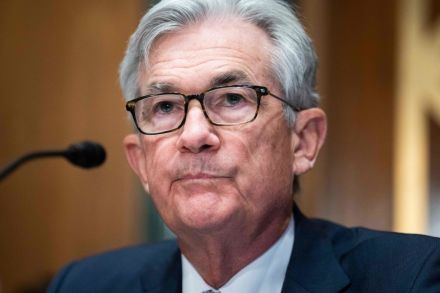
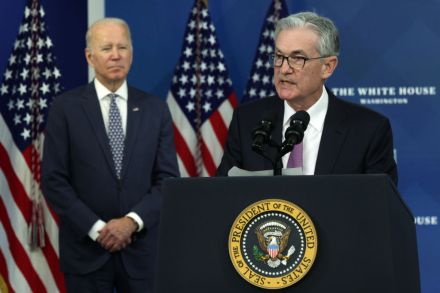
President Joe Biden’s re-nomination of Jerome Powell as Federal Reserve chairman came as no surprise to financial analysts. Powell remained the most likely candidate given his ability to schmooze and glad-hand with politicians within and outside the administration. He earned the title of “best bureaucrat in Washington, DC” by receiving endorsements from both National Review and the American Prospect despite their divergent policy views. A corresponding vote in the Senate seems preordained, unless Massachusetts Senator Elizabeth Warren gets her way and forces a new pick. “Reappointing Powell is the safest route here,” the Cato Institute’s Norbert Michel told me in an email after Powell’s nomination on Monday.

The death of the phone call

Scientifically, the jury is still out on whether women are better multitaskers than men. A 2013 study suggested that women do, in fact, outperform men, while a 2019 German study found no demonstrable differences between the sexes. In my entirely unscientific opinion, I think the stereotype is real. Women are engaged in all kinds of things at the same time. At any given moment, I’m engrossed in my work while also contemplating the contents of my freezer, making a mental note to order more diapers, and simultaneously clipping my daughter’s toenails. A New York Times piece on why women do the household worrying described a woman’s mental load as a “combination of anxiety and planning that is part of parenting.

zoom
Netflix

Netflix’s Chappelle of hate

The difference between what I call accuracy and right-side norms within newsrooms is simple. Accuracy norms require journalists to get to the truth. Right-side norms require journalists to prove they’re on the “right” side of controversies. If this includes obscuring or spinning certain facts, so be it. For reasons ranging from politicization to the gutting of smaller and traditional outlets, most American journalism now adheres to right-side norms. Consider the Dave Chappelle controversy. If you don’t yet have an opinion about the jokes Chappelle makes about transgender people in his Netflix special, The Closer, watch it to get them in full context. There’s been enough bloviating about the jokes themselves.

PEN

Black tie in NYC

Visiting New York for my first black-tie dinner since the onset of the pandemic — a benefit for PEN America, the writers’ organization dedicated to free expression and the promotion of literature — I open my suitcase to discover I am sans black tie. I hit the streets, slaloming through crowds of unflappable Manhattanites who have surely witnessed stranger sights than a frazzled man in a mulberry tuxedo, desperately searching for a cravat. To my shock, Neiman Marcus is out of bowties. I purchase a black necktie. On my way out the door, another customer comes in. “Where are your bowties?” he asks aloud. “You won’t find any here,” I volunteer.

Supply chain for dummies: a fairy tale

Joe Biden cheerfully told Americans that most of them are too thick to understand what a “supply chain” is. Naturally, he understands it thoroughly. You can see with your very own eyes how well he has handled it. Since, as Joe said, you must be wondering why so many shelves are empty, I’m here to explain. Following the president’s wise advice, I will use small words and a simple story. Let’s begin in the good ol’ days, not too long ago, when the shelves were magically full. The story begins in a land ever so far away, where happy people worked and worked to make Christmas toys for children in Kansas. When they finished making the toys, they placed each one in a little box and then placed lots of them in a great big box.

supply chain

The trouble with unrealized capital gains taxes

No one knows what will come out of the sausage making now going on up on Capitol Hill, but let’s take a look at one proposal to raise money to pay for some of the cost of the reconciliation bill. At the moment, capital gains are taxed only when the asset is sold or the owner dies. (The estate tax is just a tax on capital that is triggered by death rather than by sale.) Oregon senator Ron Wyden proposes that they be taxed every year whether sold or not. Unrealized capital gains are certainly a tempting target. After all, for people like Bill Gates and Jeff Bezos, practically their whole, vast fortunes are capital gains, the cost basis of their stock in Microsoft and Amazon is, at most, a few cents a share.

ron wyden unrealized capital gains tax

The supply chain crisis that stole Christmas

Who knew our relationship with China would be responsible for ruining not one but two Christmases? At least this year we had a bit of warning. Our own vice president told us of the current supply chain issues back in August. While most Americans were worried about President Biden’s botched withdrawal from Afghanistan, Vice President Kamala Harris was in Singapore discussing a different topic altogether. “The stories that we are now hearing about the caution that if you want to have Christmas toys for your children it might be the time to start buying them because the delay may be many, many months.” For once, Kamala was correct. Last year, in the middle of the pandemic, Americans had very different concerns.

supply chain

Who’s targeted by the $600 IRS reporting requirement?

Tucked away in the reconciliation bill now bogged down in Congress is a requirement that banks report the annual deposits and withdrawals from every bank account that has activity of more than $600 a year. It would not list individual transactions, just the total money flow in and out. Ostensibly, this is to catch rich people who have been under reporting income. Secretary of the Treasury Janet Yellen gave as an example: “High-income individuals with opaque sources of income that are not reported to the IRS, there's a lot of tax fraud and cheating that's going on.” Wages, salaries and fees are already reported to the IRS through W-2 forms. So is investment income. That sort of income is what a large majority of American families depend on.

irs

The numbers game

The most important macroeconomic development of the last three decades has been the extraordinary growth of the Chinese economy. In 1990, it was largely a subsistence peasant economy with a negligible footprint in world trade. China now provides the largest share of world exports, and by some standards has already become the world’s largest economy. In 1990, the wage of an average Chinese worker was perhaps 1/40th of that of an American worker. By 2020, it was just about a quarter: a tenfold gain in just 30 years. Before the 18th century, all societies were basically subsistence peasant agricultural societies with a small upper layer of landowning nobles and clerics. Then the Industrial Revolution began.

inflation labor
border

Whipping up a crisis

'It’s a little thing, but a big little thing.’ I’ve been using this not-exactly-eloquent phrase lately to describe a category of observation that could be written off as nitpicking, but which isn’t, really. If you notice enough big little things, you might just be able to explain how the world works. One big little thing I’ve been thinking a lot about lately comes from ‘Another Crisis at the Border’, the September 27 edition of The Daily, the blockbuster New York Times podcast. The episode was hosted by Astead Herndon and was mostly a conversation between him and his fellow Times reporter Michael Shear. They discussed the growing crisis at the US/Mexico border, and the large group of mostly Haitian migrants fleeing political and natural disaster.

A brief history of embarrassing economic forecasts

Many are familiar with the old aphorism that in real estate the three most important determinants of value are location, location, location. Things are a bit different in making economic forecasts and predictions, where two variables matter most: accuracy, of course, but also timing. Regarding accuracy: a lengthy list of economists — some quite eminent — have ended up with egg on their faces because of inaccurate predictions and forecasts. In this regard, there’s the observation by the distinguished economist Irving Fisher, 92 years ago today on October 16, 1929, that stock prices had reached 'what looks like a permanently high plateau’. Since the Great Crash occurred two weeks later, Fisher’s timing wasn’t so great either.

forecasts

The global elite is egregiously rich and corrupt — and you’re paying for it

Deep down, everyone has always known that the wealthy and powerful hide away vast quantities of often ill-gained money in far-flung tax havens. In recent years though, with the Panama and Paradise Papers, the public has had chances to see how the clandestine industry that helps the elites do so operates. Another such opportunity has come knocking with what is being called the biggest leak of offshore data in history. The Pandora Papers consist of almost 12 million files that lay out the secret financial affairs of almost three dozen world leaders and hundreds of high-level public officials from more than 90 countries. The details make for sensational headlines: the king of Jordan has a hidden $100 million real estate empire (including a seven-bedroom mansion in Malibu!

pandora paper elite