Books

Evie Wyld’s latest novel is unsettling yet hopeful

Evie Wyld’s powerful fourth novel opens from the perspective of Max, a ghost who haunts the south London apartment where he lived with his girlfriend Hannah. A ghost story is new ground for Wyld, the multi-award-winning Anglo-Australian writer, but her signature traits are immediately evident — poetic observations of unusual details; a pervasive sense of grief and palpable trauma, leavened with a wry sense of humor (Max notes his "strong urge to file a complaint" about being a ghost); and an intricate plot that compels readers to delve into complex past events.

Wyld

The Einstein family atrocity

What’s in a name? Well, if it’s Einstein, quite a lot. For Roberto Einstein, it was to prove a devastating connection, even though he had lived in Italy all his adult life, was married to an Italian Christian woman, Nina, with whom he had two children who regularly attended church, and was father to two motherless nieces who were brought up Catholic. In 1944, the increasingly paranoid German occupation decided that Roberto’s whole family was Jewish and inextricably linked to the world-famous Nobel prizewinning scientist Albert Einstein, now in America and high on the Nazi death list. There were connections, of course. Roberto and Albert were first cousins — their fathers were brothers — and were both committed atheists.

Einstein
romantasy

Romantasy, the hot new literary genre du jour

A friend recently found himself trapped on a plane next to a young woman reading a Kindle bedecked with stickers of dragons and pointy-eared, hunky men. The font size was so large it was impossible not to see the sexually explicit text. He observed, “I was reading The Lord of the Rings; her book was more along the lines of I’m the Lord of Your Ring. I’ve never felt so uncomfortable.” Welcome to the cultural phenomenon of romantasy — a newly mainstreamed trend fueled by TikTok, or rather BookTok. It’s a shame there isn’t room in the portmanteau name for “sex,” which is a crucial ingredient in the genre, made clearer in the alternative informal term “fairy porn.

Pynchon

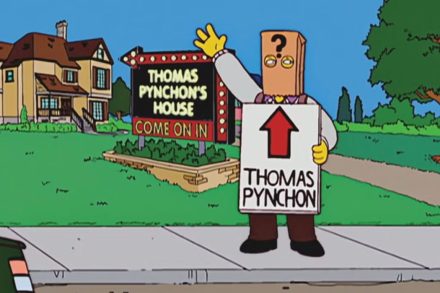
Inside Thomas Pynchon’s most underrated novel

Atop the Almaden Tower in downtown San Jose — the world headquarters of Adobe Systems Inc. — sits a singular art installation. Four amber wheels rotate every few seconds in a seemingly innocuous and frankly nonsensical digital display. The installation, known as the “San Jose Semaphore,” is the brainchild of the data-driven media artist Ben Rubin and first appeared — or began transmitting — in August 2006 to the mass bamboozlement of passersby. What was going on, they cried? Was it that most millennial of things — a sign? For those less likely to be beguiled by some concealed piece of chicanery, the circles were little more than frivolous decoration, another example of Adobe splashing the cash on some geometric garnishing.

Lodge

David Lodge, the master of Anglo-American campus humor

"Literature is mostly about having sex and not about having children.” So said the British novelist, occasional screenwriter and literary critic David Lodge, who died at the beginning of 2025 at the age of eighty-nine. Lodge, who had suffered from encroaching deafness for several decades, had not, in truth, been a major literary figure for a considerable period before his death. This retreat into obscurity had not been helped by a trio of memoirs, beginning with 2015’s Quite a Good Time To Be Born, which perplexed critics — including this one — with their dour, downbeat and decidedly un-humorous tone. Few would have known, from reading them, that their author had once been regarded as one of the late twentieth century’s most accomplished comic novelists.

Wong

Veteran journalist Edward Wong on his memoir of food and feud

From 2008 to 2016, Edward Wong reported on China for the New York Times, heading up its Beijing bureau. Last year, the veteran journalist, now the Times’s diplomatic correspondent, published his first book: a blend of family memoir, narrative history, political observation and personal reckoning. At the Edge of Empire tracks Wong’s father, Yook Kearn Wong, as he moves from fervent support of the Chinese Communist Party and its ideological goals to disillusionment and disappointment. It is also a book about what makes an empire. Born in Hong Kong before moving to Guangdong Province as a child, after joining the military as a young man Yook Kearn was posted to remote Xinjiang province, in China’s northwest corner.

culture

This month in culture: March 2025

With Love, Meghan Netflix, March 4 If there were an award for the year’s least eagerly awaited show, Netflix’s With Love, Meghan would have to be in the running, if not quite the clear front-runner at this early stage of the year. Even the synopsis — “Meghan Markle invites friends and famous guests to a beautiful California estate, where she shares cooking, gardening and hosting tips” — summons up gasps of horror. The footage that has arrived via trailer indicates that this will be as vacuous as an Instagram reel brought to full, unlovely life, with its uniquely dreadful hostess conveying nothing so much as an onscreen vacuum where any kind of charm, grace or likability should be.

Masa Son: the world’s most reckless investor

For a few days in February 2000, Masayoshi Son was the richest person in the world. A risk-taker and showman, universally known as Masa, he had long been disdainful of Japan’s staid "salaryman" business culture and was riding the wave of dot-com mania. His company SoftBank, founded in 1981, had bet big on the growth of online shopping. The bullish mood didn’t last, and Masa slunk away from the limelight — but only for a while. A techno-optimist, the now sixty-seven-year-old has repeatedly reinvented himself, urging doubters to see beyond the immediate: "You’re limiting your field of vision to thirty years… Start bold and think 300 years ahead.

Masa

Ali Smith’s latest novel falls flat

"Gliff" is a word which can mean "a short moment," "a wallop," and "a post-ejaculatory sex act;" to "dispel snow," "to frighten," and to "escape something quickly." It’s "really excitingly polysemous," says one of Ali Smith’s characters. It’s certainly an apt title for a book which can’t seem to define itself. At its center are two children, Briar and Rose, who have been abandoned. Their mother is absent, caring for a sick sister, and their other responsible adult leaves to find her. The children exist in a stock dystopian world (people are surveilled by CCTV cameras and zombified by screens) with a twist: they repeatedly wake up to find that a red line has been painted around their house or camper van. They are on a list of "Unverifiables.

Gliff

Bill Clinton’s latest memoir sees him at his chirpiest — and most combative

In February 1974, the British prime minister Edward Heath, then facing one of his country’s cyclical economic crises, called a snap general election. The result was close; Heath’s Conservative Party won the popular vote but secured fewer parliamentary seats than the Labour opposition. After power-sharing discussions broke down, Heath resigned from office. A fifty-seven-year-old bachelor without a London home of his own, he lodged for the next several months at a small Westminster flat owned by his political secretary Timothy Kitson. The man who had served as his nation’s head of government for the previous four years was left with a typist, a single daytime detective and a part-time driver at his disposal.

Clinton
Peterson

Wrestling with Jordan Peterson

Jordan Peterson is one of those curious figures who has, thanks to the mysterious operations of the internet, been thrust into the limelight, willingly or not. While he has become a locus of hatred for certain left-wingers, thanks to his implacable attitude toward “woke” phenomena, in reality his supposedly controversial advice amounts to little more than that young people should work hard and take responsibility for their actions. Even the bolshiest socialist couldn’t really disagree. His 12 Rules for Life is a bestseller on both sides of the Atlantic, and he has a large and adoring fanbase.

Cher

Cher should stick to what she knows best

The worst celebrity memoirists write first-person Wikipedia pages. Like Michelangelo carving a beautiful posterior out of Italian Carrara marble, the best celebrity memoirists edit their lives into tawdry yet moving epics. When they work, celebrity memoirs are the Warhols of American literature. When they fail, they’re the literary equivalent of a CVS receipt: boring and destined for the trash. Cher: The Memoir, Part One falls somewhere in between. It takes a miracle to reach Cher’s narrative peak. For more than a hundred pages, she details her childhood criss-crossing America as her mom marries and divorces man after man. I lost track of how many jerks Cher’s mother married, but according to Google, she married six different men (Cher’s heroin-addict biological father twice).

Goethe

Why Goethe matters

Johann Wolfgang von Goethe bears one of the most famous names in world literature, though he is largely unread by English-speakers. He is most closely associated with the novel and dramatic form, so many would be surprised to know that he primarily spoke of himself, for much of a long life that spanned from 1749 to 1832, as a scientist. He was a pioneering exponent of the science of evolution, and in two wonderful poems, The Metamorphosis of Plants and The Metamorphosis of Animals, he explored his belief that nature evolves from simpler, earlier life forms. This, rather incredibly, was seventy or eighty years before Charles Darwin began to write.

culture

This month in culture: February 2025

Kinda Pregnant In theaters February 5 Amy Schumer stars as Lainy, a woman who dons a prosthetic pregnant belly when she grows envious of her best friend’s maternal glow. Once inside the secret world of mommies, Lainy learns how far she will go to stay close to her friends while being pulled toward a new love — Will Forte, who assures Lainy that she’s the least pregnant person he’s ever dated. Striking the balance of irreverence and heart Schumer is known for, Kinda Pregnant is buoyed by an accomplished comedic cast and backing from Adam Sandler’s Happy Madison Productions.

The Killer Angels still sings

“Very fine people on both sides” was one of the first Trumpisms to enter our national lexicon. In the heady days of 2017, when Donald Trump’s presence in the White House was still a novelty and liberal resistance at its peak, the removal of a statue of Confederate General Robert E. Lee in Charlottesville, Virginia precipitated a full-blown political crisis. Trump, in his inimitable fashion, clumsily suggested that those protesting the statue’s removal had a point, an argument that was widely interpreted as proof of his secret affinity for Confederate sympathizers, white supremacists and other far-right fanatics. In truth, Trump was awkwardly defending a version of the Civil War that has lately been eclipsed in our national consciousness. Is Trump a history buff?

killer angels

The best film, TV and music of 2024

Film The Substance Seeing Dune: Part Two in IMAX, with the floor shaking as Paul Atreides’s forces charged the palace was my second-best cinema-going experience of the year. Trumping it was watching a DC audience recoil every other minute at Coralie Fargeat’s body-horror The Substance, a film that nods to Stanley Kubrick and David Cronenberg while declaring itself the most original of 2024. Two-thirds of the way through, I stopped wincing and started laughing, probably because my body didn’t know how to react. The film is a brutal parable of female self-loathing and insecurity — exacerbated, of course, by a venal male-led system, which Dennis Quaid’s producer Harvey personifies in a manner as grotesque as any of the movie’s gross-out special effects.

2024

An insightful account of America’s decline

I wouldn’t have thought a book about America’s decline would cause me to laugh out loud, but having enjoyed its author Matt Purple’s work for years now (full disclosure: he’s a personal friend and former Spectator colleague), I should not have been the least bit surprised that his debut book is as funny as it is insightful. Decline from the Top: Snapshots from America’s Crisis and Glimmers of Hope is a veritable joy to read. Though he declares himself to be a “cranky conservative,” Purple’s humor and wit offer a diagnostic examination of the American condition that exudes warmth and obvious heartfelt concern for our nation’s wellbeing.

Purple
Mailer

How Norman Mailer changed the face of biography

Many labels leap to mind in association with the prolific and controversial Norman Mailer, who died in 2007, but “biographer” is not typically one of them. He was not considered a serious practitioner of the genre in the same sense as Edmund Morris, Ron Chernow or his friend Doris Kearns Goodwin. And yet, as his own official biographer J. Michael Lennon asserts to me, “Mailer became a major biographer in the last half of his career.” Thirty years ago, two intriguing books by Mailer appeared just a few months apart: Oswald’s Tale: An American Mystery and Portrait of Picasso as a Young Man.