Books

Will Tripp keeps it short

Have you met Will Tripp? He’s the pugnacious dwarf lawyer who starred in Harry Stein’s Will Tripp: Pissed Off Attorney at Law. That was probably the funniest book of 2014, certainly the most amusing novel I read that year. Will, whose credo is ‘Shut up, and get on with it’, was busy paying his way through law school by means of his athletic prowess, sort of. He specialized in being tossed back and forth by the inebriated patrons of a local bar until some do-gooding crusader took time away from battling against secondhand smoke and carbon emissions to intervene to Save the Dwarfs and got the sport of dwarf tossing declared illegal. Will had to find new employment, inspecting sewers.

will tripp

I was fathernapped

My body is limp and naked but for a thin, sullied sheet strewn around my waist. I’m on my back, my arms hang outstretched in a submissive crucifixion. My hair is matted and caked with dried blood around my right ear, my eyes clenched shut with fear. The downpour is relentless. Then my body flinches, my nostrils flare. Small expressions pop and twitch as I recover consciousness. The invisible straitjacket of sleep paralysis loosens. The dream recedes. And then my nightmare begins. Desperately parched, I pry open my cracked lips to take in the water, only to be shocked by its bitterness. My senses now tripped into awareness, I peer up and shock turns to disgust as it dawns on me that the rain is cascading from a penis protruding from a tangled forest of pubic hair.

greg ellis children

Is caste the American class system?

John Dollard (1900-80), trained in sociology at the University of Chicago and in psychoanalysis at the Berlin Institute, brought the sensibility of a novelist to a five-month study in Indianola, Mississippi, which he wrote up as Caste and Class in a Southern Town (1937). Dollard went south, but what he found applied in the other direction: The ‘caste line is drawn in the North as effectively, if not as formally, as in the South,’ which meant ‘We are still deliberately or unwittingly profiting by, defending, concealing or ignoring the caste system.’ Caste, Dollard argued, had far-reaching implications: ‘Our social system has come under world inspection and is literally being looked at by several billion people or their competent agents.

caste
crichel

Men of letters

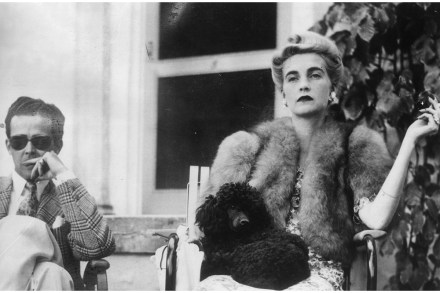
In the spring of 1945 three men pooled their resources to buy Long Crichel House, a former rectory built during the reign of Queen Anne in a secluded Dorset village. Desmond Shawe-Taylor and Edward Sackville-West were highly influential music critics, while Eardley Knollys, a former gallery owner, was now assistant secretary to the National Trust and a painter. The idea was for the three friends to live communally but each have his own part of the house where he could work undisturbed and enjoy some privacy. The house was in fact large enough to accommodate not only a live-in butler and cook-housekeeper but, from 1949, a fourth partner, Raymond Mortimer, the leading literary and art critic of the day.

Let’s just go ahead and ban books

We should save ourselves some time and ban all books. They’re too much trouble. For example, Elin Hilderbrand, author of Golden Girl, hates Anne Frank. We know this because a teenager in the novel quips that hiding in a friend’s attic for the summer would make her 'like Anne Frank’. Didn’t Hilderbrand get the memo? Teenagers are not allowed to make jokes (or mistakes). One presumed reader wrote to the book’s publisher, 'As a Jewish woman, one who lost 18 members of her family in the Holocaust I'm disgusted in you as a publisher that you allowed that line to be published. It's inexcusable.’ Good for her! Hilderbrand was clearly insulting Anne Frank’s legacy, making excuses for the Holocaust and pledging her allegiance to Hitler.

unread library

Nature is healing

Ignoring the padlocked gate, my six-year-old son Nicholas and I climbed through a break in the metal fence and pushed into the mesh of undergrowth. This was the site of Ducker, the open-air swimming pool that once belonged to Harrow School in London. Here the young Winston Churchill romped (naked, since trunks were for prefects), as, in his own day, did my dad. When I arrived at Harrow in the 1980s, the pool — far bigger than Tooting Bec Lido, which is now the UK’s largest — had just been abandoned. It was covered with graffiti, the haunt of skateboarders. Returning in 2021, I looked for changes wrought by three decades of neglect. Google Maps showed a J-shaped artificial lake, 98ft by 492ft.

nature

The soul of Flannery O’Connor

Since the racial riots last summer, Flannery O’Connor has been scrutinized by literary critics and activists for reasons wholly unrelated to her literary artistry and her formidable oeuvre, whose size, though not large, is remarkable for a writer who died at the age of 39 after having been diagnosed in her mid-20s with lupus. The abruptly renewed interest in Miss O’Connor could be said almost to amount to an O’Connor revival were it not focused on a single question: ‘Was Flannery O’Connor a racist, or was she not?’ Attempts to answer it have involved an evaluation of her character based on her novels, stories and voluminous correspondence, and led in one instance to the critical conclusion that she was ‘not a saint’.

O'Connor
john mcwhorter words

Parse the curse

We all know that there are some things we shouldn’t say. Words that are mean-spirited and injurious, potty-mouthed expressions when we stub our toes, hateful things that can drip off the tongue like acid. But no words are better equipped to capture the changing landscape of a culture than those that aren’t supposed to be uttered. At a moment where everyone from high school principles to New York Times journalists are struggling with the latest iteration of language rules, John McWhorter, an associate professor of linguistics at Columbia University is out with a thoughtful, deeply researched, and downright funny book about swears. Nine Nasty Words: English in the Gutter — Then, Now, and Forever wrestles with two thorny, topical questions: what can’t we say?

Stacey Abrams’s new novel is a love letter to lawyers

A politician publishing a novel is a bit like the lead singer of a rock band declaring that not only are they going to release a solo album but it is going to express their newfound interest in electronica. Expectations are low — or high depending on your appetite for other people’s failure. Still, for all the mean things you could say about Stacey Abrams’s new legal thriller While Justice Sleeps, you could say some kind things as well, the foremost being that it is not cynical. This is not some kind of botched cash-in. (For that, look forward to my editors asking me to review Hillary Clinton’s forthcoming novel State of Terror.) Abrams loves to write.

stacey abrams

Is Sohrab Ahmari a Satanic ogre?

Sohrab Ahmari is an ogre sent by Satan to annihilate American freedom. At least, that’s the reputation he has with liberals of the more excitable sort. His new book ought to soothe their twitchy nerves. The Unbroken Thread is an easy going, ecumenical, rather cosmopolitan tour of 12 moral questions and select thinkers who responded to each of them. ‘My primary purpose,’ writes our implausible theocrat, is ‘not to offer definitive answers, drawn from any one particular tradition, but to explore the possibility that our contemporary philosophy might be wrong in crucial respects.’ Ahmari has been much vilified for his criticism of Drag Queen Story Hour, an event in which crossdressers introduce themselves to children in public libraries.

ahmari
berlin

Berlin has always been a Faustian metropolis

Each time I return to Berlin, the wonderful, awful city where I spent the best days of my misspent youth, I pay a sentimental visit to Grolmanstrasse, where my German grandparents used to live. There isn’t much left to look at. Their apartment block was destroyed in 1945 in the Battle of Berlin. The site where it stood is now occupied by a children’s playground. For me, that empty space seems to symbolize the way Berlin has changed — mainly for the better, but at enormous human cost. So much has vanished — not just the buildings, but also the people who inhabited them. For my children’s generation, Berlin is a party town. For me, it’s a city full of ghosts. It is these ghosts that keep bringing me back to Germany’s battered, bombastic capital.

Read all over

In the 1880s a new group of women was entering newsrooms. Not content to write society sketches or cover the fashionable hats of the season, they went for bold reporting — often going undercover or participating in other dramatic ‘stunts’. The antic that launched Nellie Bly’s career in 1887 was getting admitted as a patient on Blackwell’s Island in New York, then an insane asylum for women. She had told the editor of the New York World she would do anything fora job on the paper, and this was what she was assigned. She went to a boarding house under an assumed name, pretended to be unhinged and was duly committed. Rescued after 10 days by a representative from the World, her exposé of the indignities suffered by patients in the asylum was a sensation.

sensational

Ever the Twain

Mark Twain’s work contains in itself pretty much all of 19th-century America. This is America as she was when still, geographically and socially, more a frontier society than not; before she became heavily industrialized, urbanized and suburbanized: increasingly convergent upon the European societies from which she was descended. Twain’s America is, in short, America when she remained a unique place; even as she was evolving with lightning speed from her earlier self into something approaching her present one. Mark Twain made an international reputation for himself with the publication in 1869 of The Innocents Abroad, a travelogue that recounts a trip of many months through Europe and the Middle East.

twain
habsburg

Radetzky marches on

‘The Radetzky March’ was composed by Johann Strauss the Elder as a tribute to Field Marshal Joseph Radetzky von Radetz. An aristocrat of Czech origin, he was one of the fiercely conservative soldiers who gave the Habsburg Empire its bad name. First performed in 1848, the year of revolt in Europe, the ‘March’ was an immediate success. Austrian bands men were playing it at the battle of Königgraetz in 1866, fought against the Prussian Kaiser. For the first time, the Prussians had machine guns, and their rapid fire bloodied the white uniforms of the Austrians. Prussian victory condemned Austria to be the lesser of the two German-speaking nations, and on the losing side in the two world wars.

Spells and bindings

In 1791, Isaac D’Israeli, father of future prime minister Benjamin, published his most famous work, the Curiosities of Literature, a collection of freewheeling mini-essays on whatever literary topics happened to tickle their author’s fancy: ‘Titles of Books’, ‘Noblemen Turned Critics’, ‘On the Custom of Saluting after Sneezing’, ‘Cicero’s Puns’. One of its joys is its capaciousness — completely unsystematic, yet seeming somehow to touch a little on everything. The book is long, but the essays are rarely more than a couple of pages, sometimes less.

library

Fear thy neighbor

In an age of rancor, one thing we can all agree on is that it makes a certain amount of sense to fear the police. What other force in civil society is authorized to intrude on private life, and deny its benefits and freedoms, in quite the same way? It may be the law-abiding members of society who fear the police most palpably. While actual criminals carry knowledge of their own guilt, the innocent must live with the knowledge of how easily we could be wrongly accused, misidentified or railroaded. Alfred Hitchcock did more than any other popular artist in the last century to help form a certain image of the police in the public consciousness.

hitchcock

The plot against Philip Roth

Hard to avoid the suspicion the latest clamor for Philip Roth to be canceled isn’t just a marketing gimmick by the publishers of the great man’s latest biography. #MeToo repackaged as a means to shift product, in other words. For what could we possibly now have learned about the author, just three years after his death, that would cause a meaningful reappraisal of his position — with Saul Bellow and Don DeLillo — at the pinnacle of modern literature? That he was very sexy? Is that it? ‘God, I’m fond of adultery,' he is said to have said in Blake Bailey’s Philip Roth: The Biography, apparently while prowling London on the hunt for Chinese prostitutes. Pass the smelling salts.

philip roth

The reason of Jordan Peterson

If only Hamlet had known Jordan Peterson. To be or not to be, Dr Peterson believes, is indeed the burning question — but it’s a question that can be resolved decisively in favor of Being with a capital B. And he’s willing to walk any modern-day Hamlet who cares to listen through the math. This reasoned position in favor of existence is at the heart of Jordan Peterson’s latest book, Beyond Chaos: 12 More Rules for Life. It’s also, I’d argue, at the heart of his popular appeal. Sure, his undeniable charisma doesn’t hurt; and of course, he’s brilliant, well-read and articulate. But so are many other public intellectuals.

cultural marxism jordan peterson

Things go flying

There are fashions in the paranormal as in everything else. Since the famous Enfield hauntings of the late 1970s, poltergeists seem to have gone quiet, or at least unreported; but before then they were everywhere. In 1938, poltergeists kicked off in Thornton Heath, Surrey, and a Jewish Hungarian journalist and psychic investigator, Nandor Fodor, was alerted to strange happenings in the home of a 34-year-old housewife there. The list of happenings is familiar in all poltergeist stories. Furniture moves, light fittings shatter, crockery, money, knick-knacks, even small pictures are thrown through the air, sometimes seemingly aimed directly at individuals.

alma fielding

Amazon’s book bullying is just the latest act of woke intolerance

The house of the Lord, we are told, has many mansions. So does the house of wokeness. If you are Coca-Cola, you address flagging sales by embarking on an ad campaign (and internal training regimen for employees) urging those drinking its sugar water to 'try to be less white', i.e.,  'less arrogant, less certain, less defensive, less ignorant and more humble'. If you are Disney, you scour your cartoons for images, situations, or language that worried white bureaucrats imagine might cause offense to anyone on this week’s list of designated victim groups. If you are Dr Seuss Enterprises, you cashier six of your books because they 'portray people in ways that are hurtful and wrong'.