Books

Amanda Knox’s new memoir asks what lies next

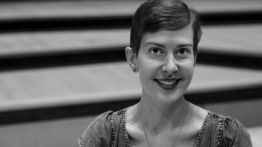
The question at the heart of Amanda Knox’s latest memoir Free: My Search For Meaning is a simple one: what are the life prospects for an exoneree? It follows 2013’s Waiting to be Heard, which detailed the Seattle student’s imprisonment in Italy before and after a wrongful murder conviction, and her fight for justice. For anyone who was asleep under a boulder at the time, Knox is the gauche American student who became the target of a media firestorm following the brutal murder of her British roommate Meredith Kercher in Perugia, Italy, in 2007. She was convicted of the crime alongside her boyfriend Raffaele Sollecito in 2009 and freed on appeal in 2011. (Kercher’s actual murderer, Rudy Guede, was convicted in a fast-track trial in 2008, and released in 2021.

amanda knox
isherwood

The double life of a single man

In the late 1930s, the author W. Somerset Maugham said that Christopher Isherwood “holds the future of the English novel in his hands.” But the younger writer was about to leave London for Los Angeles. He and his close friend W.H. Auden emigrated in January 1939. En route, their ship was beset by a blizzard. It arrived in New York looking like a wedding cake, in Isherwood’s evocative description. Their journey to the New World was a wholescale rejection of what Isherwood had long thought of as “the Test.” For earlier generations, this had been the Great War (Isherwood’s father, Frank, was killed at the Battle of Ypres). For them, it was to be World War Two. Auden and Isherwood would be damned as cowards, but Isherwood had already found other interests.

dickens

A Charles Dickens patchwork

What connects pistachios, hay, and Mr. Krook in Charles Dickens’s Bleak House? Asked this question on a recent episode of the British TV quiz show Only Connect, the contestants noted all three are prone to spontaneous combustion, although, as one player exclaimed, “I can’t imagine that happening in a novel, but things were different back then.” Novels contain novel imaginings, but people back then were equally skeptical. Dickens eventually had to defend the death of Krook, the sozzled owner of a rag-and-bottle shop, by listing the historical precedents. He knew a thing or two about a rapid reaction between fuel and oxygen that emits a fiery blaze of energy. By night he walked and walked, to still his beating mind.

Val Kilmer should be more appreciated in death than he was in life

The late Val Kilmer was difficult. That word is a kiss of death in Hollywood, because as soon as it’s murmured that you are hard to work with, your career declines inexorably. Kilmer had directors lining up to say how impossible he was. Joel Schumacher, who made Batman Forever with him, barely stopped kvetching about the actor, calling him “overpaid, overprivileged and psychotic.” Shortly after the film’s release, Schumacher said “He was badly behaved, he was rude and inappropriate. I was forced to tell him that this would not be tolerated for one more second. Then we had two weeks where he did not speak to me, but it was bliss.

Kilmer

A crisp and refreshing account of the apple

In Food for Life, Tim Spector’s book on the science of eating, the author gives the chemical makeup of a mystery food, listing more than 30 scary-sounding E numbers, sugars, acids and chemicals, before revealing that it is an… apple. Sally Coulthard’s book, The Apple, shows that it’s the apple’s complexity as well as its familiarity, that makes it the ideal punchline for Spector, and, for Coulthard, a perfect vehicle to carry the history of how we grow, trade, cook and eat together and take responsibility for each other and the environment (or not).

apple

Apple TV+’s Dope Thief is an ugly mess

LOG is the name of ungraded digital video footage. It’s flat, lifeless, and dark, but that’s fine because you can tweak, tune, and adjust in a way that was never possible with film, fiddling with exposure, contrast, saturation, and so forth. In those days, everything had to look as good as possible on the film. But, with the ability to grade in post, fix visual effects in post, and change backgrounds and designs in post, directors started getting lazy. And eventually, some convinced themselves that ugliness is a distinct stylist choice. It’s not laziness; it’s an aesthetic. I say all this as, in another era — an era with more care — Dope Thief could have been a great show.

Dope Thief

How F. Scott Fitzgerald anticipated our modern age

It has never been easier, or less rewarding, to be a Great Gatsby bore. As the book that is frequently, and speciously, cited as the Great American Novel — perhaps because, at around 180 pages, people have bothered to read it — turns 100 this month, it has become the byword for a certain kind of middlebrow literary appreciation. Even people who are barely aware of the novel know certain images and lines, such as the omnipresent lighthouse, “So we beat on, boats against the current, borne back ceaselessly into the past” and the whole Ralph Lauren-esque visual aesthetic that F. Scott Fitzgerald appeared to anticipate. The novel, published in April 1925, has achieved the impossible by breaking free of the page and reverberating across the world in a kind of endless meta-narrative.

Gatsby

Caroline Calloway wants to give you some advice

Caroline Calloway — “It” girl, Instagram phenomenon, scammer, grifter — wants to give you some advice. Except, like most things in Calloway’s world, it’s not that simple. What she actually wants is for Elizabeth Wurtzel, author of Prozac Nation (1994), to give you some advice. But there’s just one problem: Wurtzel is dead. No matter: Calloway is stepping in, updating Wurtzel’s unpublished advice guide with some of her own insights and social-media savvy. If this unbidden collaboration from beyond the grave sounds farfetched, that’s because it is. Elizabeth Wurtzel and Caroline Calloway’s Guide to Life is about as mad as you would expect from the self-published author of Scammers and no less extraordinary for it. Of collaboration, Calloway knows a fair bit.

Calloway

Scott Turow’s latest novel attempts to understand humanity

Scott Turow’s Presumed Innocent burst into the world in 1987, zinging out of bookstores into bestseller-dom like nobody’s business. It concerned Rusty Sabich, a lawyer who became a suspect in the case he was prosecuting. There were enough twists and turns to satisfy the most Daedalian of labyrinth-makers, and its longevity was demonstrated by its being adapted into a new, Jake Gyllenhaal-starring show last year on Apple TV+. Presumed Guilty’s title plays nicely on its predecessor’s, and also points toward this new book’s consideration of racism within the American justice system. Sabich is now an old man, nearing his eighties. But boy, is he active. We know this because he likes to canoe while stripped to the waist. He chops wood in the outdoors!

Turow

A biography of Lorne Michaels that strays into hagiography

The gilt fell off Saturday Night Live’s reputational gingerbread almost from the moment of its inception. Long before the arrival of Bob Woodward’s Wired: The Short Life and Fast Times of John Belushi (1984) — its antihero dead at the age of thirty-three — whatever luster the show had possessed had been well-nigh obliterated by a tide of scuttlebutt. The girls were (apparently) all bulimics and anorexics. The guys were coke fiends and egomaniacs. Misogyny (exemplified by Belushi’s dislike of sketches written by women) and back-stabbing were endemic; drug dealers sat in on the writing sessions.

Lorne

Why Europe needs to take the Putin threat more seriously

Russia’s war on Ukraine presages a dire future for all of Europe unless Vladimir Putin’s military is decisively defeated. That is the powerful and persuasive argument advanced in Keir Giles’s new book. To appreciate fully the importance of his contentions, you must acknowledge not only Giles’s own status as a supremely well-connected senior fellow at the famed Chatham House think tank in London but even more so the all-star cast of international military luminaries who have publicly endorsed his analysis: the now-retired US generals John Allen and Ben Hodges, UK general David Richards, Australian general Mick Ryan, plus former Estonian president Toomas Hendrik Ilves. Giles’s assertions thus should be taken with the utmost seriousness.

Giles

The courage of Salman Rushdie

I know that our readers have led varied and colorful lives, but I would suggest that few, if indeed any, of you have spent decades cowering under the daily terror of a fatwah imposed upon you by a totalitarian state because of a literary novel that you once wrote. I would also suggest that, when Salman Rushdie — for he had that dubious privilege — emerged from a lengthy, frightening and tedious period of hiding, he chose to immerse himself in the social life of both London and the United States to show that he was not afraid, and that the threats and grimacing of extremists did not mean that he was not entitled to lead his own version of his best life. He was right to do so.

salman rushdie

Evie Wyld’s latest novel is unsettling yet hopeful

Evie Wyld’s powerful fourth novel opens from the perspective of Max, a ghost who haunts the south London apartment where he lived with his girlfriend Hannah. A ghost story is new ground for Wyld, the multi-award-winning Anglo-Australian writer, but her signature traits are immediately evident — poetic observations of unusual details; a pervasive sense of grief and palpable trauma, leavened with a wry sense of humor (Max notes his "strong urge to file a complaint" about being a ghost); and an intricate plot that compels readers to delve into complex past events.

Wyld

The Einstein family atrocity

What’s in a name? Well, if it’s Einstein, quite a lot. For Roberto Einstein, it was to prove a devastating connection, even though he had lived in Italy all his adult life, was married to an Italian Christian woman, Nina, with whom he had two children who regularly attended church, and was father to two motherless nieces who were brought up Catholic. In 1944, the increasingly paranoid German occupation decided that Roberto’s whole family was Jewish and inextricably linked to the world-famous Nobel prizewinning scientist Albert Einstein, now in America and high on the Nazi death list. There were connections, of course. Roberto and Albert were first cousins — their fathers were brothers — and were both committed atheists.

Einstein
romantasy

Romantasy, the hot new literary genre du jour

A friend recently found himself trapped on a plane next to a young woman reading a Kindle bedecked with stickers of dragons and pointy-eared, hunky men. The font size was so large it was impossible not to see the sexually explicit text. He observed, “I was reading The Lord of the Rings; her book was more along the lines of I’m the Lord of Your Ring. I’ve never felt so uncomfortable.” Welcome to the cultural phenomenon of romantasy — a newly mainstreamed trend fueled by TikTok, or rather BookTok. It’s a shame there isn’t room in the portmanteau name for “sex,” which is a crucial ingredient in the genre, made clearer in the alternative informal term “fairy porn.

Pynchon

Inside Thomas Pynchon’s most underrated novel

Atop the Almaden Tower in downtown San Jose — the world headquarters of Adobe Systems Inc. — sits a singular art installation. Four amber wheels rotate every few seconds in a seemingly innocuous and frankly nonsensical digital display. The installation, known as the “San Jose Semaphore,” is the brainchild of the data-driven media artist Ben Rubin and first appeared — or began transmitting — in August 2006 to the mass bamboozlement of passersby. What was going on, they cried? Was it that most millennial of things — a sign? For those less likely to be beguiled by some concealed piece of chicanery, the circles were little more than frivolous decoration, another example of Adobe splashing the cash on some geometric garnishing.

Lodge

David Lodge, the master of Anglo-American campus humor

"Literature is mostly about having sex and not about having children.” So said the British novelist, occasional screenwriter and literary critic David Lodge, who died at the beginning of 2025 at the age of eighty-nine. Lodge, who had suffered from encroaching deafness for several decades, had not, in truth, been a major literary figure for a considerable period before his death. This retreat into obscurity had not been helped by a trio of memoirs, beginning with 2015’s Quite a Good Time To Be Born, which perplexed critics — including this one — with their dour, downbeat and decidedly un-humorous tone. Few would have known, from reading them, that their author had once been regarded as one of the late twentieth century’s most accomplished comic novelists.

Wong

Veteran journalist Edward Wong on his memoir of food and feud

From 2008 to 2016, Edward Wong reported on China for the New York Times, heading up its Beijing bureau. Last year, the veteran journalist, now the Times’s diplomatic correspondent, published his first book: a blend of family memoir, narrative history, political observation and personal reckoning. At the Edge of Empire tracks Wong’s father, Yook Kearn Wong, as he moves from fervent support of the Chinese Communist Party and its ideological goals to disillusionment and disappointment. It is also a book about what makes an empire. Born in Hong Kong before moving to Guangdong Province as a child, after joining the military as a young man Yook Kearn was posted to remote Xinjiang province, in China’s northwest corner.

culture

This month in culture: March 2025

With Love, Meghan Netflix, March 4 If there were an award for the year’s least eagerly awaited show, Netflix’s With Love, Meghan would have to be in the running, if not quite the clear front-runner at this early stage of the year. Even the synopsis — “Meghan Markle invites friends and famous guests to a beautiful California estate, where she shares cooking, gardening and hosting tips” — summons up gasps of horror. The footage that has arrived via trailer indicates that this will be as vacuous as an Instagram reel brought to full, unlovely life, with its uniquely dreadful hostess conveying nothing so much as an onscreen vacuum where any kind of charm, grace or likability should be.