Arts Reviews

The good, bad and ugly in arts and exhbitions

Hitching them together does neither any favours: Hilma af Klint & Piet Mondrian, at Tate Modern, reviewed

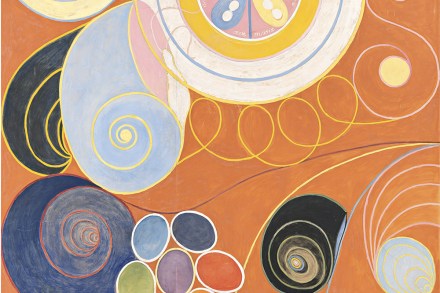
In July 1928, an unknown Swedish woman artist mounted a solo show of her revolutionary abstract paintings at the World Conference on Spiritual Science in London. It was a moment the 65-year-old Hilma af Klint had waited a long time for, but her confident prediction 20 years earlier that ‘the experiments I have undertaken will astound humanity’ was not fulfilled. So deafening, in fact, was the critical silence that greeted her work that she left instructions for it to remain under wraps until 20 years after her death. The world wasn’t ready for her ‘future pictures’. Entering the room devoted to Mondrian’s signature grids, you could be in a different
Powerful and beguiling: Innocence, at the Royal Opera House, reviewed

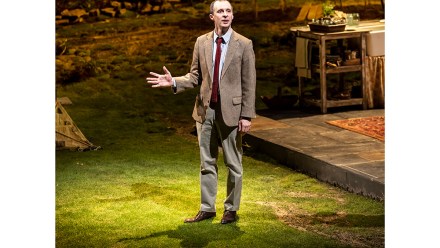
The big London companies gave two UK premières in the space of a week, both dealing with the subject of teenagers being shot dead. Kaija Saariaho and Sofi Oksanen’s new opera Innocence was premièred at the Aix-en-Provence Festival in 2021 and comes to the Royal Opera in exactly the same production by Simon Stone, the Australian director responsible for that lockdown favourite The Dig as well as a shattering staging (in Munich, in 2019) of Korngold’s Die tote Stadt. Innocence is a series of elastoplasts being pulledoff very slowly So Innocence was never likely to pull its punches. Chloe Lamford’s set – a brightly lit modernist structure that revolves as

A triumph: Nederlands Dans Theater 1, at Sadler’s Wells, reviewed

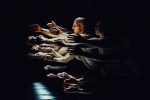
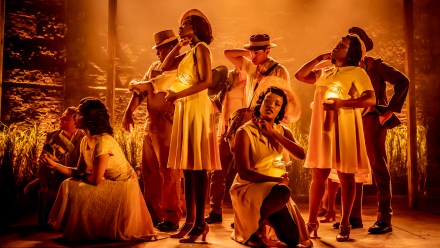
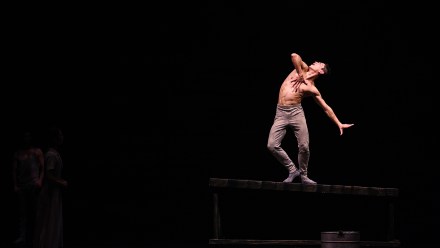
Yes, yes, I know. You’ve had your fill of David Attenborough’s jeremiads, you’ve heard enough already about climate change catastrophe. You’ve got the message, ordered the electric car and solar panels: now can we talk for a moment about something less unthinkably apocalyptic? The point is as much to celebrate the grace and beauty of these phenomena as to mourn their passing But the quiet triumph of Figures in Extinction [1.0] is to make the crisis seem freshly urgent and emotionally engaging. The first of three scheduled collaborations between the Canadian choreographer Crystal Pite and Complicité’s theatrical magician Simon McBurney, presented by Nederlands Dans Theater 1, it focuses on endangered

I cried twice: The Unlikely Pilgrimage of Harold Fry reviewed

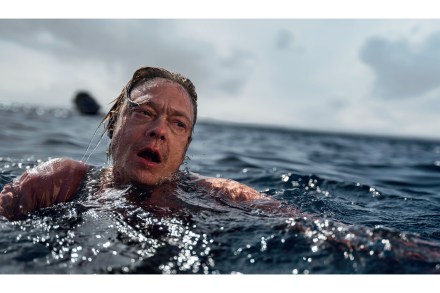
The Unlikely Pilgrimage of Harold Fry is an excellent adaptation of Rachel Joyce’s bestselling novel (2012) about a retired old fella who traverses England on foot in the belief he can save a friend dying of cancer. It could have been twee or sentimental (that was the fear) but instead it is spare and restrained and while there are occasional jarring moments it is still wonderfully tender and full of feeling. I cried, possibly twice, but I don‘t think it was three times, whatever anyone might say. Broadbent is a wonder, so real and sincere it doesn’t feel like acting, and Wilton equals him The film is directed by Hettie

John Gielgud and Richard Burton’s fraught, botched, triumphant Hamlet

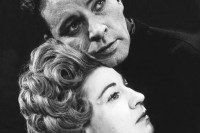
In 1963 two Hamlets went into production: one directed by Laurence Olivier, the other by John Gielgud. The situation had been engineered by Richard Burton and Peter O’Toole. The story goes that while shooting the film Becket, Burton and O’Toole had decided they should each play the Prince under either Olivier or Gielgud and they tossed a coin over who would get which director. O’Toole got Olivier; Burton got Gielgud. Both productions – booze-drenched affairs – went ahead, but the Hamlet that became a showbiz legend was Burton’s doomed Dane. The production made a fortune; it was probably the most profitable Shakespeare ever staged Burton looked up to Gielgud. He

Not an experience you’d want to repeat: Shen Yun, at the Eventim Apollo, reviewed

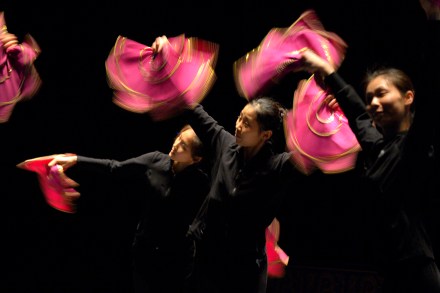
If you live in London, you may well have spotted Shen Yun’s enormous candy-coloured posters on the Underground, endorsed by puffs from authorities proclaiming the show to be ‘very, very on top’ and ‘an exemplary display of excellence’. This primitive advertising strategy seems to have worked: on the night I went, the Hammersmith Apollo (capacity around 3,500) was filled to the gills, the crowd made up of the same social mix that you might find at the Cirque du Soleil. What did any of us think we’d be getting? I was more impressed by the speed of the costume changes than I was by anything that happened on stage ‘Shen

Why do theatres hate their audiences?

War has broken out in theatreland. Managements are increasingly at odds with the audiences who fund their livelihoods. A recent stand-off involved James Norton’s new show, A Little Life, which contains a couple of scenes in which the actor removes his clothes. A punter at a preview in Richmond secretly photographed the moments of nudity and posted the images online. This sparked a furore in the newspapers and the majority of commentators took the producers’ side against the theatre-goers. Dr Kirsty Sedgman, a media studies lecturer, spoke piously to the Independent about ‘an absolute violation of the unwritten contract between audiences and performers’. The Mirror reported that ‘drastic measures’ might

Boring is as good as this erotic drama gets: Netflix’s Obsession reviewed

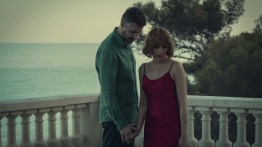
It is, of course, traditional for film and TV reviewers to demonstrate their steely high-mindedness by claiming that anything describing itself as ‘erotic’ is in fact deeply boring. Unfortunately, faced with Netflix’s four-part Obsession, the b-word is hard to avoid – the twist in this case being that boring was as good as the series got. The rest of the time it alternated between the inept, the infuriating and the utterly mystifying – and not just because you could never fathom what on earth the characters thought they were up do. How, for instance, did so much money and talent get wasted on a show that the people involved with

Rossetti’s muse was a better painter than he was: The Rossettis, at Tate Britain, reviewed

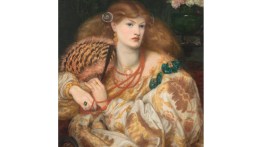
‘A queer fellow’ is how John Everett Millais described Dante Gabriel Rossetti after his death, ‘so dogmatic and so irritable when opposed.’ What’s queer in England is quite normal in Italy, where heated arguments are described as ‘discussioni’, but history has tended to forget that Rossetti was Italian. His fellow Pre-Raphaelites, however, were very conscious of his foreignness, though Holman Hunt found the ‘maccaroni’ served at the Rossetti family table – where you were as likely to meet Giuseppe Mazzini as Niccolo Paganini – ‘delicious’. Rather than professional models the Pre-Raphaelites wanted girls with a mass of hair, preferably red Gabriel (he adopted the Dante in his teens) was the

The last unashamedly happy masterpiece: Haydn’s The Creation, at Ulster Hall, reviewed

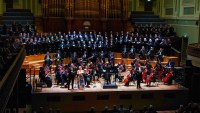
Haydn’s The Creation is Paradise Lost without the Lost. True, the words aren’t exactly up there: translated into German by Haydn’s pal Baron van Swieten and subsequently retro-translated into some of the clumsiest, most endearingly rococo English ever set to music. But you get the idea. Near the start some demons get consigned (very efficiently) to the outer darkness, and at the end the angel Uriel gives Adam and Eve the briefest of warnings – despatched in a brisk recitative before the chorus of angels floods the heavens, once more, with sunlight and praise. Basically, though, it’s optimism. It’s freshness. It’s a universe founded on faith, and with it, joy.

Glorious: Elton John’s farewell tour, at the O2 Arena, reviewed

Elton John has now been retiring for nearly five years. The Farewell Yellow Brick Road tour began in Allentown, Pennsylvania, in September 2018. Why there? Because it’s a hop and a skip from the small town of Lititz in Amish country, where scores of the big arena shows are built – it’s the real rock’n’roll capital of the world. Since then, with breaks for Covid and other health worries, he has played roughly 300 shows, grossing north of $800 million as of January this year – this is the most commercially successful tour ever. Retirement, or the threat of retirement, has always been a canny career move: Frank Sinatra played

So tastelessly disturbing it forgets to say anything: Sick of Myself reviewed

Sick of Myself is a satire from Norway that skewers the ‘look at me, look at me’ generation addicted to social media and asks: how far will someone go? Too far, is the short answer. Much, much, much too far, is the longer one. Indeed, although this starts out as a dark comedy, it does eventually escalate into full-on body horror, and while it is compelling and original, if you are as squeamish as I am, you will eventually be watching from behind your hands. Still, I did catch around 67 per cent, so consider this a review of 67 per cent of the film. The other 33 per cent

What the V&A Dundee exhibition doesn’t tell you about tartan

Criss-crosses, everywhere: 300 objects covered in them. The exhausting range and depth of the world’s most famous pattern is on full display at the V&A Dundee’s vast new exhibition. Tartan is a more genuine emblem of Scottish nationhood than the famous deep-fried Mars bar, which no one really eats. But it’s not uniquely Scottish. Plaid has been worn across western Europe for hundreds of years, then was claimed by Scotland as the symbol of the nation, now recognised the world over. It’s even a political weapon. In the recent SNP leadership election, the outsider Ash Regan wore practically nothing but the fabric. Ian Blackford has in the past unnerved many

One of the best things you’ll see on TV this year: Netflix’s War Sailor reviewed

War Sailor (Krigsseileren), a three-part drama on Netflix about the Norwegian merchant navy in the second world war, is one of the best things you’ll see on TV this year. But I doubt many other critics are going to rave about it or even notice it, for some of the very same reasons that I think make it so cherishable: it’s meandering, episodic, understated and made in Norway, with subtitles. Originally released last year as a feature film for the international category of the Oscars (where it was overshadowed by the more in-your-face All Quiet On the Western Front), War Sailor is the most expensive Norwegian movie ever made. But

Reframes Patricia Highsmith as a gay icon – and ignores her anti-Semitism: Loving Highsmith reviewed

I first discovered writer Patricia Highsmith (Strangers on a Train, Carol, the five Ripley novels) as a young teenager working my way through Golders Green Library. I guess she came shortly after Georgette Heyer, and I was hooked. I only later became aware of her virulent anti-Semitism, and on this count she was not half-hearted – she called the Holocaust ‘the semicaust’ as it failed to fully deliver – yet I still could not look away. I’m the same with the spiders at the zoo: horrified, but also mesmerised. We must, I suppose, separate the art from the artist as not everyone can be Paul McCartney, but any Highsmith documentary

Crossing Continents is the best of the BBC

Ask a member of Generation Z where in the world they would most like to live, and chances are they will say South Korea. K-pop and kimchi have made it indisputably fashionable, and if the Instagram account of one of my Korean friends is anything to go by, life there is really quite idyllic, provided you can forget who your neighbours are. It would take the average worker more than a century to save enough money to purchase an apartment  A recent episode of Crossing Continents on Radio 4 presented a very different side of the story. John Murphy, a superbly enquiring producer and presenter, went to visit some of

Is milk racist?

I was tired when I went to see Milk at the Wellcome Collection, having been up for much of the night feeding my baby. In European and Christian imagery, one sign said, ‘a lactating woman often represents fertility, charity and abundance’, but I was not feeling full of the milk of human kindness. Nor was I in the mood to be lectured about the evils of feeding children milk. As it turned out, this wasn’t really a show about milky motherhood. Cows and women produce milk but it’s unfashionable to dwell too much on that detail. The exhibition has a few sculptures of women; mostly they are headless. A massive