Arts Reviews

The good, bad and ugly in arts and exhbitions

Bullet Train is a neon-washed delight

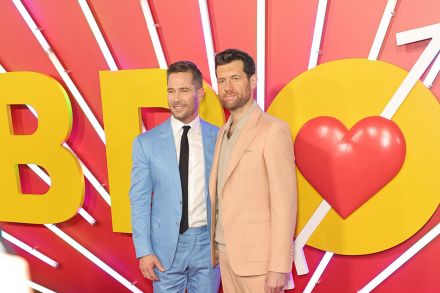
Based on the trailers, you’d be forgiven for thinking that Bullet Train was a gritty, serious-minded action thriller in the vein of John Wick. Nothing could be further from the truth: the best way to describe this movie is if Quentin Tarantino and Guy Ritchie co-directed a remake of Murder on the Orient Express. And happily, in the hands of director David Leitch — the talent behind Atomic Blonde and Deadpool 2 — it’s a genre mashup that mostly works. As the film opens, an enigmatic man codenamed “Ladybug” (Brad Pitt) boards one of Japan’s famous “bullet trains,” which travel at high speed and stop at each station for only a single minute. His mission: to recover a mysterious briefcase filled with ransom money and escape before anyone’s the wiser.

bullet train

Robert Icke’s smart pairing

On a Saturday in August, stuck in Manhattan  and growing less enamored of the thought, I holed up at the Park Avenue Armory to catch English director Robert Icke’s Hamlet (2015) and Oresteia (2017), playing in repertory. Icke is a darling young thing on the British theater scene, “acclaimed,” as the program informs us, “for his intelligent and accessible productions” of classic texts. Hamlet runs for three hours and forty minutes, Oresteia for three fifteen, which gives you some idea of what is meant (or not) by “accessible.” These are big, bold productions. But for what it’s worth, the cavernous Wade Thompson Drill Hall proved accessible to a packed crowd.

hamlet

The Sandman is a confused disappointment

The author Neil Gaiman is one of the comparatively few writers who really understands how to use social media. Not only does he have nearly 3 million followers under the handle @neilhimself, his bio self-deprecatingly insists he will "eventually grow up and get a proper job," though "until then, he will keep making things up and writing them down." Gaiman is a prolific tweeter, interacting with his millions of admirers in a joyful and unpretentious way. I once had an edifying conversation with him around the time that my biography of Lord Rochester, Blazing Star, was published. Gaiman is a fully paid-up Rochester aficionado, and was gracious and generous with his time and appreciation.

Why do films get canceled?

Although it’s not exactly my cinematic bag, I understand why people were looking forward to Batgirl. It is a superhero film (as so many are these days), but with a potentially interesting female lead, namely Barbara Gordon, aka "Batgirl," the daughter of Commissioner Gordon, Batman’s ally. The film attracted a starry cast, including J.K. Simmons as Gordon, Brendan Fraser as the sociopathic antagonist Ted Carson, aka "Firefly," and Michael Keaton gamely reprising his Batman role. It cost $90 million, was directed by the filmmakers responsible for the surprisingly entertaining Bad Boys For Life, and might have been expected to be a modest box office hit: at the very least, it should have provided a couple hours of undemanding entertainment.

louis c.k.

Louis’s comebaC.K.

He's officially back. The past month has seen the quiet return to public life of comedian Louis C.K. as the incredibly popular — but very much canceled — creative genius has gone on a podcast tour promoting his latest film, Fourth of July, which is available to stream at his website starting August 6. His path to a comeback was made possible not just by his stature as a member of most comedians' Mount Rushmore of comics, but also by his innovative approach to connecting with his fans — an approach that was ahead of the curve at the time, and signals the path comedians may increasingly take in an era where their jokes can cause headaches for streaming services. C.K.

Taylor Swift finally faces the woke mob

It's been four years since pop superstar Taylor Swift went full lib. After years of speculation over her political leanings (her silence on issues led some to believe she was a secret Trump supporter), Swift urged her fellow Tennessee residents to vote against the "appalling" and "terrifying" Republican Marsha Blackburn for Senate. "I will be voting for Phil Bredesen for Senate and Jim Cooper for House of Representatives. Please, please educate yourself on the candidates running in your state and vote based on who most closely represents your values," Swift wrote in an Instagram post. Since then, Swift has been outspoken about her pro-choice, anti-gun, and anti-Trump views.

Taylor Swift attends the "All Too Well" premiere at AMC Lincoln Square on November 12, 2021 in New York. (Photo by ANGELA WEISS/AFP via Getty Images)

Philip Guston in the padded room

It was once a cliché of modern art that its principal aims included shocking its audience. Aesthetic aggression was the correlative of class warfare. It’s no accident, as the Marxists say, that avant-garde comes from the military lexicon. In painting, Gustave Courbet’s 1866 “L’origine du monde,” a rudely realistic, closely cropped view of an anonymous woman’s nude genitals, is often hailed as an early shot across the bow. Five years later, the artist would lead the Paris Commune in toppling over the Napoleonic Vendôme Column. For pugnacious creatives like Courbet and his descendants, consciousness-raising was always going to be a little bit uncomfortable. One can imagine how easily this gets out of hand.

guston
North Star

Ukraine in black and white

Displays of wanton brutality and heroic resistance in the Russo-Ukrainian War of 2022 have prompted some in the West to proclaim a moment of “moral clarity.” Some caution might be wise here, since moral clarity in world affairs is not always as clear or as moral as its claimants think. It was Soviet ideology, succeeding czarist imperialism, that for so long smothered Ukraine, along with the other captive nations consigned to Stalin at Yalta. As Ukraine may now be slipping captivity at last, the West rejoices. But how clear is the clarity? History’s players sometimes switch roles even from one act to the next. It has not, for example, always been brutal Russians that heroic Ukrainians went up against. Eighty-one years ago, it was brutal Germans.

arcade fire

Arcade Fire: the last of the art-rockers?

After I saw the Canadian band Arcade Fire on tour in London in late 2010, I began my review of the gig by quoting Psalm 98: “Make a joyful noise unto the Lord, all the earth: make a loud noise, and rejoice, and sing praise.” My abiding memory of the evening was that it was fun. Despite the apparent solemnity of many of the act’s songs — several of which had been taken from their debut album, Funeral, and revolved around death and despair — the concert had a celebratory and upbeat aspect. It concluded (as virtually all of their shows had done) with a euphoric singalong of what has become their signature song, the cathartic “Wake Up.” A decade later, matters have changed. The world is in a considerably more anxious state than it was.

Durham

The underrated Kenny Dorham

Kenny Dorham was one of the jazz greats. The closest player in modern times to his intimate sound is probably Roy Hargrove, who, like Dorham, hailed from the Lone Star State. But despite all the accolades from the jazz cognoscenti, there is something plaintive about his career, down to the liner notes for his own albums. Indeed, right from the first sentence. Take the 1956 album Kenny Dorham and the Jazz Prophets on the ABC-Paramount label: “Kenny Dorham is one of those artists who have not as yet been accorded their deserved share of recognition.

ornament

SoHo’s downtown drawings

Pity the poor Drawing Center. Founded in 1977 — or, rather, “born into the petri dish of the SoHo art scene in the 1960s and 1970s” — the Center was the pet project of Martha Beck, a former curator at the Museum of Modern Art. She felt that the medium of drawing, being underserved by the arts establishment, needed its own specialized venue. Over the years, this downtown gallery has proved its mettle, mounting a variety of historical and contemporary exhibitions, as well as making a point of reaching out to working artists, some of whom later went on to greater recognition. But that petri dish? It’s changed mightily since the heyday of industrial lofts rented on the cheap.

The Princess is misanthropic TikTok schlock

The studio pitch for Hulu’s new direct-to-streaming action thriller The Princess probably went something like this: “What if we crossed The Princess Bride with The Raid: Redemption?” Honestly, though, that logline makes the film sound better than it is. The Princess is a dizzying, hyperviolent spectacle that blends nonstop combat with a decidedly progressive moral vision, resulting in an eminently GIF-able — but emotionally sterile — finished product. The eponymous Princess (Joey King, whose breakout role was Beverly Cleary’s Ramona Quimby), who’s never given a proper name, inhabits a quasi-fantastical European kingdom devoid of magic or monsters on the model of The Princess Diaries’ Genovia.

Ron Howard: nobody’s favorite Hollywood director

If anyone told you that Ron Howard was their favorite film director, you might be forgiven for laughing out loud. Yet on paper, Howard has had as successful a career as any other filmmaker working today. Of the twenty-seven pictures he's directed, there are Academy Award winners and nominees for Best Film, massive box office hits and several critically acclaimed pictures that show a degree of both eclecticism and an apparent ability to turn his hand to anything imaginable. There are few directors who have made everything from epic fantasy to gritty '70s-set dramas about the David Frost and Richard Nixon interviews.

Where the Crawdads Sing reduces a rich novel to a love triangle

Delia Owens’s novel was probably destined to be a bestseller. How many books manage to combine a distinctive sense of natural “place” — the marshes surrounding the North Carolina town of Barkley Cove — with themes of survival, romance, and murder? And with a bestseller comes a film adaptation; hence the recently released Where the Crawdads Sing, which is playing in theaters now. When the town’s golden boy Chase Andrews (Harris Dickinson) is found dead at the base of a rickety wooden tower, blame immediately falls on the enigmatic Kya Clark (Daisy Edgar-Jones, likely best known for her recent starring turn in Normal People), who lives alone in a rickety house deep within the marsh.

Beastie Boys were masters of cultural appropriation

In New York in the 1980s, anyone could be anything. That’s how a punk group comprised of three Jewish kids was able to socially transition into hip-hop, team up with super-producer Rick Rubin and go on to release the first rap album to crack the Billboard 200. Beastie Boys, as they were known, consisted of Michael “Mike D” Diamond, Adam “Ad-Rock” Horovitz and Adam “MCA” Yauch. The Billboard-cracking album Licensed to Ill was an instant classic that launched the group into superstardom. Full of swagger and juvenile nonsense, as well as jabs at swagger and juvenile nonsense, the record was merely the beginning of a long and influential career, one that only ended when, in 2012, MCA died of cancer.

The latest Jane Austen adaptation is dreadful

Full marks to whoever tweeted, after watching the trailer for the dire new version of Jane Austen’s Persuasion, that, "I’m sorry but Dakota Johnson has the face of someone who knows what an iPhone is." In that pithy phrase, the failings of Carrie Cracknell’s film are laid bare immediately. Johnson, despite the utter dreadfulness of the Fifty Shades films that launched her to fame, is a talented and likable actress, but she is also contemporary in a way that many of her peers are. You can dress her in all the crinolines and bonnets and Regency finery in the world, but she still looks like a California resident from 2022 cosplaying, rather than an inhabitant of early nineteenth-century Britain. But Johnson is not the only problem with Persuasion.

Americans should be proud of their Poet Laureates

It isn’t often I’ll say this — and, in fact, I hope this is the only time — but as a Brit, I’m jealous of you Americans. It isn’t the fact that you have a notionally more functional government than us, or even that you have unrestrained access to things like Pop Tarts and peanut butter cups. No, the answer lies, as it always does, in poetry. Over on this side of the Atlantic, we’ve had a Poet Laureate since 1668 — when John Dryden was given a position in the royal household by Charles II. We could claim to have had one even earlier, given that the versifier, playwright, and scribbler Ben Jonson was given a pension by James I in England way back in 1616.

The latest Thor isn’t ‘super gay’

The career of the New Zealand director, writer and actor Taika Waititi is beginning to resemble an especially demented fairground attraction. An Oscar winner for his screenplay for Jojo Rabbit, a Nazi-themed black comedy that will make people fight in bars over perceptions of its quality (or lack thereof), he has since gone and taken the Marvel dollar. Unlike so many of his fellow Marvel directors, however, Waititi has fought to keep his work personal and distinctive. In the case of 2017’s riotous Thor: Ragnarok, this worked superbly well. Despite his working as a director-for-hire with no screenwriting credit, it was a hilarious and hugely entertaining space adventure that remembered to be fun, unlike so many other Marvel pictures.

The unsolved mystery of Marilyn Monroe

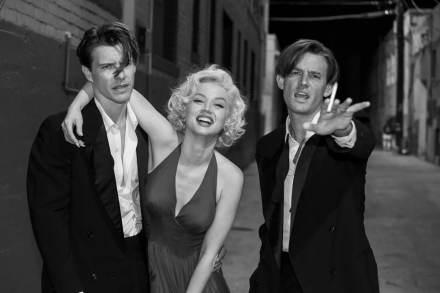
When Kim Kardashian wore Marilyn Monroe’s dress to the Met Ball back in May, the world was aghast. Many claimed the dress was damaged (something the owners deny), and the dress’s original designer, Bob Mackie, told the world it was a “big mistake," saying, “Nobody else should be seen in that dress.” Some of the concerns came from the fact that Kim Kardashian had had to lose a significant amount of weight to fit the blonde bombshell’s proportions — the dress was so tight on Monroe that she'd had to be sewn into it — and that it set a dangerous precedent for the preservation of historical costumes.