Arts Reviews

The good, bad and ugly in arts and exhbitions

Stranger Things and the perils of nostalgia

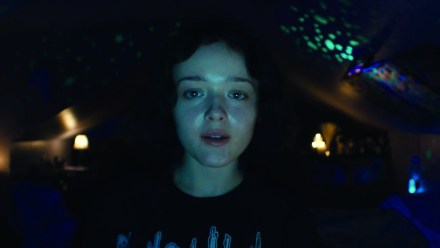
Recently, Kate Bush went to the top of the iTunes charts — yes, such a thing does still exist — with her 1985 single "Running Up That Hill." It’s an excellent song, one of her finest works, but the reason for its somewhat unexpected resurgence in popularity is because it was prominently featured in the fourth and penultimate season of Stranger Things. It's testament to the show’s continued popularity that its consistent, even ruthless channeling of Eighties nostalgia can lead to unexpected knock-on effects.

Hollywood has a school violence problem

Streaming services have a school violence problem. For all the hand-wringing and anti-gun stances actors love to indulge on social media, their industry has no problem glorifying the very terror they claim to condemn. Two such cases came last week, right after the Uvalde school shooting that left twenty-one people dead, nineteen of which were schoolchildren. On Friday May 27, three days after Uvalde, the fourth season of Stranger Things premiered on Netflix with an opening scene of mass child death, apparently at the hands of the show’s protagonist, Eleven, in a flashback. Several kids' corpses lie on the floor with smears and pools of blood around them. The streaming service added a disclaimer at the beginning of the season specifically referencing the incident in Texas.

stranger things school

America has lost her Top Gun spirit

Quick Top Gun II: Maverick movie synopsis (and spoiler alert) by the Bad Guys: let's build a secret base using the Star Wars Death Star plans. We'll leave an air vent that looks like a giant bullseye where one bomb will take down the whole place. Good Guys movie synopsis: to make it a fair fight, instead of one Navy Seal throwing a grenade down that ventilation shaft, we'll come up with a near impossible plan involving multiple airplanes flown by irascible characters. Should kill the whole two hours. It seems like some sort of anti-union move to credit people with the screenwriting for this movie.

Deep water Winslow

The advance buzz on Winslow Homer: Crosscurrents wasn’t good. “Woke Winslow” — that’s how observers, online and through the grapevine, pegged the Metropolitan Museum of Art’s new exhibition of paintings and watercolors by Winslow Homer (1836-1910). The stalwart purveyor of maritime adventure and manly pursuits, woke? One glance at the enlarged black-and-white photo displayed at the front end of Crosscurrents — a blurred portrait of Homer in his Maine studio — makes clear that the fusty man with the impatient glare is no one’s idea of a social-justice warrior. Looks aren’t everything, of course. Truth to tell, Homer’s art does touch upon important aspects of American history.

winslow homer
zimmer

Is Hans Zimmer a genius or a charlatan?

If you have visited a cinema in the past two decades, you will know the work of the film composer Hans Zimmer. Since he emerged in 1988 with his score for the Oscar-winning film Rain Man (he recently won his second with Dune, among twelve total nominations), Zimmer has created the music for more than a hundred films, television series and other multimedia projects. His eclecticism both startles and amuses. He is surely the only person alive to have collaborated with the reclusive director Terrence Malick (on The Thin Red Line) and to have composed music for a soccer-based video game, FIFA 19. He has scored romantic comedies, sweeping epics, cartoon animations and thrilling action films.

paradise

Throwing curveballs

"This mob is not the people,” declared Henry J. Raymond in his paper, the New York Times, about the Draft Riots in July 1863. Blue-collar workers in New York, mostly Irish, had begun by protesting a new conscription law, but anti-war sentiment quickly became a pretext for widespread destruction, looting and racial violence. Blacks were hunted, their homes and businesses trashed, and scores of them lynched. Raymond wanted no quarter for the rioters: “Give them grape[shot] and plenty of it.” The new musical Paradise Square imagines a “little bit of Eden” in the Five Points slum of downtown Manhattan, July 1863, where, we are told, blacks and Irish did not just coexist peacefully for a time but flourished.

worst

The final word on the millennial generation

More than anything else, the phrase “I’m still figuring it out” defines the millennial generation. Floating from passion to passion, job to job, lover to lover, possible spouse to possible dead end. In Joachim Trier’s The Worst Person in the World, Renate Reinsve plays Julie, a person that most of us would recognize from life, and certainly from the last ten years of media: approaching thirty; romantic and flighty to a fault (in the prologue, she drops out of medical school to become a philosopher and then a photographer); beginning to feel a void she doesn’t know how to fill.

Ricky Gervais, Netflix and clickbait controversy

Ricky Gervais has caused a stir. This is not, perhaps, the least expected thing you could hear about the sixty-year-old British comedian, but his new Netflix show, SuperNature, has attracted an unusual amount of opprobrium for what people have perceived as anti-trans jokes. In the show, Gervais makes a distinction between “the old-fashioned women, the ones with wombs” and “the new women... with beards and cocks.” He calls upon the latter to “lose the cock,” and the audience laughs along with him hysterically.

ricky gervais

Zelensky is the star of the Cannes Festival

The Cannes Film Festival remains the most glamorous and famous gathering of the movie industry in the world. High-profile, black-tie premieres attended by some of the best-known actors jostle alongside the more disreputable commercial market. Films on sale this year include My Neighbor Adolf, about the unlikely friendship that is struck up between a Holocaust survivor and a mysterious man who may or may not be Adolf Hitler. But back in the main festival, everything is going entirely to plan. Apparently. There has not been a “normal” Cannes Film Festival since 2019. The 2020 edition was canceled, and the 2021 event took place in reduced and rather glum circumstances in July. But now Cannes is back, back, back, bébé!

Evelyn Statsinger’s otherwordly art

New York’s Upper East Side — 1018 Madison Avenue, to be exact — currently hosts another world at the Gray Gallery. It’s a universe with a near-scientific attention to detail. Plant stems are bisected and, in turn, bisect paintings like winding snakes; petals and branches are painted in such microscopic detail that they appear like the surface of some far-flung planet; and canvases are awash with such bright, clean lines they seem almost like subway maps of a particularly topsy-turvy city. The works — pastels, oil on canvas, and oil on linen — are those of Evelyn Statsinger (1927 – 2016), the deeply underappreciated artist who lived in New York, Chicago, and Michigan.

Why are government unions never the bad guys?

If there is such a thing as a formula for making a hit film, it has something to do with giving audiences a new and unusual villain. Over the years, screenwriters have thrown their protagonists up against enemies as thuggish as boss Johnny Friendly in 1954’s On the Waterfront and as smooth as Olivier’s Crassus as in 1960’s Spartacus. “The more successful the villain, the more successful the film,” as Hitchcock himself once put it. Which is why Hollywood’s constant search for new and unusual bad guys has explored almost every conceivable milieu: corporate America (The Big Short), street gangs (The Warriors), hospitals (Coma), prisons (Shawshank Redemption), law firms (The Firm), and even the movie studio itself (The Bad and the Beautiful).

Are critics useless?

When the Oscar-winning actress Viola Davis was recently asked by the BBC how she felt about the poor reviews she has received for her performance as Michelle Obama in the new Showtime series The First Lady, she was not coy in her response. "Critics absolutely serve no purpose," she replied. "And I’m not saying that to be nasty either. They always feel like they’re telling you something that you don’t know. Somehow that you’re living a life that you’re surrounded by people who lie to you and 'I’m going to be the person that leans in and tells you the truth.' So it gives them an opportunity to be cruel to you." The writer Brendan Behan once described a critic as being like "a eunuch in a harem.

Bob Dylan’s and T.S. Eliot’s search for truth

The fact that the master songwriter Bob Dylan is a fan of a literary allusion should come as no surprise. This is the man who, in his autobiography Chronicles Vol. 1, declared that reading the French symbolist poet Arthur Rimbaud made “bells [go] off.” (Incidentally, it was Suze Rotolo, his first love whom he so cruelly lambasted in “Ballad of Plain D,” who introduced him to the poet. One feels that Dylan should have paid her a little more retrospective credit than the all-but-bitter love songs on The Freewheelin’ Bob Dylan.

What is David Lynch up to now?

One of the most enduring images from the Oscars came two decades ago, at the 2002 ceremony, when director David Lynch revealed himself as one of the most courteous and pleasant figures in contemporary cinema. Ron Howard had just won the Best Director award for his work on the dishonest and ephemeral mental health drama A Beautiful Mind. As the beaming Howard — one of the most popular figures in Hollywood — headed onto the stage to collect his prize, two of his defeated rivals, Robert Altman and Lynch, embraced one another.

Blues for Pablo

What is there left to say about Picasso? This question, posed by a colleague apropos of Picasso: Painting the Blue Period, an exhibition on display at the Phillips Collection in Washington, DC, is inevitable. There are few cultural figures whose life and accomplishments have been as exhaustively accounted for as the man born — take a breath! — Pablo Diego José Francisco de Paula Juan Nepomuceno María de los Remedios Cipriano de la Santísima Trinidad Ruiz y Picasso. Innumerable exhibitions, books, scholarly tracts and films have been devoted to this relentlessly protean artist. Even after his death almost fifty years ago — Picasso died in 1973 at the age of ninety-one — he looms large in the public consciousness.

picasso

Jewel aid

In the late 1890s, the workshop of Maison Cartier adorned its Belle Époque clients in “garland-style” jewelry fashioned from white diamonds in platinum settings shaped like curled ribbons and bows. Soon, however, a more streamlined style began to emerge. In 1904, the workshop produced a small, rhomb-shaped brooch, decorated with smaller rhombs in diamonds and rubies. By the 1920s, Cartier was regularly producing polychromatic jewelry in a linear, abstract style made up of interlocking or tessellated triangles, squares, lozenges and other geometric shapes that had rarely been seen in Western jewelry. The craftsmen also combined brightly colored stones such as turquoise, coral and jade, and they experimented with enamel. What prompted this dramatic change?

cartier

Charles Mingus at 100

"All the Things You Are” is an essential jazz standard, but in 1960 the bassist Charles Mingus gave it an update: “All the Things You Could Be by Now If Sigmund Freud’s Wife Was Your Mother.” It doesn’t take a psychoanalyst to peek under the hood of this composition. Like many Mingus tunes, the loose adaptation is fairly bipolar, picking up and dropping off in fits and starts, alternating between vacuum-tight swinging sections and meandering, tempo-less squabbles between members of the four-piece band. Mingus isn’t for the faint of heart, but on the centenary of his birth it’s worth confronting his life’s work, which surely places him among America’s most important composers.

Mingus

Midcult madness

On the same Broadway block as MJ: The Musical is the tale of another song-and-dance man hailing from Gary, Indiana: Harold Hill, doctor of music, huckster of band equipment and Meredith Willson’s titular Music Man (1957). Well, that’s not quite the case: Professor Hill is a lying crook, and his Hoosier backstory is a fabricated ruse. He claims to be a graduate of the Gary Conservatory of Music, class of ’05, but the town of Gary was only incorporated in 1906. Played by Hugh Jackman, this smooth criminal sails into River City, Iowa, promising the Ewarts and Eulalies of the town he’ll make disciplined bandspeople out of their darling Winthrops and Amarylisses.

music