Arts Reviews

The good, bad and ugly in arts and exhbitions

GCSEs and the arts of lobbying

For the past six years or so a variety of arts organisations have been campaigning against the English Baccalaureate, or the ‘EBacc’, as it’s known. To meet this standard, schoolchildren have to get grade C or above in seven GCSEs (Eng lang, Eng lit, maths, two sciences, a humanity and a foreign language) and, according to the campaigners, this means students have been turning away from arts GCSE subjects such as music, drama and dance. They claim that since the EBacc’s introduction by Michael Gove, arts education has been decimated. Now, I have some sympathy for the lobby groups making this argument. The first part of their case — that
Rules of engagement

The BBC foreign correspondent Hugh Sykes was meant to be talking about how music has shaped his life with Sarah Walker on Essential Classics last week (Radio 3, Friday), but their conversation actually gave us far more crucial insights into why he has won awards for his work, reporting from troubled places such as Tehran, Baghdad, Belfast, Berlin and Islamabad. He stressed the importance of checking your facts, ‘Verify, verify, verify’, and especially now that the demand for instant news coincides and conflicts with the torrents of information flooding the internet. ‘Never report anything until you’ve got at least two sources,’ Sykes insisted. He also explained how easy he found

Impaired vision

With the Shannon Matthews story, it’s not easy to accentuate the positive — but BBC1’s The Moorside (Tuesday) is having a go nonetheless. Although touching at times, the result ultimately proves a rather awkward watch. Shannon was nine when she went missing from the Moorside estate, Dewsbury, in February 2008. Her mother Karen made a tearful televised appeal for the return of ‘my beautiful princess daughter’, but ended up serving four years in jail for being an accomplice in Shannon’s kidnapping. With her chaotic taxpayer-funded life, and her seven children by five fathers, Karen was duly turned into a sort of anti-poster girl for the tabloids. The Moorside itself became

Losing the plot | 9 February 2017

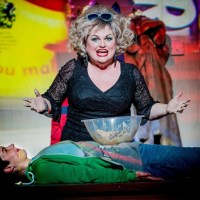
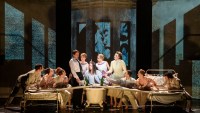
Fully to enjoy Opera North’s new production of Humperdinck’s Hansel and Gretel you need to take a trinocular perspective on it, but you can enjoy it a lot anyway. You could be mystified, if you don’t know the story, by the setting and action, as indeed I was some of the time despite having recently watched a straightforward account of it from Vienna on DVD, and having seen countless productions of it. So I would advise at least reading the plot. As so often with contemporary operatic productions, the synopsis in the programme book bears only a passing resemblance to what you see on the stage. If you are conscientious

Timeless and dated

Tennessee Williams’s breakthrough play is a portrait of his dysfunctional family. A young writer, Tom (Williams’s real name), lives with his effusively domineering mother and his painfully coy sister, Laura. Mother, once a famous beauty, gets Tom to find an eligible chap for Laura. Tough call. Beautiful Laura has a deformed ankle and she’s just flunked out of secretarial college after suffering the embarrassment of vomiting over her type-writer. She now pines away at home forming sterile friendships with a colony of animal statuettes lodged in a glass case. This set-up has the delicious simplicity of a comedy sketch. The conflict between the unstoppable mother and the self-effacing daughter promises

Mother superior

Unlike with buses, you wait ages and ages for one fabulous film as framed by the older female perspective to come along and then there’s absolutely no saying when the next one will be, or if there will ever be another. (Indeed, a recent study of 2,000 films found that women in the 42–65 age bracket are given less and less to say while dialogue for men of the same age actually increases.) So don’t let this pass, and don’t do so having dismissed it as ‘a feminist film’ because it’s emotionally smart about everybody. It just takes in that portion of the human race usually left out, is all.

Saint Joan is the perfect religious play for our ignorant era

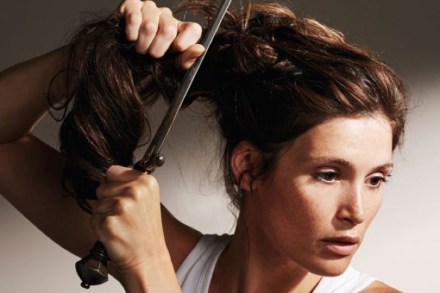
The chief appeal of Saint Joan, which I saw last night at the Donmar, is that it is a brilliant vehicle for a young actress. Gemma Arterton is great, if a little too mature and attractive to convey teenage innocence. Otherwise, I don’t quite see the point of George Bernard Shaw’s play, and wonder why it is regularly revived in our time. Does it have anything intelligent to say about religion? It romanticises a medieval mystic who took up arms – which has rather little to do with contemporary Christianity. At one point it suggests that her stubborn individualism is the source of Protestantism, but this is muddled in various

Hull’s a poppin’

In early January, lastminute.com recommended its top 15 destinations for 2017. In 12th spot, just above Montreal, Croatia and Japan, was Hull. And if you’re tempted to opt for a snooty chuckle at this point, my advice would be to go to Hull — because, judging from my recent experience, even on a cold January weekend, the place is buzzing with a hugely infectious, if still slightly bashful, sense of rediscovered civic pride. ‘I’ve lived here for 50 years,’ one man told me, ‘and this is the greatest thing that’s happened to the city in my time.’ The ‘this’ he’s referring to is, of course, Hull’s status as the UK

Seeing everything in black and white

Two divergent approaches to printmaking are on view in an exhibition of graphic work by Francis Bacon and Lucian Freud at Marlborough Fine Art, Albemarle Street. For the former, media that depend on line, such as etching, were of little interest, since — as his friend Freud would point out — Francis couldn’t draw very well. But, Freud would add, Bacon’s painting was so brilliant that he made you forget that limitation. Bacon’s prints were essentially reproductions of his oils, signed and numbered by the artist. The etchings Freud made in the last three decades of his life were not like that at all. Though the models for the etchings

Sign of the times

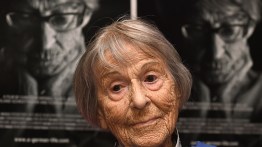
As if on cue, The World At One on Monday (Radio 4) ended with a short (too short) interview with an Austrian documentary film-maker who recently made a film about Brunhilde Pomsel, secretary to Hitler’s propaganda minister, Joseph Goebbels. The announcement of her death in Munich, aged 106, prompted the conversation, which happened to follow all the stories about the repercussions of President Trump’s executive order banning those from certain countries from entering the US. The significance was not lost on the ever-astute Martha Kearney. Florian Weigensamer described Pomsel in great age as ‘just incredible’. She was ‘quick-witted, funny, a great storyteller’. But, said Kearney, ‘She was working at the

Metal fatigue

‘All that glisters is not gold,’ wrote Shakespeare (The Merchant of Venice), and you have to hand it to the guy, as he’s nailed it on the head. This Gold certainly glisters. You look at the poster and think: ‘Oh, yes. Glistery.’ It’s directed by Stephen Gaghan, who wrote and directed the terrific Syriana. It stars Matthew McConaughey. It’s based on a true mining scandal that is as outrageous as it is fascinating. But this Gold is not gold. It has its highly entertaining moments, and there is some fun to be had in McConaughey’s madly over-zealous performance but it is derivative (of The Wolf of Wall Street, The Big

Notes on a scandal | 2 February 2017

Kids: who’d have them? Certainly no one who has ever been to the opera. If they’re not murdering you, they’re betraying you, defying orders or throwing themselves into the arms of the nearest unsuitable suitor. What happens when that suitor is a god, or — god forbid — their own brother or sister? Answers came on the back of two very different operatic postcards this week. At the Barbican, bathtime gone bad. A claw-foot bath sits centre stage, a cold, white womb in which monstrous twins writhe in fleshy ecstasy. Backs arched, legs flexed into Priapic verticals, they coalesce the clenching pulse of orgasm and the surging agony of childbirth

Playing dead

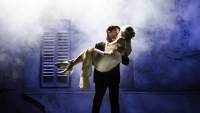
It could be the nuttiest idea ever. The protagonist of this American musical is Death, who secretly reprieves a beautiful Italian princess, Grazia, and spends the weekend at her father’s palace where a house party is in full swing. The dad knows the gatecrasher’s identity. But Death introduces himself to the others as a suave Russian duke. All the womenfolk promptly fall in love with him, including Grazia, who sets out to bag the mysterious foreigner. Where can this strange plot go next? Nowhere. Once Grazia learns that Death has come to terminate her existence the story will end. So the script is padded out with additional entanglements between a

The only way is up | 26 January 2017

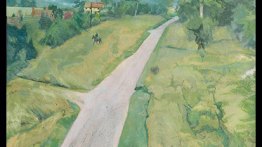
Michael Andrews once noted the title of an American song on a scrap of paper: ‘Up is a Nice Place to Be.’ Then he added a comment of his own: ‘The best.’ This jotting was characteristic in more than one way. A splendid exhibition at the Gagosian Gallery, Grosvenor Hill, London, makes it clear that Andrews was — among other achievements — a supreme aerial painter. No one else has better caught the sensation of floating, to quote another song from the Sixties, up, up and away. It was also typical of Andrews that his addition to that title was only two words — but it makes a big difference.

Sloppy seconds

Danny Boyle introduced T2 Trainspotting at the screening I attended and said that, throughout filming, he’d seen the cast looking at him and what these looks were saying was: ‘It had better not be shite, Danny.’ This may sum up all our thinking, pretty much. It had better not be shite, Danny. Danny, do what you have to do but, we beg you, don’t make it shite. Once more, with extra feeling: don’t, don’t, don’t make it shite, Danny. And? I take no pleasure in saying it (seriously, hand on heart) but this sequel is, in fact, quite shite.* I won’t bore on about the original film, even though some

Amphibious assault

David Spicer’s farce Raising Martha opens with a skeleton being disinterred on a frog farm by animal-rights activists. They hope to force the frog farmer, an ageing dope fiend, to set his amphibious livestock free. Got all that? It’s complicated. And there’s more. The skeleton turns out to be the long-dead mother of the farmer, who alerts his shifty brother and calls in the cops as well. A loquacious twerp, Inspector Clout, arrives to investigate and the tangled narrative starts to unfold. This is an uneven play but the good bits are excellent. Stephen Boxer is amusingly deranged as the hallucinating frog man. The animal-rights activists are wittily portrayed as