Arts Reviews

The good, bad and ugly in arts and exhbitions

Keep politics out of art

If you want to lose friends and alienate people in the art world, try telling them you support Britain leaving the EU. As someone on the left, I’ve always argued a left-wing case for leaving. It is, to say the least, an unfashionable position, usually met with anxious looks, sullen silence or overt hostility from one or other artist, curator or art bureaucrat. That the art world should be against Brexit should come as little surprise. It’s striking, however, how far art has become involved in the burning political questions and controversies of the moment, to the extent that making art is often seen as nothing more than an extension

Now, that’s better

Captain Marvel is the 654th film in the Marvel franchise — the figure is something like that, I think — and as the first one to be female-led it was mercilessly trolled before its release by the fan boys. ‘This movie is gonna bomb like no other and they only have themselves to blame,’ was one typical remark. The nastiness escalated further when the film’s star, Brie Larson, said she was sick of being interviewed by ‘white dudes’ while doing promotion and asked why so many film critics are white and male. (78 per cent are, according to the latest research.) I don’t know why I’m telling you all this

Comedy returns

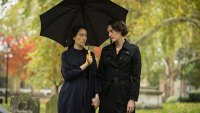
BBC2’s MotherFatherSon announced its status as a classy thriller in the traditional way: by ensuring that for quite a long time we had no idea what was going on. At first it looked as if the focus would be on a missing teenager whose phone we saw abandoned in the woods. But then we cut to an American called Max (Richard Gere, no less) arriving in London by private jet on an apparent mission to choose our next prime minister. Then to a younger man running fast and screaming. Then to a veteran female journalist being sacked — and not only because she’d just lit a cigarette at her desk.

Rooting for crime

Jesus Hopped the ‘A’ Train by Stephen Adly Guirgis deserves its classic status. This wordy and highly cerebral play pulls off an extraordinary feat by leading the spectator inside the mind of a psychopath. The setting is Rikers Island, where an old lag, Lucius, befriends a younger detainee, Angel, who hopes to be acquitted of killing a pastor whom he shot in the buttocks. (The bullet-in-the-bottom detail is typical of Adly Guirgis’s macabre frivolity.) Lucius is a chain-smoking fitness freak who keeps himself in trim by jogging on the spot and performing bursts of press-ups in his cell. We first meet him as the victim of petty bullying by a

Privates on parade | 28 February 2019

‘Those who can, do; those who can’t, teach.’ If there’s an exception to prove Shaw’s rule, it’s Phyllida Barlow. The 40 years the sculptor spent teaching at the Slade, where her pupils included Rachel Whiteread, have not only left her creative energies intact, but completely failed to keep a lid on them. After turning Tate Britain’s Duveen Galleries into a cross between a lumberyard and an enchanted forest in 2014, then filling the British Pavilion to bursting point at the 2017 Venice Biennale, the septuagenarian who can conjure a sculptural wonderland from the contents of your local branch of Travis Perkins has been let loose on the Royal Academy’s Gabrielle

Cloak of invisibility

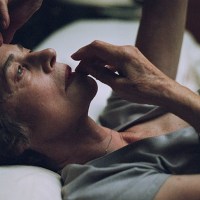
Hannah stars Charlotte Rampling in a film where not much happens and not much happens and not much happens and then, finally, not much happens. One scene, for instance, involves changing a light bulb and that’s it, and as close to an action stunt as we ever get. (Unless you count doing laundry.) But. But. It is also peculiarly mesmerising, showcases an extraordinary performance, and cumulatively builds into a powerful exploration of pain, loneliness and invisibility. So not much happens and not much happens and not much happens — but a great deal is said. Directed and co-written by Andrea Pallaoro, and set in an unspecified Belgian town, the film

You’ve been trolled

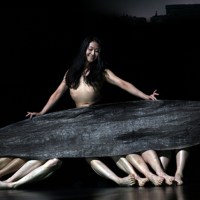
Please believe that I try to give every production my full attention, to do due diligence, to blink and miss nothing. But when, halfway through Tanztheater Wuppertal Pina Bausch’s Since She, one of the male dancers appeared on stage with cowbells attached to his willy, I’m afraid I spent a fair few minutes looking hard at my notebook. The cowbells are not the strangest thing in this night of the grotesque. Since She is both danse macabre and Grand Guignol. A woodchipper whirrs at the back of the stage, the set is a mountain of mattresses. One man sniffs a sausage, another turns a spit. A woman defecates into an

Accidental hero | 28 February 2019

Steve Coogan is back as Alan Partridge but frankly who cares? Like Ali G, I’ve long thought, he’s one of those ‘classic’ 1990s comedy characters funnier in recollection than ever he was in reality. He should have been confined to brief sketches — like Paul Whitehouse and Harry Enfield mostly did with their cheesy has-been DJs Smashie and Nicey — not cruelly exposed in endless TV series where you’ve got the joke in the first five minutes and the rest is pure cringe. Actually, though, This Time with Alan Partridge (BBC1, Mondays) is genuinely funny, clever and enjoyable because finally he has scriptwriters who don’t hate him. For his original

This will hurt

When reviewers call a work ‘important’ they mean ‘boring’ and ‘earnest’. And in those terms Shipwreck is one of the most ‘important’ shows I’ve ever seen. It’s not a play but a series of monologues and conversations spoken by a group of American liberals stuck overnight in a rural farmhouse. ‘It’s a red zone,’ they shudder when they learn that they’re in a Republican county. They pass the night carping loftily about the faults of Trump’s campaign and of his presidency between the inauguration and his dismissal of James Comey on 9 May 2017. It’s unclear why this arbitrary time period is chosen, and by ignoring more recent events the

Points of view | 28 February 2019

Is it me or are we now faced (or perhaps I should say fazed?) much more often by stories in the news that test our moral and ethical principles to the limit, forcing us to question ourselves and what we think to such an extent that it becomes impossible to be sure of what is right? I can never understand the high-minded righteousness and full-blown convictions of the panellists on Radio 4’s Moral Maze, who each week are given a topical issue and who then spend 45 minutes tossing it about, testing the pros and cons and questioning a group of often baffled witnesses who are invited on to the

Bohemian Rhapsody’s Oscars win is a triumph over snobby film critics

Midway through Bohemian Rhapsody, the big screen biopic about legendary Queen frontman Freddie Mercury that won four Oscars on Sunday, we see a montage of the critical reviews given to the group’s 1975 song of the same name. Queen had put it out as a single and it wasn’t expected to be a success. At six minutes, it was twice as long as most top 40 hits and its bizarre blend of opera, pop and hard rock was like nothing anyone had ever heard before. “Pompous and overlong,” concluded one music critic. “All flash and calculation without soul,” opined another. “A song that should be sunk to the bottom of the

Oscars 2019: does Green Book deserve to be called ‘lying white guilt trash’?

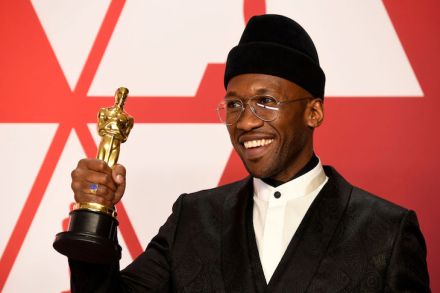
It was a big night for Rami Malek and the Green Book team, and a big night for me too. My palms, closely shaved for the occasion, were sweatier than usual. My tux, freshly laundered and let out, suddenly tightened when the nominations were read out. I was afraid I’d be publicly humiliated, but it turned out that I was a winner. Yes, my Oscar tips were pretty accurate this year — until they weren’t. I thought I’d factored more racial tokenism than a Bernie Sanders campaign video, and more political gesturing than a fundraising disco for the Democratic Socialists of America. But I got the balance of tokenism wrong. I thought ‘All the

The diversity agenda is killing cinema

The film world is atoning for its crimes against diversity. On screen, strong women are supplanting Disney princesses. Superheroes, once uniformly white and male, are turning multicultural. Gay intrigue is edging out heterosexual romance. Away from the camera, bankable stars force studios to employ minority personnel by adding ‘inclusion riders’ to their contracts. Film-makers must repent ancient mis-speaks, beg forgiveness and denounce peers accused of transgressions. Abuse allegations against Woody Allen may be unproven, but actors who have taken his shilling disown him and donate their tarnished earnings to #TimesUp. Unsurprisingly, the current awards season reflects these rectifications. Of the eight nominations for best picture Oscar, six boast diversity credentials.

Home truths | 21 February 2019

The creation of a commission to examine beauty in new building created a stir in the media, with the chairman subjected to a hate storm of unusual turbulence even by the standards that he regularly has to endure. Hate storms arise when powerful interests are threatened, and this was no exception. There is hardly a person in this country who is not aware of what Milan Kundera has called the ongoing ‘uglification of our world’ and who does not hope that something might be done about it. No one I talk to denies the need for a large number of new houses. But they all hope that this need can

Art and life

Diane Arbus saw mid-20th century New York as if she was in a waking dream. Or at least that is the impression you get from the exhibition of her early photographs at the Hayward Gallery. She was attracted to people on the margins of society — or, as she roundly called them, ‘freaks’: fairground performers, assorted human oddities and individuals with non-standard bodies such as ‘Miss Makrina, a Russian Midget, in her Kitchen NYC’ (1959). Arbus famously observed of such individuals: ‘They’ve already passed their test in life. They’re aristocrats.’ However, Arbus could make just about anybody — or thing — appear unaccountably strange. An old couple on a park

Lines of enquiry

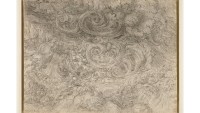
A cataclysmic storm is unfolding. Dense, thunderous lines of black chalk sweep rapidly around the paper in frantic curls of awesome energy. Rocks tumble beneath the irresistible force of an engulfing flood. Cloud and rain, vapour and water, both churned by the same punishing vortexes, become almost indistinguishable. The scale is hard to judge until you glimpse, in the foreground, a hilltop fortress, dwarfed and ruined by the relentless inundation. Man and his monument, both powerless in the face of almighty nature. It’s a terrifying scene of chaos and one that Leonardo da Vinci revisited numerous times in his final years. Facing his own mortality, he produced a series of

On Van Gogh and Rembrandt

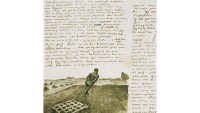
Being in the south of France obviously gave Vincent an enormous joy, which visibly comes out in the paintings. That’s what people feel when they look at them. They are so incredibly direct. I remember in some of his letters Vincent saying that he was aware he saw more clearly than other people. It was an intense vision… [H]e must have been doing some very concentrated looking. My God! After working for a long time, I get very tired eyes. I just have to close them… Photographs of those fields around Arles that Van Gogh painted wouldn’t interest us much. It’s a rather boring, flat landscape. Vincent makes us see