Americana

In Georgetown, the scariest part of Halloween is the virtue-signaling

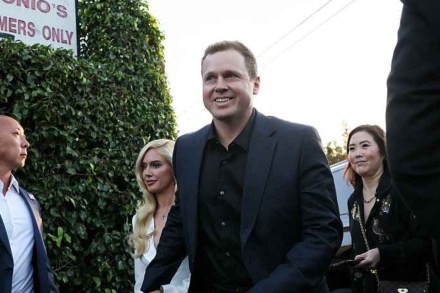
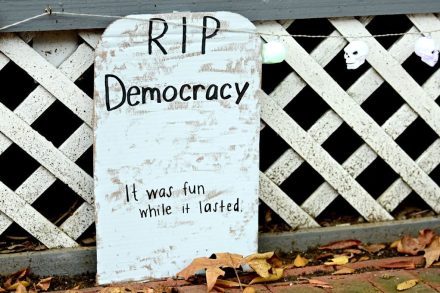
Halloween has never been my favorite holiday, but as I was warned when we moved here last November, in Georgetown it is a serious affair. For the entire month of October, giant spiders scale the rowhouses, ghosts and cadavers dangle from trees, cackling animatronic witches guard the cemetery and the local bed and breakfast, parking spaces are “reserved” for ghostbusters and on every other block there’s a 12-foot-tall skeleton waiting to send my two-year-old into shrieks of delight. Then there are the pumpkins: every shape, size and color, stacked by the dozen in tasteful arrangements on every step of every stoop in town. How does everyone pull this off, I asked my real-estate agent, my one-stop source for all Georgetown-related trivia.

georgetown halloween

Jason Aldean’s critics have clearly never been to a small town

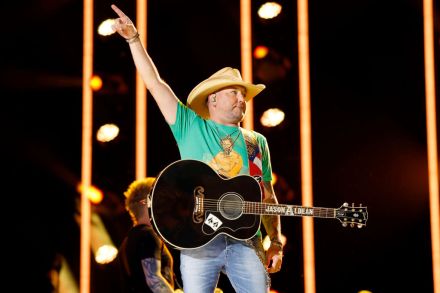
Country music superstar Jason Aldean has come under fire for a song that condemns violent crime and promotes the Second Amendment. But the people trying to cancel “Try That In A Small Town” are desperate race-baiters who have evidently never visited a small town (the song has been playing on country stations since May, but the left has only just now become outraged by it). Though their charge that the song is a “pro-lynching” anthem is obvious nonsense, Aldean is correct in saying such absurd rhetoric must be addressed, as leaving it unchecked is “dangerous.” https://www.youtube.com/watch?
jason aldean

Don’t deprive Americans of July 4 fireworks

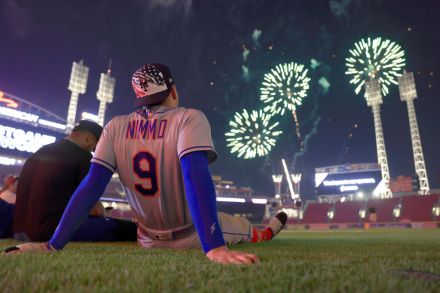
The Fourth of July is an opportunity to reflect upon the miracle that is the founding of the United States, a process that has been instrumental in the spread of freedom, democracy and human rights across the globe. That, unquestionably, is something worth celebrating. Fireworks have been a part of this celebration from the start, with displays gracing the skies of Philadelphia and Boston in 1777. For some parts of the country, however, the days of fireworks may be numbered, as the displays’ environmental and health impacts collide with politics. Reuters published a piece on June 30 detailing all of the dangers associated with the patriotic explosions.

fireworks

A tale of a Cracker Jack box and the old America

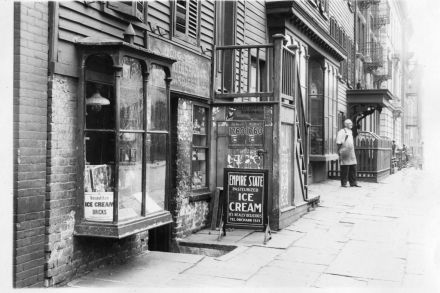
If it wasn’t for Chevalier Quixote Jackson, I wouldn’t be here today. Whether or not the Pittsburgh-born laryngologist and "father of endoscopy” knew it, 100 years ago his bronchoscope saved my grandfather’s life. The story, relayed to me by my grandfather and appearing in at least three New York City newspapers, is not only a fascinating one, but a window into an America that seems both distantly foreign and warmly home. My mother’s father was of English and Irish extraction. His Irish ancestors — from whom he inherited the surname Fitzpatrick — had arrived in New York City during the Famine. The English side had also been in New York for generations, and apparently had some wealth.

On the hunt for my fiancé’s Christmas shotgun

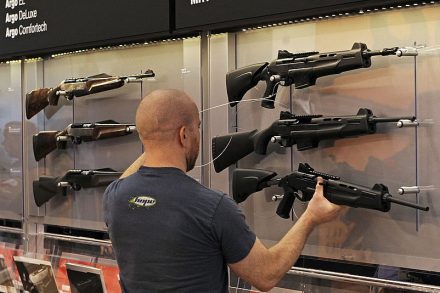
A platitude oft repeated by left-wing activists is that its easier to buy a gun in the United States than it is to purchase medicine or vote. Feminists similarly like to say that American women have fewer rights than firearms. If anyone on the left would like to test these obviously absurd claims, I would challenge them to start by trying to buy a Benelli M2 Field Shotgun. I went down the Benelli rabbit hole a couple of months ago after my fiancé told me he wanted one for Christmas. When I discovered the hefty price tag on an M2, I somewhat jokingly protested à la A Christmas Story that he might shoot his eye out. Just like young Ralphie, my fiancé was undeterred.

benelli shotgun

An errand into the wilderness

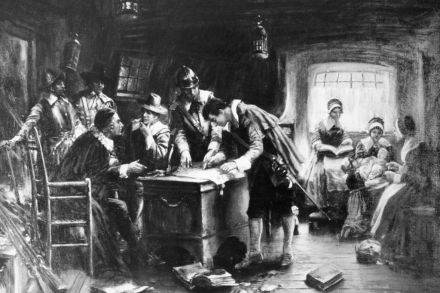
Four hundred and two years ago this month, a group of courageous Pilgrims crossed the Atlantic on a ship seasoned from years of service in the English Channel. Their ship was the Mayflower. It bore a people with characteristics — bold, daring, foolish, devout — essential to the founding of a new nation that would become the envy of the world. The year was 1620. Europe was two years into a thirty-year religious war that would raze its cities, starve its citizens, unleash plagues and take kings. They set their backs to the old ways — and bet their lives and their families on America. What started in Plymouth changed the world — and changed it for the better.

pilgrims

CVS is the perfect surrogate for American culture

At some point in my adulthood I came to realize what I thought of as my children's precious childhood memories were actually my memories of them. As they got older, I understood they remembered little of the details of family vacations or the long museum treks we made them go on in the name of education. Those were my memories. Because we lived in multiple countries during our prime child raising years, those memories are spread out geographically. So we do not encounter refresher courses every Thanksgiving when we visit the old house. I can't say if we'll ever get back to some of those places (I can say for sure we will never organize the hundreds of photos we took that now reside in massive shipping boxes), so they really do now exist only in memory.

Guardian writer doesn’t get why Americans love fall

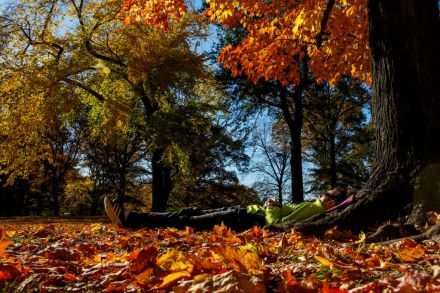
We Americans are used to the Brits weighing in on our affairs. I try to view their concerns with compassion, as a hard-to-kick habit leftover from the pre-Revolution days, or an endearing tendency they can’t help, like when your mother continues to remind you to wear a coat in winter even after you’re well into your forties. But our English cousins have finally crossed the line. Writing for the Guardian, Arwa Mahdawi vilifies that which we Yanks hold most sacred: “the season they call ‘fall.’” According to Mahdawi, autumn is “overrated” “rubbish.” Instead of pumpkin-spicing everything, she suggests we elevate another squash variety, “the humble courgetti,” as our favorite flavor profile of the season. I simply cannot let such abuse go unchallenged.

Stop trying to make the four-day workweek happen

Growing up in my little Pennsylvania hometown, most businesses would close early on Wednesdays around lunchtime. The idea was that they would re-open in the evening or on Saturday mornings to give people who couldn’t get away from their nine-to-five jobs the chance to shop, go to the bank, etc. To this day, a few places (the ones that are left) adhere to this tradition. They shut their doors at noon or so mid-week, everyone knows they do, and we plan our lives accordingly. It works in Philipsburg, a rural place with a few thousand loyal customers who have known for decades that Larry’s Saw Shop won’t be open Wednesday afternoon. So we get our chainsaws dropped off for service on Tuesday or first thing Thursday morning. That’s just the way it is. Life goes on.

Enjoy fishing, but don’t overthink it

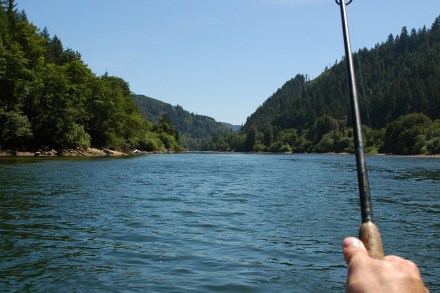
Spring fishing season has finally arrived in southeastern Virginia. I went out a few weeks ago to see if the crappie were biting. They weren’t. I went out last weekend after I borrowed a kayak from a friend — someone had stolen my run-down Jon boat (may they never catch anything again but disease) — and caught three. I am a recreational — not an avid — angler, and will probably only fish a dozen or two times over the next months. I don’t mind if I don’t catch anything. There are moments, even, when I think I would almost prefer not to catch anything because it would interrupt the experience of floating on the lake and looking.

fishing

Learning to speak American

Rarely has a question stopped me in my tracks quite so abruptly. It was a Wednesday at 8:30 a.m., and rushing to get to a meeting on time, I walk-jogged past my building’s extremely friendly Jamaican doorman. “Ohh-kay,” he greeted me characteristically with a curt nod and a little wave. “How are you?” I replied, not missing a beat. Then we both got on with our days. Except I didn’t. I’d barely stepped out into the crisp morning air when it hit me with the force of an Oxford English Dictionary tumbling from the window of the apartment above me: what had just happened?

Conservatives should embrace urbanism

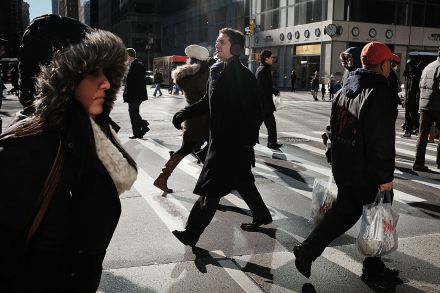
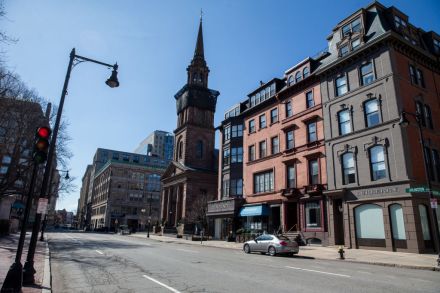
I consider myself an urbanist — despite the fact I lean to the right. Or perhaps, in my case, because of it. But what exactly is “urbanism”? It’s a new term that carries a lot of different meanings. It might indicate acclaim for the big, blue, coastal cities, the sort that conservatives dislike. It might denote a wonky focus on things like zoning, setbacks, street widths and other aspects of urban design or engineering. It might also bring to mind moralizing, busybody progressivism. My take on it is more informal and less partisan: an awareness of the built environment as an independent variable in human behavior, and a desire that our built environments be conducive to commerce and community at a human scale. I think that’s conservative.

urbanism

Time for a national snow day

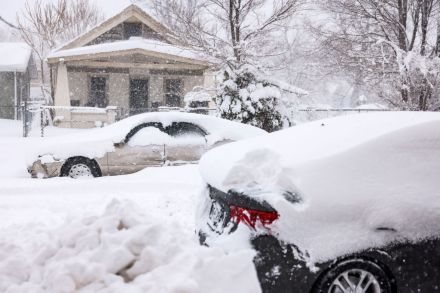
The world in wintertime (at least where it snows) is a different place. Here in rural Pennsylvania, a distinct, sulfuric musk — a most nostalgic and comforting scent — wafts through my little hometown, lending an antiquated charm that reminds us of bygone days when coal was king (and proves it’s still very much in the royal family in these parts). While the natural world dies, hibernates, and goes dormant, our human spirits are rejuvenated. When the temperature drops, there’s a communal mood change, the effects of which tend to be a contagious energy and a marked softening of mankind. People let down their guards, exchanging prank gifts at office Christmas parties while wearing elf ears and silly, ugly sweaters bedecked with jingle bells.