
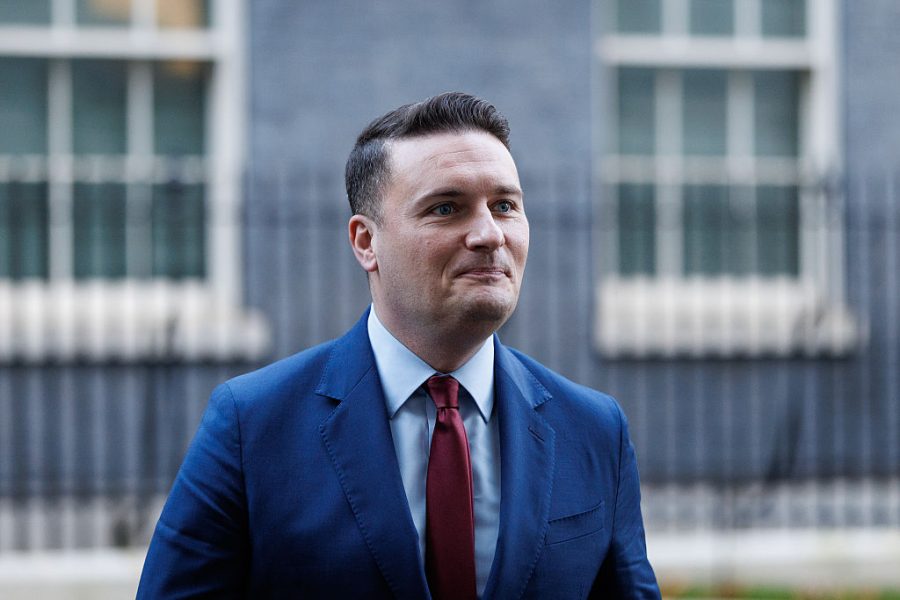
Could Labour, under a new leader, go into the next election with a manifesto promising to start negotiations to rejoin the EU? It is beginning to look like a real possibility given Wes Streeting’s assertion that Britain should rejoin the customs union. If Britain were to become part of the customs union, it would make questionable sense to remain outside the single market, and if Britain were to rejoin the single market, it could be sold as little more than a tidying-up exercise to apply for full membership of the EU.
Streeting’s remarks have left Keir Starmer – who spent months in opposition calling for a second referendum which he hoped would overturn the result of the first – in the odd position of looking (relatively) like a Eurosceptic. As he points out, joining the customs union would undo two of his government’s genuine achievements: completing the trade deal with India which was begun by the Conservatives, and negotiating a better carve-out from Trump’s punitive tariffs than Ursula von der Leyen managed for the EU.
Adopting a more pro-EU position is arguably Labour’s greatest chance of remaining in power
Does anyone really think that a Streeting-led Labour party would stop at rejoining the customs union? That would leave us in the dreaded worst-of-all-worlds position of being half-in, half-out of the EU. We would have to live with EU trade deals which had been negotiated with the interests of the EU’s 27 members in mind, not with Britain’s. We would no doubt have to pay to join, shelling out billions more than we are already paying for Starmer’s reset deal and for rejoining the Erasmus scheme. And you could bet, given that we would still be outside the single market, that the EU would dream up ways of making life difficult for UK exporters. If we were back in the customs union, you can bet the debate would move swiftly on to full membership.
Streeting’s position does, however, make political sense for him – assuming he covets the Labour leadership (which of course he denies). According to YouGov, around eight in 10 Labour voters agree that Britain should rejoin the customs union. Such a promise could well pull in Liberal Democrat and Green voters, too. It would also prepare the way for Streeting to vault to the position of full EU membership once he was installed in Downing Street.
Adopting a more pro-EU position is arguably Labour’s greatest chance of remaining in power after the next election. Like it or not, membership of the bloc has become a touchstone issue for the liberal-left. Labour doesn’t have a great chance of staying in power after 2029 whatever it does – to judge by how its poll ratings have begun to slip below the still-dire position of the Tories. But by unashamedly committing itself to rejoining the EU, Labour would then at least stand for something, which it doesn’t at the moment.
How would Reform and the Conservatives cope with a Labour party promising a bold policy of rejoining the EU? They could find themselves splitting the Eurosceptic vote while Labour reeled in the Rejoin vote. Perhaps their best hope is to remind Green and LibDem voters that a vote to rejoin the EU would be a vote to weaken Britain’s net zero policies. It would mean, for example, that Britain’s ban on new petrol and diesel cars would have to be delayed from 2030 to 2040.
One of the Leave campaign’s main arguments was that a Britain free of EU ties could deregulate on social and environmental issues, thereby becoming more business and growth-friendly. Yet that is not how things have turned out. Perversely, Britain has become keener to regulate on many issues. Turning Greens into Eurosceptics could go on to deny victory to a Streeting-led pro-EU Labour party.



Comments