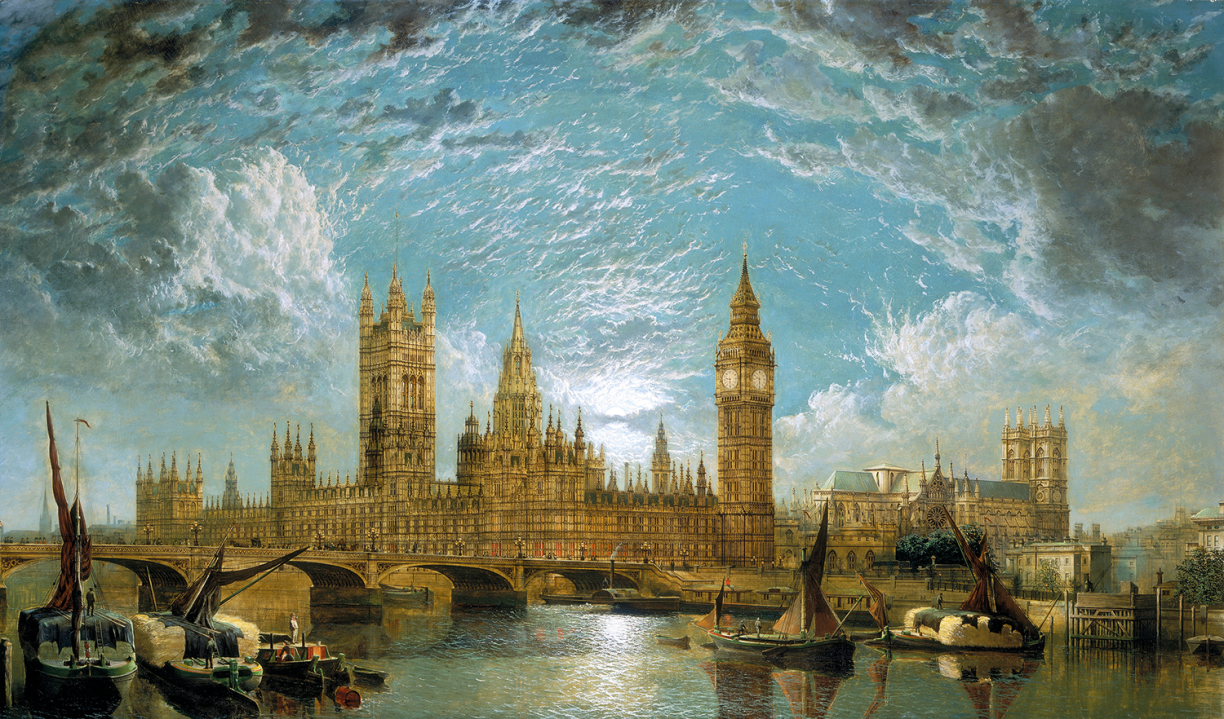
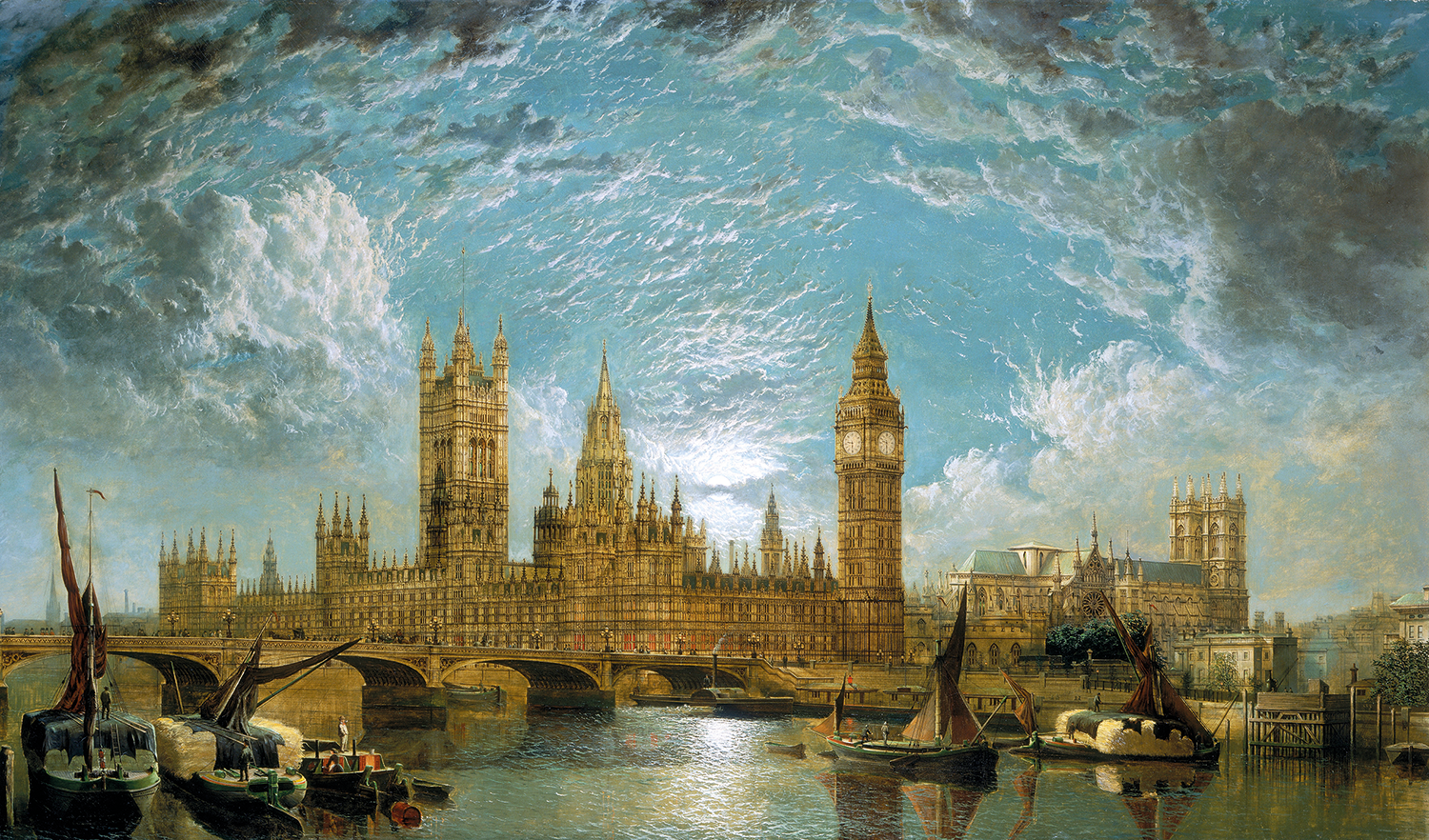
What does £450 million get you these days? With that cash, you could buy a Premier League football club. Or fund 10,000 nurses for a year. If you’re feeling civic-minded, why not give everyone in the UK a fiver and have a chunk of change left over?
In the case of the Parliamentary Restoration and Renewal (R&R) programme – the plans to rebuild and repair the Palace of Westminster – the best part of £500 million has been spent on, well, it’s quite hard to tell. MPs and peers have batted ideas back and forth about how to fix their grade I-listed, Unesco World Heritage workplace for more than two decades.
‘We’re sleepwalking into a Notre-Dame-style inferno’
Meanwhile, parliament crumbles. No significant works have been done on Charles Barry’s 1834 design since it was rebuilt after the Blitz, and its age is showing. The steam-powered heating frequently breaks down. The sewage system leaks. Vermin are commonplace. Fourteen miles of water pipes and roughly 250 miles of cabling snaggle through its 1,100 rooms. The Palace – and I felt a perverse lift of national pride on learning this – has the most asbestos of any building in Europe. Ongoing maintenance costs £1.5 million a week, and it is barely keeping the lights on: since 2016, there have been 36 fires and 19 instances of falling stonemasonry. In 2019, a House of Commons debate was suspended when water began to pour from the ceiling.
‘We’re sleepwalking into a Notre-Dame-style inferno,’ says Peter Hain, a former leader of the House of Commons. ‘Six thousand people work in parliament, and every single one of us is vulnerable. It’s a much-respected, beloved centre of democracy that’s exalted throughout the world – and yet it’s unfit for purpose. If it burns down, the public are going to turn on parliamentarians and ask: “What were you doing?”’ Another insider was more blunt: the ongoing saga of R&R was a scandal ‘another HS2 in the making’.
You don’t have to spend long in the Palace to realise the buildings are in a dire state. On a recent behind-the-scenes tour, we were issued with hard hats and told to wear sensible shoes. Stepping through a scuffed and scarred wooden door, we descended into the basement, a restricted area described by one peer as ‘a cathedral of horror’.

Down below, the atmosphere was somewhere between a medieval dungeon and a gold mine. There was the smell of old stone and the temperature was significantly warmer than up above thanks to the vast, leaky Victorian heating pipes that ran alongside us. Heading further in, we shuffled through ‘submarine corridor’. Originally large enough for three men to walk comfortably abreast, we were now forced to spelunk around snaking tangles of pipes, telecoms cables and the single, lonely yellow wire in charge of ringing the Division Bell.
Generations of repairs and replacements had been bunged in since the early 1800s; much of the older work was now redundant but couldn’t be ripped out because newer stuff was in the way. Emerging at the end of the tour, our guide pointed out a typical workaround – a water pipe had been leaking on to an electrical circuit board so engineers had rigged up plastic guttering to catch the drips. What happened when it spilled over? ‘Well, then we send someone to mop it up,’ he replied. As a metaphor for the R&R programme, it seemed a little on the nose.
Untangling what has gone wrong with R&R – and why it has been so delayed – can feel like parsing the inner workings of the CCP. But discussions about the necessary repairs to parliament have been on the table since the mid-2000s. By 2016, there was sufficient anger in both Houses for a joint committee to argue there was a ‘clear and pressing need for action’ – a call that was given heft by the 2019 Parliamentary Buildings (Restoration and Renewal) Act.
Yet since then, momentum has been stop-start. An arms-length body – the R&R Delivery Authority – recommended in 2020 that both Houses evacuate for the duration of the works. But MPs pushed back and, in 2022, they disbanded the Delivery Authority and took the work back in-house. That group, now called the R&R Client Board, finally published a report last month recommending two options. They suggested that the only two feasible plans were a full decant of both Houses: ‘full decant’. Or a rolling series of repairs with members remaining in the buildings: ‘enhanced maintenance/EMI +’. Under ‘full decant’, MPs would move to the Northern Estate, while the Lords would head to the QEII conference centre. ‘EMI+’ would see the Lords move out for up to 13 years, and the Commons occupy the Lords chamber for two years.
Under both plans, the expense – and timeframes – are startling. ‘Full decant’ would take between 19 and 24 years and cost up to £11.5 billion. ‘EMI+’, meanwhile, would potentially drag on for 70 years and run up to £20 billion (excluding inflation). Under this scheme, there’s a chance works would continue past 2100 – even the primary-school kids tottering around on tours of the Palace would be lucky to see their completion.
But inaction carries a heavy penalty too. Each year of delays adds £70 million of costs; thanks to inflation, this figure could be £350 million overall before everything is completed. And, of course, a catastrophic disaster could strike at any time.
‘There’s been this extraordinary complacency and unwillingness to grasp the nettle,’ says Hain. ‘Yes, the costs are horrendous – but if you keep kicking the can down the road and patching up, the costs go on for ever.’
So what explains the wait? ‘There’s never going to be a good time to spend £15 billion on a politician’s workplace,’ says Dr Alexandra Meakin, a lecturer at Leeds University and expert on R&R. ‘But it’s compounded by a lack of leadership. There’s never been one person in charge of the project and there never can be because of the way parliament is run.’ Consensus requires both Houses to agree how to proceed. And constitutionally, a previous parliament cannot bind a future one, so a project whose lifespan is measured in decades has to compete with four-year election cycles – and MPs’ feelings.
‘Politicians use the word “love” to describe their connection to the Palace of Westminster,’ Meakin notes. ‘They feel the very fabric of the building – the bricks, the concrete, everything in it – bears the influence of their predecessors. One MP told me: “Every time I walk through Westminster Hall, I think of the words of William Wilberforce.”’
The Palace has the most asbestos of any building in Europe
The public are more pragmatic. When surveyed, most saw it less as an office for MPs and more a symbol of democracy, an emblem in bricks and mortar of British power and our place in the world. Dithering until it burns down, therefore, would be quite the statement.
The UK is not unique in reckoning with this problem. The Reichstag was comprehensively reimagined by Norman Foster between 1995 and 1999, transforming the war-damaged building. The Canadian government, meanwhile, is renovating its own parliamentary estate, with each house moving out in turn. But the Austrians have stolen a march: repairs to Theophil Hansen’s grand neoclassical parliament building were conceived, approved and completed ‘long after R&R was first proposed and before we put a single spade in the ground’, says Meakin.
The nature of the British parliament is not immutable. During the second world war, the estate was heavily bombed and, from June 1941 to the autumn of 1950, the Commons met in the Lords Chamber and the Lords met in the Robing Room. (This fact was kept secret until 1950, though, to avoid damaging morale.) Then during the summer of 1980, the Lords briefly moved to the Royal Gallery when a wobbly wooden boss threatened to brain peers.
The R&R report delivered last month promises a parliamentary building fit for the future. Glossy architectural renderings imagine a sunken modern visitors’ centre, similar to the Louvre’s entrance hall. There’s an emphasis on accessibility and sustainability: as it stands, only 12 per cent of the Palace is step-free and the heating is so knackered that portable heaters are everywhere. Heat pumps and discreet solar panels are in discussion. ‘It needs to be a building that everyone in the UK would feel welcome in,’ says Meakin. ‘A building that belongs to the nation, rather than the temporary occupants of the current legislature.’
How likely is that vision to be realised? To move forward, a debate is due to take place this year on the R&R report. After that, both Houses will vote on whether to proceed with ‘Phase One’ stabilisation works – the necessary first steps before either ‘full decant’ or ‘EMI+’ can take place. These initial repairs are expected to take seven years and cost £3 billion. Then, in the early 2030s – and, crucially, after the next election – members will approve one of the two options and full-scale works might finally begin.
‘Punting the vote to 2030 means this parliament has, in effect, abdicated its responsibility,’ says Meakin. ‘What are the chances that, in five years’ time, a new intake of MPs will commission their own review and the whole saga will drag on while this symbol of democracy and iconic national building continues to crumble?’
For now, the fate of the Palace of Westminster is in members’ hands – if it doesn’t burn down around their ears first.




Comments