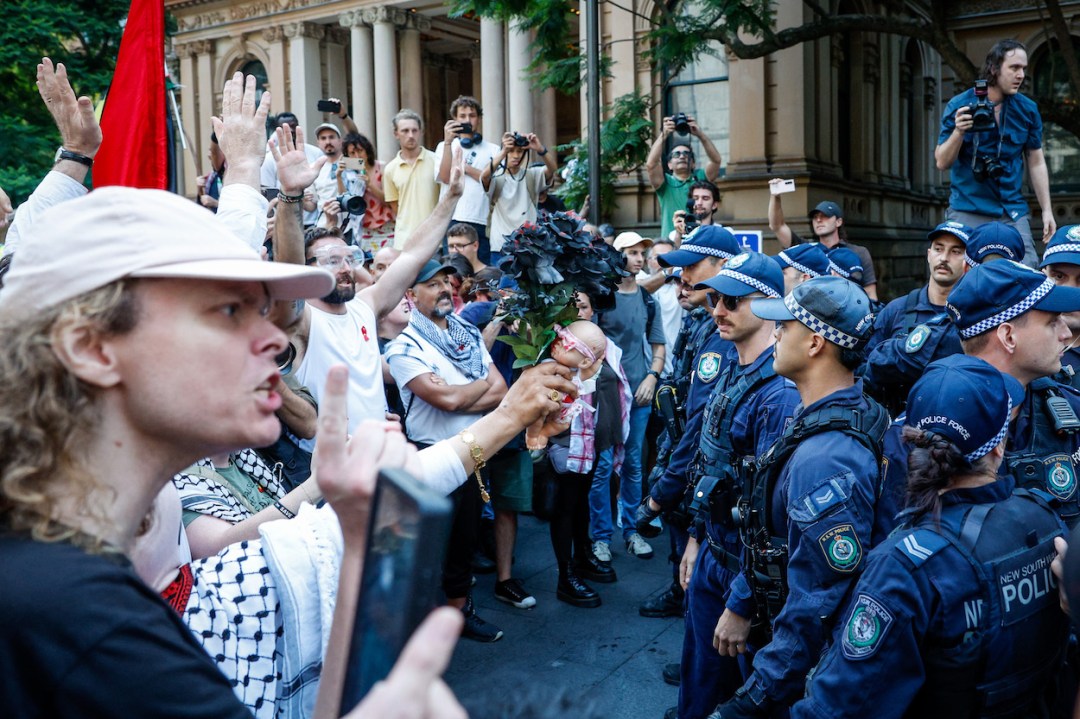
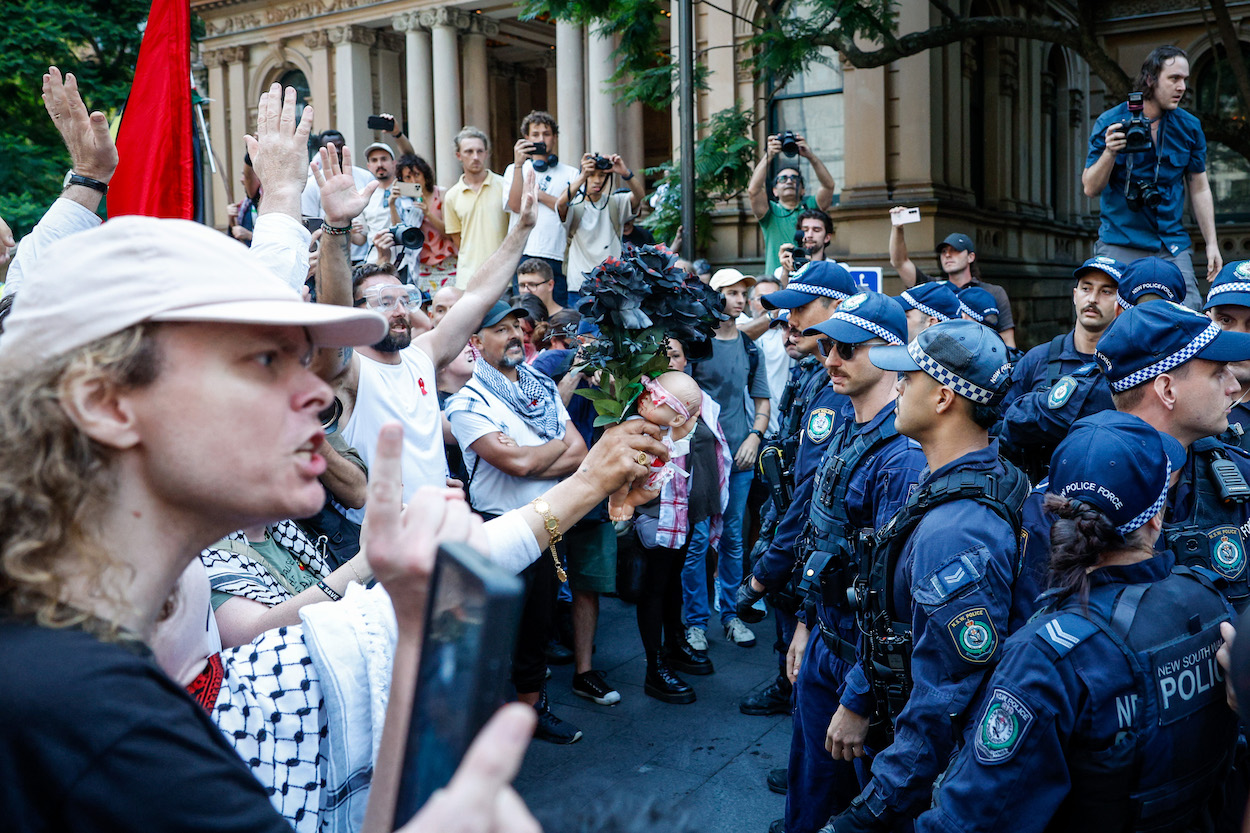
‘From Gadigal to Gaza, globalise the intifada!’ This cry rang out on Monday night at an angry protest in central Sydney (trendily-named Gadigal by radical Aboriginal activists). But it wasn’t simply the chant of an angry pro-Palestine mob. The firebrand demagogue who spat out this invective, which proceeded a violent protest against the visit to Sydney of Israel’s president, Isaac Herzog, was no ordinary activist. She was Grace Tame, the 2021 recipient of one of Australia’s highest public honours: Australian of the Year.
Herzog is in Australia on a state visit, organised urgently after Bondi’s Hanukkah massacre not quite two months ago. His purpose is simple: to mourn with Australia’s Jewish community, to console and show solidarity with them on behalf of the people of Israel.
What occurred in Sydney, Melbourne and other Australian cities on Monday night was as ugly as the hatred-filled ‘protests’ that started outside the Sydney Opera House on 9 October 2023, with its spontaneous chants of ‘F*** the Jews’ and, according to some, ‘Gas the Jews’. Indeed, it was actually worse: the aim of the Sydney mob ringleaders not only was to test the resolve of police to enforce protest control and dispersal powers hurriedly legislated after Bondi by the New South Wales parliament. They clearly were determined to disrupt and intimidate the public gathering of several thousand Jewish Australians who wanted to hear Herzog speak.

‘One thing has become clear,’ the President of Israel said. ‘Hatred that starts with Jews never ends with the Jews. That is why the current rise in anti-Semitism around the world is a global emergency, and we must all act to fight it.’ When asked if he has a message to Tame and the thousands of other protesters whipped up against his visit, Herzog said: ‘These demonstrations, in most cases, what you see and hear comes to undermine our right, my nation’s right, to its mere existence.’
The fiery demagoguery of the likes of a former Australian of the Year, someone once honoured for her good work and deeds, proved Herzog’s point. In Australia’s parliament on Tuesday, prime minister Anthony Albanese rightly and decently condemned the lawlessness of the Sydney protests, and organisers’ blatant rejection of the police’s new lawful power to contain their outrage. But he refused every opportunity to denounce and condemn Grace Tame, nor did he respond to MPs’ calls to strip her of her Australian of the Year award. For Albanese, acutely aware of Tame’s being idolised by his Labor party’s far-left and pro-Palestine wing, politically that was one step too far.
On Thursday, Herzog will be in Melbourne, where protests as aggressive as those in Sydney are expected. Likely, they will be more so, as Victoria’s state government failed to act after Bondi to bolster police powers, nor specifically to outlaw chants including ‘globalise the intifada’ as punishable hate speech.
Israel’s president coming to Australia this week is proving a focus of confected outrage and hatred from the pro-Palestine rent-a-crowd of far-left activists and propagandists who don’t let truth and compassion get in the way of their attention-seeking and contempt for police and the law. Herzog is striving to reassure and console Australian Jews after the trauma of Bondi, but the violent activist reactions to his presence remind them, and Jews in the West generally, that they must still fear the consequences of their being proudly Jewish, and that they are unjustly and disgracefully treated, by some, as unwelcome trespassers in their own country.
But in coming, Herzog has done Australia a favour. What is unfolding in the streets of Sydney, Melbourne and other cities removes any illusions that the Bondi atrocity was what the president called the ‘endpoint’ of anti-Semitism in Australia. Traumatic though it was, it is not the end. The ugly hatred in the anti-Herzog protests highlight the fact that the boil of anti-Semitism was not lanced six weeks ago; its vile presence is a strong now as it was before. The fight against it must continue.
Anti-Semitism’s dark stain on Australia’s national character remains.



Comments