Every fella has a drink of choice. Some fellas go for a whiskey neat. Others an ice-cold beer. Me, I prefer a full glass of noir. Pure, unsweetened, hardboiled noir. The stuff that nightmares are made of.
This summer, as the heat scorched the lawns and melted the pavements, I went on a bender of classic noir fiction. I read, then watched, The Postman Always Rings Twice, James M. Cain’s 1934 novel about a drifter who gets a gig at a crummy roadside diner. Soon he’s falling for the boss’s wife, a pretty gal who bats her eyes at him and drives him to break the Sixth Commandment (and the Seventh too, obviously). It was adapted for the screen many times, but the best version is the 1946 one starring Lana Turner as the pretty gal and John Garfield as the drifter. You can’t take your eyes off Turner’s big wistful eyes and Garfield’s cursed smirk.
Noir fiction, although decades old, feels more relevant than ever
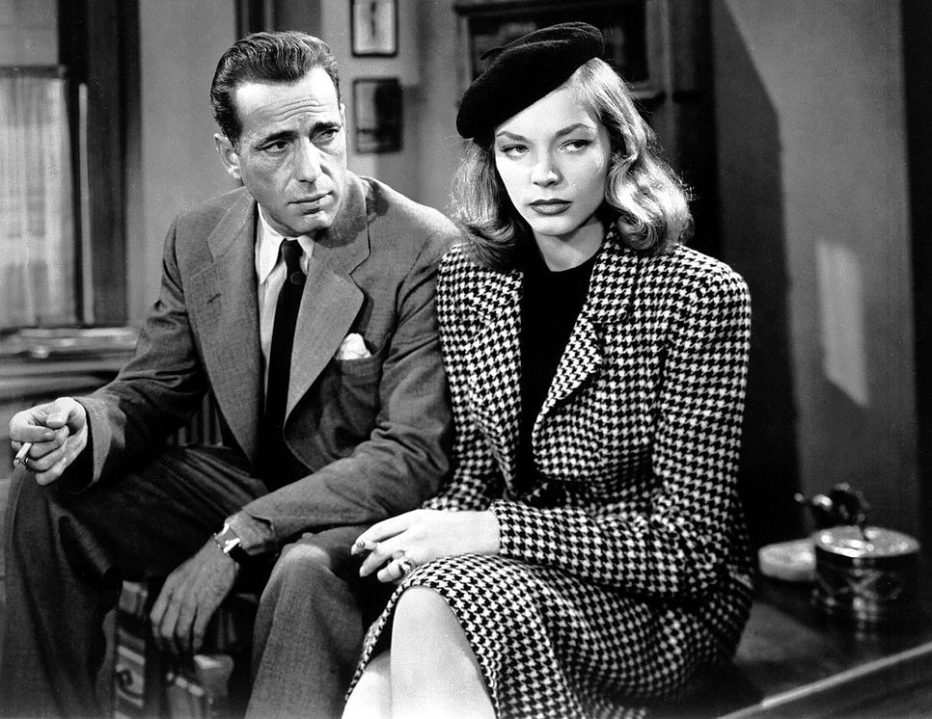
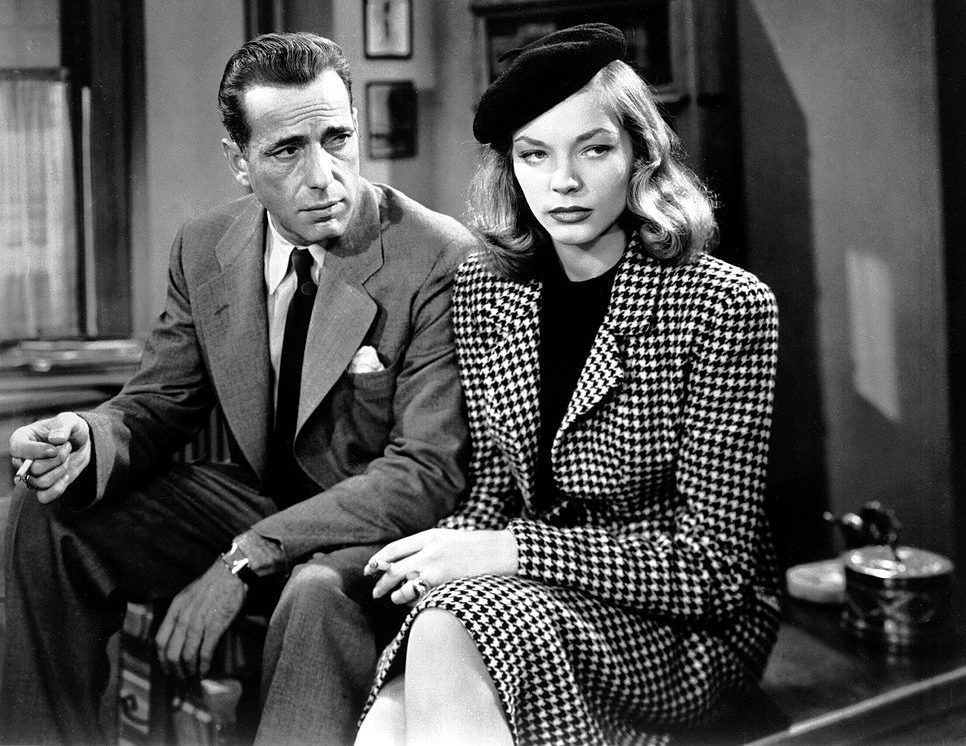
That was just the beginning. Since then, I’ve been reading and watching noir: famous works like Raymond Chandler’s 1939 novel The Big Sleep, filmed seven years later by Howard Hawks with Humphrey Bogart in the lead, as well as forgotten gems like Detour (available on YouTube), the 1945 low-budget film about a starving pianist who hitchhikes a ride to LA and, next things he knows, to his undoing. I’m a sucker for the staples of the genre: the jaded anti-heroes who never go out without a pack of smokes and a Colt, the glammed-up dames with platinum blonde curls and veins full of arsenic, the snappy dialog.
But there’s another reason why I’m hooked: Noir fiction, although decades old, feels more relevant than ever. It speaks to – and of – our febrile age better than most contemporary fare. Forget about Adolescence or whatever ‘urgently topical’ Netflix series is supposed to edify us. Noir did it all before, and without the self-importance and the hyperventilation.
My guide into the noir canon – my Virgil, if you will, as I’ve descended into this hardboiling inferno – has been Mr Charles Ardai of New York City. The author of several noirs, most recently the short story collection Death Comes Too Late, Ardai is also the co-founder of Hard Case Crime, the premier publisher of noir in the world. He’s edited more than 150 books in the genre, both reprints and new titles, including three by Stephen King. All of them have gorgeous cover art in the traditional pulp style.
“There’s often a resurgence of interest in noir,” Ardai tells me, “when the social fabric seems to be unraveling, when the institutions we are taught to rely on turn out to have a corrupt underbelly.” Noir, it’s important to understand, is the product of a specific time and place: the 1929 Wall Street crash. In the aftermath, as the Great Depression gutted the US economy, noir really took off. Then came World War II and the Holocaust and the beginning of the Cold War. Noir flourishes when human beings don’t.
But what is noir exactly? Some noirs are crime or detective stories, others domestic thrillers. Above all, it’s an existential mindset. “Noir stories focus on a protagonist who is at a great disadvantage,” Ardai says, “who is struggling against forces more powerful than he is”. Noir, he continues, is “about the struggle”.
And the struggle is ringing again today. Rising economic inequality and social upheaval, the threat of mass layoffs due to AI, fraught relations between men and women, the upsurge in youth violence. The parallels are everywhere.
Start with the noir protagonist. He’s usually a man, young or young-ish, down on his luck, strapped for cash. Unable or unwilling to find stable employment, he feels at odds with a corrupt society dominated by big organizations. “It’s the alienation of the working-class protagonist from the world of power and wealth that makes the noir conflict what it is,” Ardai tells me, “and that’s very much what you see today in every newspaper column.” Case in point: The Wall Street Journal recently reported that young American men “are abandoning the workforce”. In the UK, we’re witnessing the same phenomenon.
Once ejected, to survive, the noir protagonist gets caught up in doomed criminal enterprises. Today, his spiritual descendants bet their savings on prediction markets and become ensnared in dubious crypto schemes. Of course, just as the noir protagonist, they often end up being suckers.
For that reason, a subgenre of noir I really like is “carny noir”. It focuses on desperate men working in carnivals, where you’re either a conman or a mark. King’s Joyland, which Ardai edited, is a twist on the genre, but the classic entry is William Lindsay Gresham’s 1946 novel Nightmare Alley (adapted twice for the screen, including in 2021 by Guillermo del Toro).
Women in noir don’t have it easy either. They’re often reduced to using their God-given assets to get ahead. The femme fatale, the archetypal figure of noir, is gleeful about taking men for a ride. Think Rita Hayworth in Gilda or Barbara Stanwyck in Double Indemnity. “The femme fatale rejects the label of victim, she’s a self-made woman the way the entrepreneur is a self-made man,” Ardai tells me. “The classic femme fatale is the girl from the sticks, usually with a funny sounding name who reinvents herself in Hollywood, dyes her hair blonde and picks a name like Lana Turner.”
There’s more than a little femme fatale in the young women from small towns who reinvent themselves on Instagram, get a boob job and become “professional influencers”. At the extreme end of the spectrum, they join Only Fans and turn sex into a business.
Noir characters inhabit a feverish world where toxic ideologies, from Bolshevism to fascism, fester in the background. Take, for instance, Dashiell Hammett’s 1929 novel Red Harvest. In the opening chapters, its protagonist, a PI known only as the Continental Op, meets a communist agitator who organizes strikes. Today, the opium of the masses is “anti-Zionism”, so the Continental Op would probably be meeting an anti-Zionist activist planning a protest.
But whatever the ideology, the noir protagonist wants nothing to do with the mob. “The noir hero isn’t a joiner,” Ardai tells me. “He isn’t a sheep, and he prides himself on not being persuaded by other people’s proselytizing.” That, ultimately, is why I love noir so much. Yes, it’s a cynical genre, but it isn’t a nihilistic one. In a dissolute world, noir tells us, it matters what you do. Your individuality is sacrosanct.
In Chandler’s novels, there’s usually a scene where Philip Marlowe – played in The Big Sleep by Bogart – is offered a lot of dough to stop his investigation. He always declines. Everyone else might be, but Marlowe isn’t for sale. “In noir stories, you do the right thing because it’s the right thing, not because the world will reward you for it,” Ardai says. “In fact, in spite of the fact the world won’t reward you for it.” But don’t feel bad for Bogart: he gets Lauren Bacall by the end of the story.






Comments