
Has Jacob Rees-Mogg converted to Islam? Obviously not. Why would I even ask such a question?
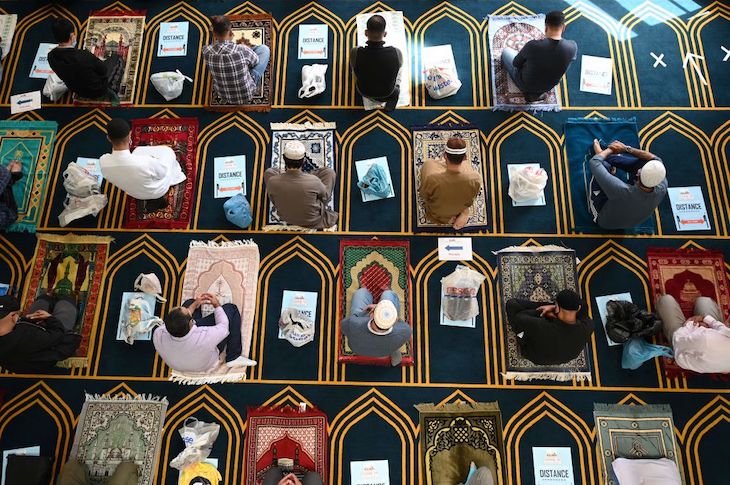
Later this week, Rees-Mogg will be arguing alongside Abdullah Al Andalusi and Michael Doward at the Oxford Union, to defend Islam from the suspicions of Western society. Sir Jacob is famous, among other things, for being an observant Catholic. He has stated that he does not believe Mohammed was a prophet, nor that the Quran is the word of God.
Rather than smear, slur, or ban those invited to speak, we would all do better to listen to them, engaging with their thoughts honestly and respectfully
“Indeed, I think if it were the word of God, God says some pretty peculiar things and encourages some pretty odd forms of behaviour,” he has said.
This puts him in direct opposition to Islam’s central and core belief that “there is no God but Allah, and…Mohammed is the Messenger of God.” So there will presumably be few people who read into his appearance a newfound support for Islamic law or for a caliphate, despite his decision to speak alongside a man who has expressed his commitment to these and other similar opinions.
I will also be speaking in that debate, but on the other side, explaining why the West should be suspicious of Islam. I won’t preempt my speech by going into those details here, and hopefully there’ll be a video of the event shortly afterwards for those who are interested. But just as Sir Jacob’s appearance alongside his teammates shouldn’t be seen as an endorsement of everything they represent, nor should my own appearance alongside my own side’s speakers: the political activist Stephen Yaxley-Lennon, better known as Tommy Robinson, and the actor and activist Laurence Fox. Rather than smear, slur, or ban those invited to speak, we would all do better to listen to them, engaging with their thoughts honestly and respectfully.
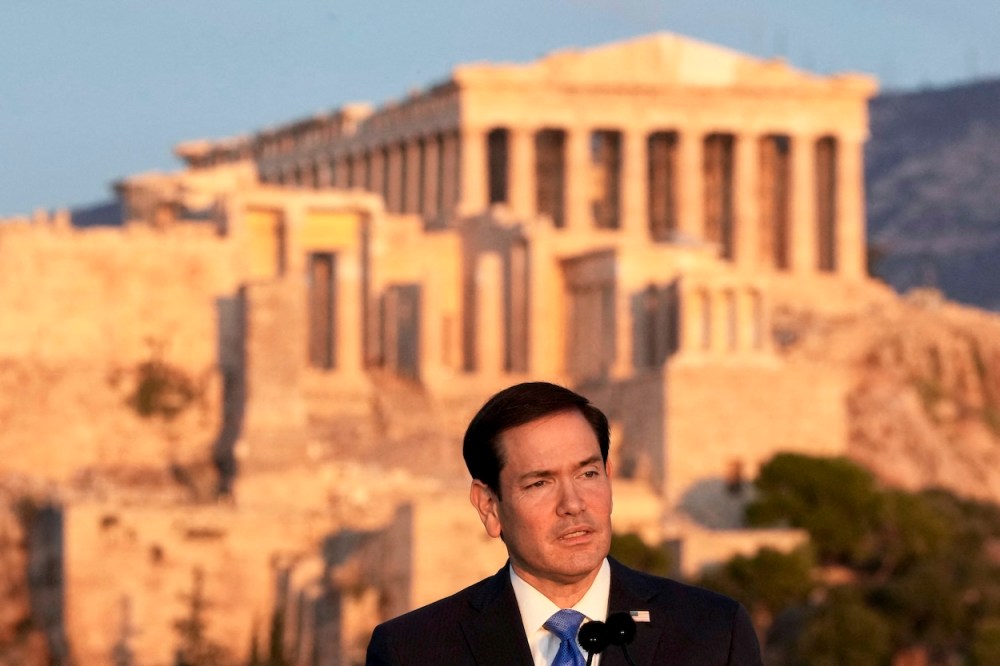
I spoke at the Oxford Union quite recently, defending the state of Israel against the absurd double allegation that it is an apartheid state responsible for genocide, and I’m pretty sure I might have had some different opinions from my side’s other speakers then as well, though all three have since become valued friends of mine. However, the proceedings on that occasion erupted into a circus of abuse. So wild was the behaviour of the Union’s exclusively selected audience that the video of my response to their tantrum garnered well over 13 million views online.
All this just goes to show that the Union, a sort of kindergarten for Westminster, can still attract attention when it wants to. Sadly, just as in Parliament, that is increasingly happening as the result of engineered outrage, provocation, and deliberate chaos, rather than informed and respectful debate of important ideas or good governance.
So why would I subject myself to all that again so soon? And why, as one or two concerned friends and colleagues have asked me, would I risk speaking from the same corner as the ‘far right’ villains of today’s political boxing ring?
Because I think this is an important debate.
Islam has become more visible, more proximate, and more consequential in Western societies than at any earlier point in living memory. It is the fastest growing religion in the United Kingdom. Pew Research Center’s 2025 analysis found that between 2010 and 2020 Muslims grew faster than any other religious group across the entire planet. The largest share of terrorism deaths in recent decades has been caused by groups claiming an Islamic jihadist justification: Islamic State/Isis, Boko Haram/Iswap, al-Shabaab, al-Qaeda affiliates, Hamas, the Islamic Republic of Iran, the Taliban, Jnim, and plenty of others. Britons eat more unannounced Sharia-compliant, halal meat than they are even aware of every single day: in our schools, restaurants, hotels, places of work and hospitals.
Some will argue that the encroachment of Islam in our lives is entirely benign, and that there is nothing to be suspicious of. Others, that we are being usurped or replaced. And millions in between that we ought, at least, to talk about all this.
The conversation is always uncomfortable. It goes against our sense of politeness to criticise, question or even discuss other people’s faith and beliefs. The modern brand of secular atheism which characterises a large portion of our population’s lives tends to shy away from respectful conversation about any faith, preferring to patronise adherents as somehow all equally foolish believers in supernatural fairytales. Many Jews think it gauche to critique another minority’s ideology out of fear of repeating the 20th century’s attempt to erase our very presence in Europe and large parts of the Middle East.
Most people who do want to talk about it feel they ‘don’t know enough’, or are simply afraid of having their heads chopped off, their bodies stabbed or blown up, or having to live in hiding for the rest of their lives. And if physical safety isn’t the problem, financial safety can be: many are unable to speak about something so socially unfashionable lest they lose their livelihood through social hysteria, debanking, and professional cancellation. How will they earn a living, feed their children, pay their mortgages? In short, we’ve all seen the price others have had to pay for speaking up.
The list of those unwilling to talk about it is long: the PC crowd, the wokies, tribal loyalists, the politically calculating, the scared. Is it any surprise that those left standing might be seen as shrill, strident, fanatically obsessed, or even crazy? Who else would keep going?
After my last excursion into the lion’s den that is the 2020s Oxford Union debating chamber, I was widely praised for my patience, my calm, and my appeal to reason. Prof. Niall Ferguson wrote that “one can only admire the grace, patience, and courage of Jonathan Sacerdoti”; The American psychologist and talk show host Dr. Phil described me as “very courageous…a study in patience and self control.” Among my father’s dying advice to me was not to boast, so I hope he would forgive me for repeating such comments here. I do so, I hope, more to illustrate my surprise than arrogance. Surprise that such qualities were worthy of note at all, let alone from such esteemed figures. They are simply part of how I was brought up and educated to be. The deep disappointment and shock I felt – and which resonated around the world – was that many of today’s Oxford students were not brought up that way, too.
So I will speak again on Wednesday in Oxford. I will speak only for myself. I will speak respectfully but honestly. And I will listen to others, too: good and bad, rich and poor, left and right, Christian, Muslim and Jew, upper and working class.
Wish me luck.




Comments