


In the summer of 1972, Lesley Whittaker walked into a pub in rural Warwickshire. She had something for her husband Tony. It was a copy of Playboy magazine. In that issue, there was an interview with the biologist Paul R. Ehrlich, who died this month aged 93. In it, he repeated the thesis of his 1968 book The Population Bomb, where he wrote that ‘in the 1970s hundreds of millions of people will starve to death’. There were simply too many of us. Worldwide famine was imminent.
Lesley and Tony were terrified. Along with a local businessman, Michael Benfield, and his future wife, Freda Sanders, they talked about it over pints at the Bridge Inn, becoming known as a ‘Gang of Four’. Over several months, they roped in 39 others, and set up the People party in 1973. This became the Ecology party by 1975, and then settled as the Green party in 1984.
If Ehrlich’s prediction had come true, there wouldn’t be a Green party. No Lesley, no Tony, no Michael, no Freda. Evidently, overpopulation did not cause everyone to starve. The prediction was wrong but its logic would prove far more enduring.
They are ‘amplifying some of the worst rhetoric that we have seen in British politics in a generation’
The Green party’s origin story reveals the sentiment that endures today under Zack Polanski’s leadership: the worst thing is always happening. Overpopulation, global famine, animal slaughter, ecological devastation, Boris Johnson, rampant terfdom, genocide. The Greens have been the most hospitable political home for the apocalyptic, the anxious and the scared.
This weekend’s Green conference is a perfect opportunity to witness the party’s paranoid style. Looking through the motions, a picture emerges of a movement consumed by its neuroses. It is no longer possible for the Greens to be just green: the party has been eaten up by what some people call the ‘omnicause’. If you’re a conservative with environmental leanings, then you’re not welcome. If you’re a gender-critical eco-warrior… well, there’s no such thing. Climate activism begets trans activism begets Palestinian activism. The author Sally Rooney gave a speech at a progressive conference this month that’s a good example of the sentiment. ‘The adversaries we confront in the Palestinian solidarity movement… are the same forces driving catastrophic climate change and destroying the very basis for our shared survival,’ she said. Each issue is yet more proof of a permanent crisis.
At this weekend’s online-only conference, party members will have an opportunity to vote on a motion declaring that ‘Zionism is racism’. Two similarly named splinter groups – Greens Anti-Zionist Alliance and Greens for Palestine – have been leading the effort, and Polanski (himself Jewish) hasn’t really condemned it: ‘If we’re talking about the definition [of Zionism] that this Israeli government are clearly perpetrating through a genocide in Gaza, then yes, absolutely. That’s racist.’
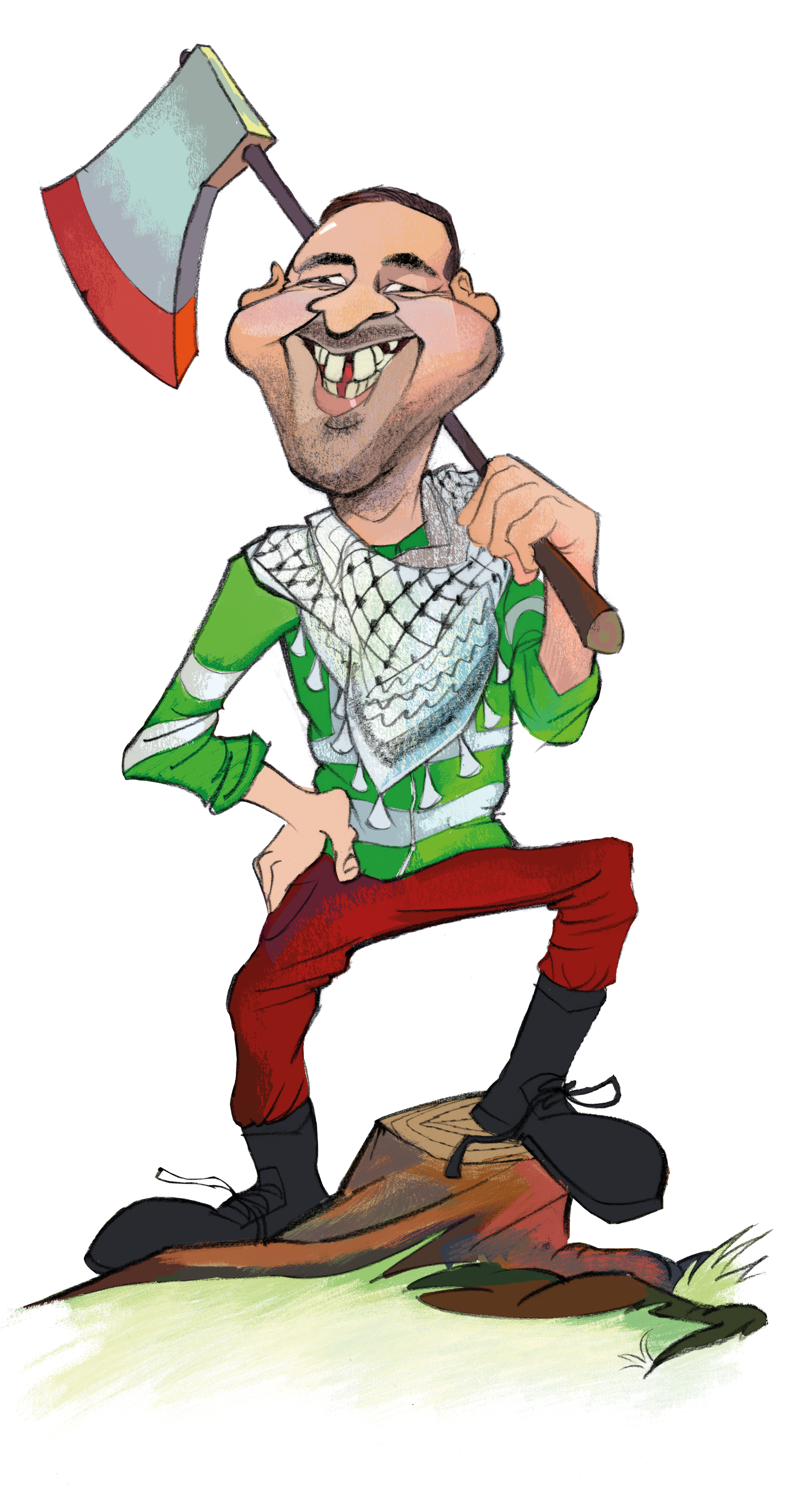
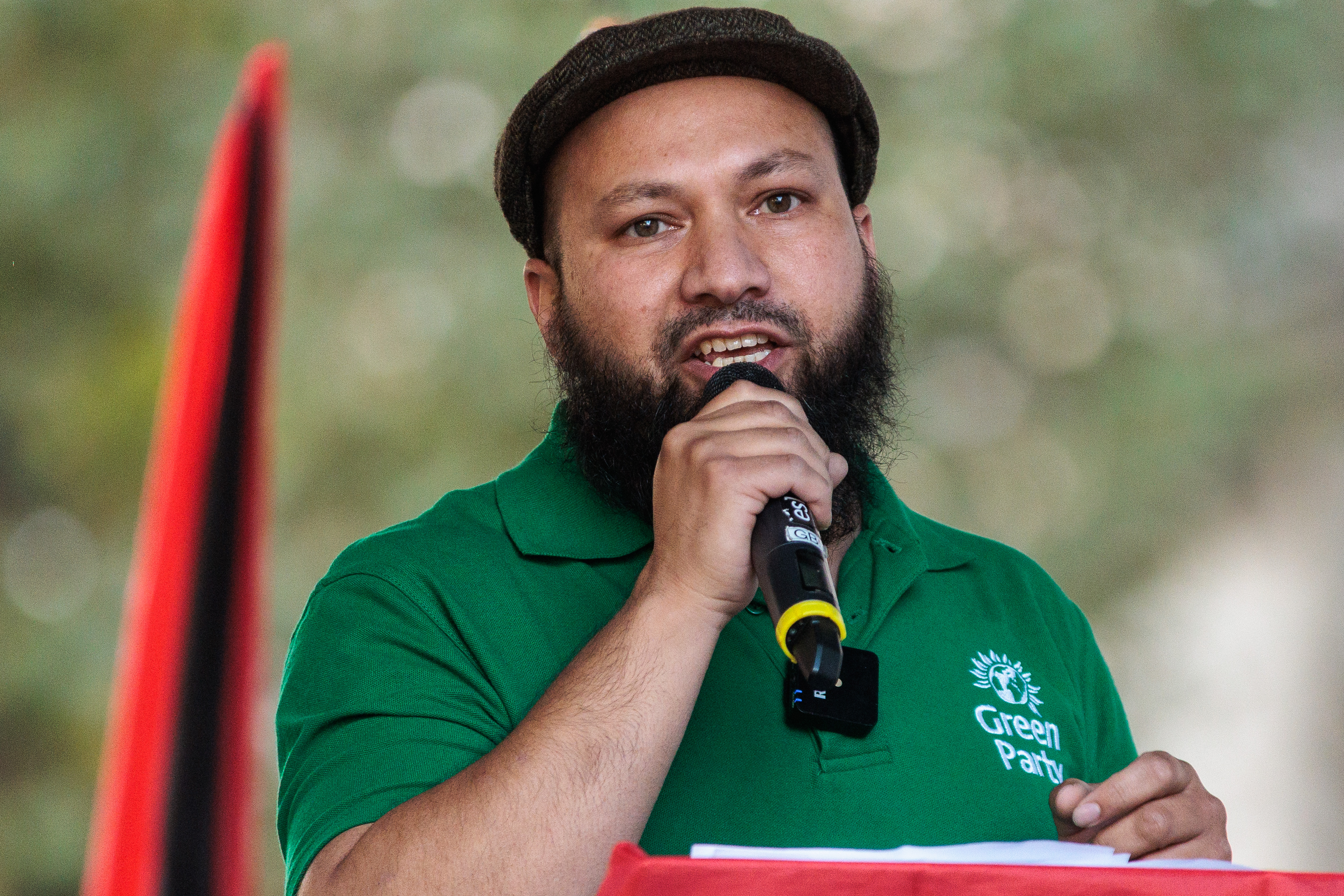
Backing the motion more vehemently is Mothin Ali, Polanski’s deputy. He’s a keen gardener, has been on a BBC show with Marcus Wareing and has a ‘My Family Garden’ YouTube page with 56,700 subscribers. The most recent video opens with him taking a chainsaw to a tree, then removing his headgear to reveal a Palestine beanie. ‘As-salamu alaykum,’ he says. ‘So today, what I’m going to do, is I’m going to show you how to cut down trees for profit’ – which is an interesting thing for a Green deputy leader to say. He then shows everyone how to prune fruit trees. He is genuinely liked on a personal level in the party: one senior figure tells me he’s a ‘gentle soul’.
But he’s got an account on another platform. Have a look at his @mothinspeaks TikTok account, which he set up in September 2023, a few weeks before the 7 October attacks that he later appeared to call a ‘fightback’ (though he denies his comments were a reference to the attacks themselves). In these videos, he’s stated that ‘Israel likes to control the media’, that Rishi Sunak challenged the Houthis because they hurt BP and he holds BP shares, and that Keir Starmer’s Labour is an ‘extreme Zionist proxy’. He hasn’t deleted these videos (not yet, anyway).
The internal debates about the Zionism motion are happening out in the open. You can just watch a Greens for Palestine meeting from last month on YouTube, where one member – Haim Bresheeth-Zabner – says that supporting Israel ‘is actually guaranteeing the growth of anti-Semitism’. He goes on to compare the ‘genocide’ in Gaza to the Holocaust, except ‘the Nazi genocide of Jews… was kept very secret’. In another pre-conference meeting this Monday, one member suggested that they make clear they’re talking about ethno-nationalism rather than ‘cultural Zionism’. This was dismissed.
Alarm is rising. A spokesman from the Campaign Against Antisemitism tells me that the Greens are ‘not only tolerating but amplifying some of the worst rhetoric that we have seen in British politics in a generation’. This growing focus on Zionism has distressed some inside the party too. The Jewish Greens lobby group, which regularly criticises Israel, says the motion ‘is likely to make Jews feel unwelcome’ in the party. In Monday’s meeting, someone asked if the proposers would meet with the Jewish Greens to discuss the motion. One replied: ‘For what purpose?’ A former member tells me: ‘The fact that so many people have flooded into the Green party to champion such extremist nonsense shows that my former party has some really serious problems to deal with.’
Keep an eye on the Greens’ reaction to Wes Streeting’s announcement this week. The Health Secretary said he would give the General Medical Council more powers to dismiss racist and anti-Semitic doctors. A motion up for a vote this weekend says ‘NHS staff cannot speak up against genocide’: in Monday’s meeting, members said the plans were ‘draconian’ limits on free speech, dressed up as anti-Semitism concern.
The wider policy agenda is just as left-field. This weekend’s motions, many of which have gone unreported until now, show a party that can’t resist the urge to self-destruct. There are some predictable headline-grabbers, such as a motion to leave Nato (it ‘drives arms races and international strategic ension [sic]’). There’s ending ‘gender-based blanket bans in sport’, too. But then there’s demolishing London City airport, which is a ‘matter of social and climate justice’ because ‘its users are disproportionately wealthy’. The most amusing motion is one that calls for video games to be protected as ‘cultural works and community spaces’. The motion proposes legislating for an ‘End of Life plan’ to be built into all gaming products, which would allow gamers to run them on their own servers and not be at the mercy of developers who might take them down. Just like a child revolting against bedtime.
The most wild is perhaps a proposed ‘F Motion’ on criminal justice (these plans won’t be voted on this weekend, but they’ll be discussed and debated). Justice in this country, apparently, is ‘dominated by a perspective grounded in Victorian values and ethics’. The Ministry of Justice needs to be renamed as the Ministry of Social Justice. Funds for policing need to be withdrawn. Ditto prisons. Tasers have to go. Prevent has to go. Laws that ‘criminalise survival’ need to be repealed, which means legalising ‘drug and sex work’. Criminal records shouldn’t stay with people for ever, since they can be a ‘disproportionate barrier to accessing work’. DBS checking is a bit much too: a check ‘should only reveal those convictions… which are currently unspent’.
The Greens have always produced a full manifesto for election campaigns, but not since the days of having David Icke as a spokesperson have their policies been so at odds with mainstream voters.
There’s a group – Greens in Exile – for those disgruntled by this drift, many of whom have been suspended by the party for their gender-critical views. The Greens have ‘shifted away from being the party of ecology’, they say. Darren Johnson, who was a Green member of the London Assembly for 16 years but has now defected to Labour, tells me the party has ‘kept the name and the branding, but it seems to be going off as a mirror image of Nigel Farage, rather than a serious ecologically-based party’. What pushed him over the edge, though, was his Green colleagues casting doubt on the Cass Review into gender identity services. Besides, he says, Labour is giving him what he wants with environmentalism: ‘I have been impressed by Ed Miliband’s work on the climate and Sadiq Khan’s work on air pollution in London.’
It isn’t just the old left that feels deserted by the Greens – there are the more patrician old environmentalists too. Two of the party’s gains at the last election – Waveney Valley and North Herefordshire – were at the expense of the Conservatives. Yet now the environment is a secondary consideration; Hannah Spencer, the new Green MP for Gorton and Denton, deemed it not worthy of a single mention in her maiden speech.
The pollster Scarlett Maguire, of Merlin Strategy, says that Polanski (who’s a fan of Spectator podcasts, although he listens on 3x speed) has ‘explicitly doubled down’ on courting ‘ultra-progressive constituencies’ and has made ‘no efforts’ to keep hold of ‘traditional small-c environmentalists in the shires and the countryside’. The Climate Majority Project’s Rupert Read, a former Green councillor, so by no means a conservative but definitely an old-school environmentalist, has written about the dangers of the Greens falling for a ‘wacky form of identity politics’. When I ask him what he means, he tells me that ‘the very hardline trans-rights position has become less credible and less popular’ after the Cass Review and last year’s Supreme Court decision and that the Greens should make clear ‘there is a diversity of views on the matter’.
The party has made ‘no efforts’ to keep hold of ‘traditional small-c environmentalists in the countryside’
Read thinks the Greens have to remain attractive to centre-right environmentalists, not least because of those Tory seats, but also because of the Conservatives’ own drift. ‘The Conservatives have backed miles away from environmental and climate commitments, especially under Kemi Badenoch,’ he says. ‘They now look as though they’re trying to copy Reform. This seems to me to be a historic mistake, because it makes it very difficult for the Conservatives to act as a mainstream party.’
If there’s anywhere, though, that Polanski’s strategy may be ultimately vindicated, it’s in Hackney. The Greens are increasingly confident that they’ll be able to take the mayoralty at the local elections in May. In fact, they’re so confident they’ve let a 19-year-old, Dylan Law, run alongside their mayoral candidate, Zoë Garbett, as her deputy. If they win, it’ll be something of a vindication of Polanski’s broader strategy of left populism. ‘It’s easy to forget that Corbyn achieved 40 per cent of the vote in 2017,’ says Maguire.
Even if they lose, it’s possible the Greens will enjoy that just as much. The hard left has lost so often in Britain and refused to learn lessons from its defeats. There must be some kind of pride in it: the unwillingness to sacrifice ideology for the electorate, the catharsis of realising you’re hated, the therapeutic release of doing what you want. Anyway, how can you feel bad about losing when the worst is always happening?




Comments