It’s the end of the working day on a Friday, and punters are steadily beginning to fill up Sparkhill’s last remaining pub. Landlord Mark McDwyer pulls another pint of Guinness (only £4.60), our conversation punctuated by the thwack of pool balls from the table behind us.
‘This is the headquarters of the Birmingham Pool League,’ he says proudly. His parents, immigrants from Ireland, bought McDwyers’s in an auction in 1997. ‘It’s a thriving pub. There aren’t enough people living in the area so a lot of our customers come from outside.’
Competition is hardly fierce. At one point, there were 23 pubs in Sparkhill. Pensioner Tom Kilmartin describes the place as ‘an oasis within a desert of despair’. But while the pub may be an oasis, the ward around it is anything but tranquil.
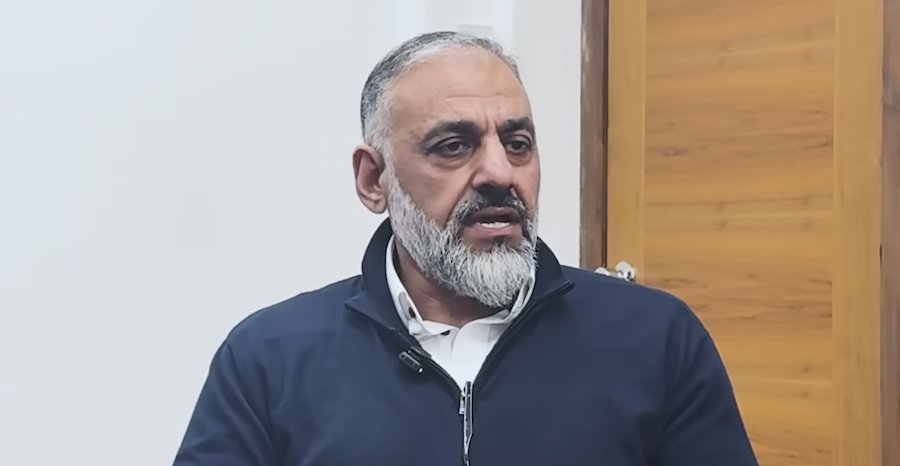
Just how much has this 60-year-old father-of-five really changed?
Sparkhill is the ward where Shahid Butt, a convicted former terrorist, is standing for a seat on Birmingham City council in May’s local elections. In 1999, Butt was found guilty, alongside five other UK nationals, of conspiring to blow up the British consulate, an Anglican church and a hotel in Aden, Yemen, on the orders of Abu Hamza, the hook-handed Egyptian cleric currently serving time in a US prison.
Two British-Indian friends, who refuse to give their name for fear of backlash, are confident he’ll win. ‘Just look at the demographics,’ says one. ‘People will listen to him because he’s Muslim and they’ll just vote for him regardless of which party he belongs to.’
Over the decades, Sparkhill’s demographics have changed dramatically. Once a predominately Irish area, white people now make up just 8 per cent. The majority are Pakistani, at 63 per cent, followed by 5 per cent Bangladeshi and just over 5 per cent Indian. Over 83 per cent of residents are Muslims. England cricketer Moeen Ali grew up in the area.
Just 100 yards away from the pub is the Ibn Salah Sharazuri mosque. Mark insists it’s only a problem during Friday prayers in the afternoon, when parking becomes a nightmare. ‘I think the area is sometimes painted badly,’ he says.
Carol (not her real name) disagrees. As a white woman, she feels her presence is conspicuous and gets a taxi from her house to the pub door after she and a friend were once propositioned by young Asian men in a car:
They said, ‘come on girls, do you want to get in with us?’ I felt intimidated. It was not remotely flattering.
Carol doesn’t think Butt should be allowed to run for public office. ‘Given that it’s Sparkhill, many probably see him as a hero,’ she says.
Since his return to Britain in 2003, Butt claims to have devoted his time to helping young people stay away from terrorism, as well as drugs-related crimes. He has worked on the Home Office’s Prevent programme.
But just how much has this 60-year-old father-of-five really changed? In one YouTube video from 2024, Butt describes jihad as an act of ‘compassion’. In another clip from September, he remarked: ‘Allah says in the Koran, do not take the Jews or Christians as your friends and protectors.’ He also refused to call Hamas terrorists.
When confronted with his comments, Butt said he did not hate either Jews or Christians. Still, all this media attention means that ‘he won’t need to canvas door to door now,’ smiles Naveed Sadiq, a 50-year-old community activist from Yardley, who knows Butt personally. Naveed is convinced that the hostility towards Butt is a ‘witch hunt’, he adds. ‘Like us, he wants change. We’re fed up with career politicians.’ He can understand, however, why many voters are turning to Reform:
I don’t believe the average white person is racist. They’ve been let down by the Tories and Labour.
Also to consider are the comments Butt made in relation to the controversy over last November’s Aston Villa-Maccabi Tel Aviv fixture. He urged Muslims nationwide to come to Birmingham to prevent Israeli football fans from ‘desecrating’ the city. At a protest held against the match, he said: ‘Muslims are not pacifists… If somebody comes into your face, you knock his teeth out.’ Though the match went ahead, the Israeli supporters were banned based on intelligence from West Midlands Police, which was later shown to be fabricated.
One Muslim activist tells me: ‘I don’t believe in boycotts. I think sports should bring people together,’ he says. ‘But many here can’t differentiate between Jews and the Israeli state.’
More than three months on from the ceasefire between Israel and Hamas, Palestine flags are still dotted around various parts of the city. Some see them as an emblem of a divided community. ‘It winds me up seeing all these Palestinian flags everywhere,’ the Indian man tells me.
Look what’s happening here in this country, but they’re more bothered about what’s happening in Gaza.
Much of that tension is compounded by a more prosaic failure of local government. Birmingham’s long-running bin strikes have left Sparkhill visibly grimy, with fly-tipped rubbish piled on pavements and street corners. Parking is chaotic, and antisocial behaviour is the most common complaint – across communities. They lament open drug dealing and a total lack of enforcement by the authorities.
On Stratford Road, a mile-long strip of independent shops in Sparkhill, I meet 29-year-old Jaweria Bibi who recently arrived from Rawalpindi, Pakistan, to pursue a master’s in international marketing. She moved here due to family connections. When asked what she thinks of the area, she grimaces. ‘It’s similar to Pakistan! I don’t feel like I’ve come to the UK.’
While plenty of Britain’s high street shops are struggling, Stratford Road remains busy and commercially alive. Store windows shimmer with Asian lehengas and sarees in jewel tones. There are halal butchers, greengrocers and nan bakeries, as well as Afghan ice cream parlours and shops selling South Asian sweetmeats. At a small yellow stall, aloo paratha (a flaky fried flatbread stuffed with potatoes) goes for £2.99. Money exchange counters dot the road, with most transfers heading to the Indian subcontinent.
But scenes like this, where things have changed beyond recognition, are cited as proof that the area has become a ‘no-go zone’ for white people. Hafiz Amin, the owner of Pakeeza Halal Shop, is not surprised at some of the negative press. ‘Just look at the mess,’ he says in Urdu. ‘Tell me, if English people came to our country and behaved like this, what would we think of them?’
His companion Muhammad Saleem is even more candid. ‘Even without the bin strike it was always like this,’ he says, smoking a cigarette. ‘I’ve been here since 1991. White people pick up their litter if they drop it.’
The bin strike and ongoing issues have left Birmingham’s reputation in tatters – even abroad. ‘I went on umrah [mini pilgrimage] and people in Mecca asked me about the bins. What type of advertisement is that for our city?’ says Naveed. ‘Islam teaches us that cleanliness is half our religion.’ When the Irish left, ‘we became ambassadors for the area but what standards have we set?’
Sparkhill is a place where parallel lives are increasingly visible. In the vacuum left by local governance, Butt, the former convicted terrorist, presents himself as an agent of change from ‘career politicians’. Whatever the result on election day on 7 May, it will say as much about the state of local politics as it does about Butt himself.




Comments