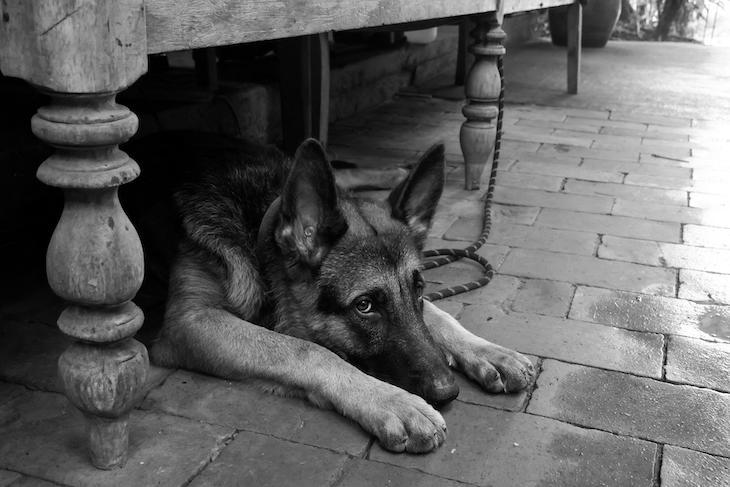
Jenny Riddell-Carpenter, Labour’s minister for nature and rural affairs, has been losing sleep. Not over village shops, bus routes, or the next farm that will not survive the inheritance-tax row. She lies awake because somebody, at the next election, might offer the country a picture of itself that includes warm ale, a black Labrador and a pub.
Speaking at a fringe meeting at Labour’s party conference in Liverpool, she called that picture “a nostalgic vision of Britain that never really existed…a very far-right nostalgic vision of Britain that we don’t want to have.” In this telling, the pub “doesn’t exist.” The dog is a prop. The pint is a dog-whistle. Hunting comes in with them, not as a trade or a quarrel about land, but as scenery; the one rural fact her party already knows how to hang on the wall and condemn.
Tuesday night, a village pub in Oxfordshire. It is three hundred years old and still standing: solid, warm, a refuge. Home from home. Solitude or company, darts or a book, jokes at the bar or a quiet table for two. The restaurant is closed. Since my wife, who normally runs a bingo, is unwell, it is very quiet, painfully so. Several regulars are throwing darts in the sports bar. A few couples in the saloon watch the fire and talk, that murmur you only get in a country inn when no piped music is playing. I have strong views on piped music in country pubs, the same views I have on warm beer. My ale is room temperature, as cask ale ought to be, and it is good. I take pride in that, not in the “warm ale” used in conference speeches. Dogs are allowed in the saloon, the sports bar and the garden. They are not permitted in the restaurant on the days we are cooking. The village is middle class, firmly Liberal Democrat and, as far as I can judge, completely without fascists.
The comment from the MP for Suffolk Coastal is almost comical. Adnams still brews in Southwold. The pubs along that coast are not sets built for Reform leaflets. They are businesses, meeting rooms, informal bus stops and, on a bad day, the last place someone can sit without an appointment. A minister for rural affairs who cannot see a constituency in that, only a “narrative,” has already shown how she intends to govern it. If her opponents want a cheap trick at the next election, they could do worse than watch All Creatures Great and Small: work, mud, neighbourliness, and dogs, recognised by millions without a seminar. She has already supplied the caption: if it looks like that, it never existed, and if you like it you are on the wrong side of history.
Riddell-Carpenter studied at SOAS, then took a master’s in Islamic history. From there it is a short step to treating a nation as an “imagined community” and a custom as something invented – useful warnings, until they become a habit of suspicion toward the ordinary furniture of home. Affection for a landscape can then be filed as far-right before lunch. George Orwell’s warm beer and old maids bicycling to Holy Communion once served a Conservative prime minister as a joke that still recognised the country. Now the same inventory keeps a Labour minister awake. Walk into the village, find the pub, and wait to be told the memory is untruthful.
The move is always the same. First the thing is declared unreal. Then it is declared dangerous. Then policy can proceed as if nothing of value is being lost. None of this requires you to believe the countryside is unspoiled. Rural England has second-homers, theme-park weekends and a self-consciousness that would have baffled the people who built these pubs. Young people in market towns are taught to flinch at their own inheritance and to treat every other inheritance as authentic. That is a political achievement, not a historical discovery.
It is not an argument that the pub is imaginary. You do not stay awake at night about a fiction. You stay awake about a fact you mean to replace. She said Labour must offer its own “progressive vision” of rural life before somebody else defines the place. In her own seat, that vision already has a working model. Suffolk Coastal is being asked to host a stack of nationally significant energy projects – Sizewell C, Sea Link, LionLink – inside a few miles of coast and heath. Construction traffic and converter stations arrive as national necessity; the pub, the dog and the winter meet are recoded as nostalgia so they need not count in the same ledger. The minister has said host villages should not be afterthoughts.
The conference line still treats the place as a canvas; housing targets on the quiet ground, “nature” as a zoning category rather than a lived landscape, hunting as a prop rather than a rural argument, and the people who already live there as a problem to be managed. Build over the peace, or empty it. Beauty and quiet are treated as zero-sum. If some people have them, the remedy is to make sure fewer do.
A pint and a dog on the flags are not a manifesto. They are a quiet and rather stubborn form of happiness. Parties that cannot stand that happiness will always call it nostalgia, then far-right, then non-existent. The minister can keep her sleepless nights. The rest of us will be in the pub that she says isn’t there.





Comments