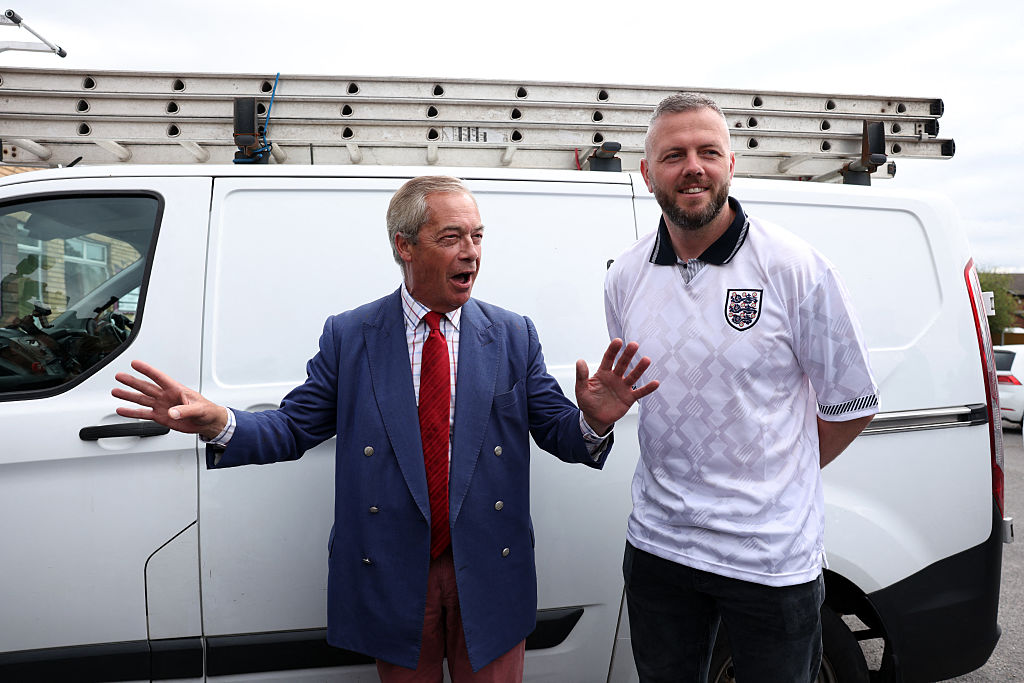
If you spent the last fortnight listening to Reform UK, you could have been forgiven for thinking Makerfield was already in the bag. The win was supposed to be inevitable. One of those places where history had stopped, Labour had collapsed and Nigel Farage’s troops merely had to turn up to collect the keys.
Momentum is a wonderful thing while you have it. The difficulty comes when it slows. A movement built on inevitability suddenly has to answer questions about competence, discipline and substance
I’d wager Reform’s top brass couldn’t believe their luck when Josh Simons, the Labour Together alumnus, stepped aside to clear the way for Andy Burnham’s return to Westminster. This was, after all, Reform’s sixth strongest target according to the MRP models – the very same models that the likes of Zia Yusuf delight in waving under the noses of my Conservative colleagues while informing them they’re not long for this world.
Then Thursday happened. Burnham strolled home with 54.8 per cent of the vote. Reform’s Robert Kenyon managed 34.5 per cent, 20 points adrift. Hardly the revolution.
Further north, something rather less noisy happened. In Aberdeen South, the Conservatives quietly took the former constituency of the SNP’s Westminster leader on a swing approaching 15 points. Reform, meanwhile, finished fourth on 8.6 per cent. One result made the headlines. The other told the more interesting story.
So what went wrong for Reform? Three things spring to mind, and none of them amount to bad luck. The first is what commentators politely call Reform’s ‘vetting problem’. I’m not convinced that’s quite right. It is really a people problem.
Any party selecting hundreds of candidates will inevitably find itself embarrassed once or twice. That’s politics and probability colliding. But when the entire country’s media is focused on one candidate you have personally chosen, there is nowhere to hide.
Reform’s leadership were reportedly warned about Robert Kenyon’s social media. They ran him anyway. Then again. Then again. Shortly before selection, his accounts appear to have received a thorough acid wash, only for old posts to resurface anyway, including the immortal line: ‘I’m sexist, sorry but I am.’ His appearance on Question Time suggested an equally shaky grasp of basic political concepts.
If this is the standard when the spotlight is at its brightest, imagine what lurks beneath the surface when 650 candidates are assembled for a general election campaign. Would they survive the scrutiny? And if they did, would they really amount to the disciplined governing force this country needs?
The second problem is discipline. Nigel Farage has often reminded us that he has spent 30 years policing the boundary with the far right. It has always been a delicate balancing act. Now Rupert Lowe’s Restore Britain, buoyed by Elon Musk’s encouragement, sits on Reform’s right flank and the temptation is to edge ever further in that direction.
That is precisely what happened. Restore Britain secured 6.8 per cent in Makerfield, much of it likely from voters Reform expected to keep. In chasing them, Reform sacrificed the broader appeal that made it competitive in Labour territory in the first place.
Every insurgent movement eventually discovers that exciting the angriest voices is easier than persuading ordinary voters. Farage, of all people, knows that. Yet at the first sign of competition on his right, Reform lost its strategic patience and lurched to meet it.
Third, and closely related, comes tactical voting. A plurality of British voters may currently tell pollsters they support Reform. Faced with an actual ballot paper, many of their neighbours become remarkably motivated to stop them instead. Reform’s vote share even nudged upwards compared with last year, yet it scarcely mattered because everyone else piled into the alternative.
Perhaps that should not surprise us. A politics built around permanent online outrage and a terminally online aggression towards anyone outside the movement – an aggression that seems aimed more at internal positioning than persuading the public – is excellent for social media engagement. It is rather less effective at assembling an electoral majority.
One only has to watch Matt Goodwin and Tim Montgomerie arguing over who counts as a ‘real Reformer’ to see the problem. It may generate clicks. It is a curious way to prepare for government.
And this is what ought to worry Reform more than anything else.
Labour are about as popular as plutonium in your tea. The British state barely functions. The Conservatives carry plenty of baggage from our time in office. By any normal political logic, Reform should be miles ahead and cruising into seats like Makerfield. Instead, they stumbled.
Momentum is a wonderful thing while you have it. The difficulty comes when it slows. A movement built on inevitability suddenly has to answer questions about competence, discipline and substance. Strip away the momentum and those questions become rather louder than the slogans.
It is hard to overstate what rides on the next election. Serious heads are needed: people grounded in first principles, disciplined enough to stick to them, and armed with plans detailed enough to survive first contact with the Blob, hostile institutions and the inevitable mid-term unpopularity that genuine reform always brings. That is a rather taller order than scribbling ‘no tax on overtime’ on the back of a fag packet and hoping for the best.
The Conservative party’s emerging policy proposition under Kemi is everything many of us have been asking for. It is taking longer to assemble than Reform’s precisely because it is not being written on the back of a napkin. More importantly, she is bringing the party with her, which is the only way anything endures in politics.
I grew up in the part of Lancashire that bureaucrats insist on calling Greater Manchester. Makerfield is exactly the sort of place I know well, and I understand why decent, patriotic people are drawn towards Reform. Many of their grievances are real. Many are justified. But grievances are not a strategy. Anger is not a governing programme.
Before the right convinces itself that the loudest answer must also be the most serious one, Thursday’s results deserve a second look. Everyone is talking about Makerfield. They might have learned rather more from Aberdeen South.





Comments