Three hours after daybreak, a blinding flash ripped through the morning sky. August 6, 1945, began as a tranquil and clear day in Hiroshima. By 8:15, the Enola Gay, an American B-29 bomber, reduced Japan’s seventh-largest city to cinders. Three days later, on August 9, Nagasaki would suffer the same fate. For the first and only time in human history, atomic bombs were used in anger. Eighty-one years on from the atomic bombings of Japan, the uncomfortable truth is that nuclear weapons are the reason that World War Three has been avoided.
Because nuclear weapons were part of the equation, those crises eventually de-escalated
Yet according to the latest survey on nuclear weapons by the Pew Research Center, 69 percent of the American public thinks that they make the world less safe. The reality is that the world would be a much more dangerous place without the Bomb.
The general public’s disdain for nuclear weapons is understandable. Nuclear weapons evoke images of mushroom clouds, fireballs in the sky, and vaporized tropical islands. The 110,000 instantaneous deaths inflicted by Little Boy and Fat Man still haunt the memory of post-war generations. Only 35 percent of Americans believe that the August 1945 atomic bombings of Hiroshima and Nagasaki were justified, compared to 85 percent in the immediate aftermath of the nuclear attacks.
However, the advent of nuclear weapons was a game-changer for the way that great power military strategists and politicians approached warfare. A shift that emphasized restraint as opposed to warfighting.
In the pre-nuclear age, heated disputes over territories and interests were settled on the battlefield. Until 1945, the main preoccupation of great-power military establishments was figuring out how to win wars. Since 1945, as the seminal nuclear deterrence theorist Bernard Brodie once famously put it, “the chief purpose [of the military establishment] must be to avert wars.”
Aware that escalation to the nuclear level would not yield any victors, countries that possess nuclear arsenals do not wage all-out war against each other. This was true throughout the Cold War, when the United States and the Soviet Union avoided direct military conflict. And it is still true today.
That is not to say that the Cold War was a period of perfect harmony. Far from it. The period between 1946 and 1991 was replete with tense standoffs and crises, such as the Cuban Missile Crisis in 1962 and the Middle East Crisis in 1973. However, in the pre-nuclear age, crises like those would have surely led to war. Because nuclear weapons were part of the equation, those crises eventually de-escalated.
As Susan Martin, a nuclear scholar based at King’s College London, wrote “in their essence, nuclear weapons are deterrent weapons. Most obviously, the destructive potential of nuclear weapons is unmatched by any other weapon.” In other words, a war in which both parties risk being destroyed is not one worth fighting. Between 1945 and 2001, there were 20 nuclear crises in all. That none of those crises escalated to all-out war is testament to the deterrent value of nuclear weapons.
The purpose of war is to produce favorable political outcomes for the victor. Carl von Clausewitz, the influential 19th-century military strategist, defined war as an “extension of politics with an admixture of other means.” War is a means to an end. The end is political by its very nature. Instigating Armageddon negates the possibility of any viable political settlement. As nuclear wars cannot be won, nuclear weapons offer little by way of battlefield utility. Therefore, nuclear wars should never be fought.
While the great nuclear powers have generally adhered to the logic of nuclear deterrence, the international security landscape is changing. Major conventional war between states is making a comeback. The wars in Ukraine and in Iran are cases in point. And strategic competition is once again playing out under the nuclear shadow.
There are roughly 12,000 nuclear warheads globally. That number is rising. Russia and the United States still possess the bulk of these warheads and are adding to their inventories. Furthermore, China has been dramatically increasing its nuclear arsenal.
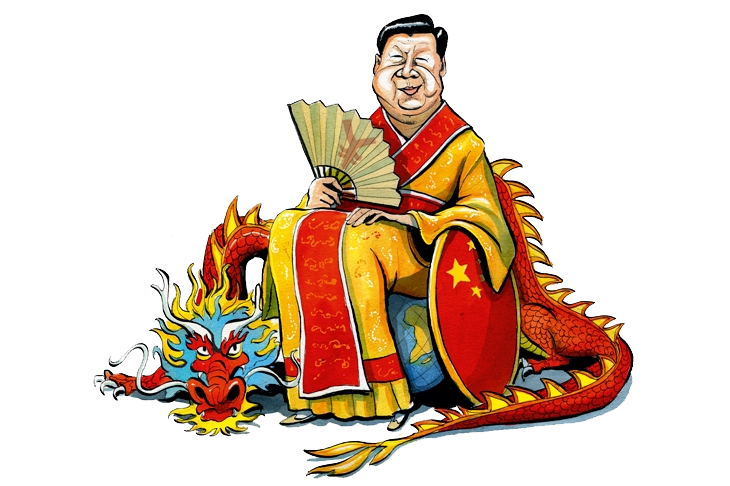
When Xi Jinping took office in 2013, China had 250 nuclear warheads. Today, it has over 600. The Pentagon projects that it will have 1,500 nuclear warheads by 2035. China’s rapid nuclear expansion has made Washington anxious about Beijing’s intentions. Many now fear that an unprecedented era of nuclear tripolar competition has begun.
As Franklin Miller, former special assistant to President George W. Bush, observed, “due to the buildup of its nuclear arsenal, China has now essentially joined Russia as a nuclear peer of the US.” The Cold War was an era of bipolar strategic competition. In this new geopolitical paradigm, three great nuclear powers compete for global dominance. And while tripolarity seems alarming, parity in the balance of nuclear power actually promotes strategic stability, dissuading nuclear powers from engaging in more dangerous forms of risk-taking.
World War Three would lead to levels of death and destruction far surpassing those witnessed during the total wars of the 20th century
The changing security landscape has made certain American strategists envision a world in which nuclear weapons could be used to wage and win conflict, as opposed to simply deterring it. Matthew Kroenig, vice president of the Atlantic Council, argues that nuclear weapons provide a war-fighting advantage. He encourages the US to increase the size of its nuclear arsenal to reduce the “expected cost of nuclear war.”
In Kroenig’s view, a more robust nuclear posture – meaning, a larger and more diverse nuclear arsenal – should be leveraged to win wars against China and Russia. This approach is misguided. By pursuing a more robust nuclear posture and by shifting away from deterrence, the United States risks heightening China’s threat perceptions and triggering a security dilemma, particularly in the Asia-Pacific region, the region with the highest concentration of nuclear weapons states in the world. Indeed, six of the world’s nine nuclear weapons states have vital interests in the Asia-Pacific, such as India, Pakistan, China, North Korea, Russia and the United States.
The combined fatalities of World War One and World War Two exceeded 80 million deaths. Advancements in modern warfare technologies mean that weapons are deadlier and more precise than they have ever been. Add nuclear weapons to the global battlefield, and World War Three would lead to levels of death and destruction far surpassing those witnessed during the total wars of the 20th century.
Far from abandoning nuclear deterrence, the answer is to make it more credible. Washington can do that by drawing clearer red lines around Taiwan, reinforcing extended deterrence commitments in Europe and East Asia, and demonstrating resolve through the threat of nuclear retaliation rather than the promise of war-fighting. That logic has held up well for 81 years. In an age of geostrategic uncertainty, the answer is not to abandon nuclear deterrence, but to sharpen it.
Lest we forget that on the anniversary of the Hiroshima and Nagasaki bombings, the bulwark against the breakout of global, all-out great power war has been, and remains, the sobering presence of nuclear weapons.






Comments