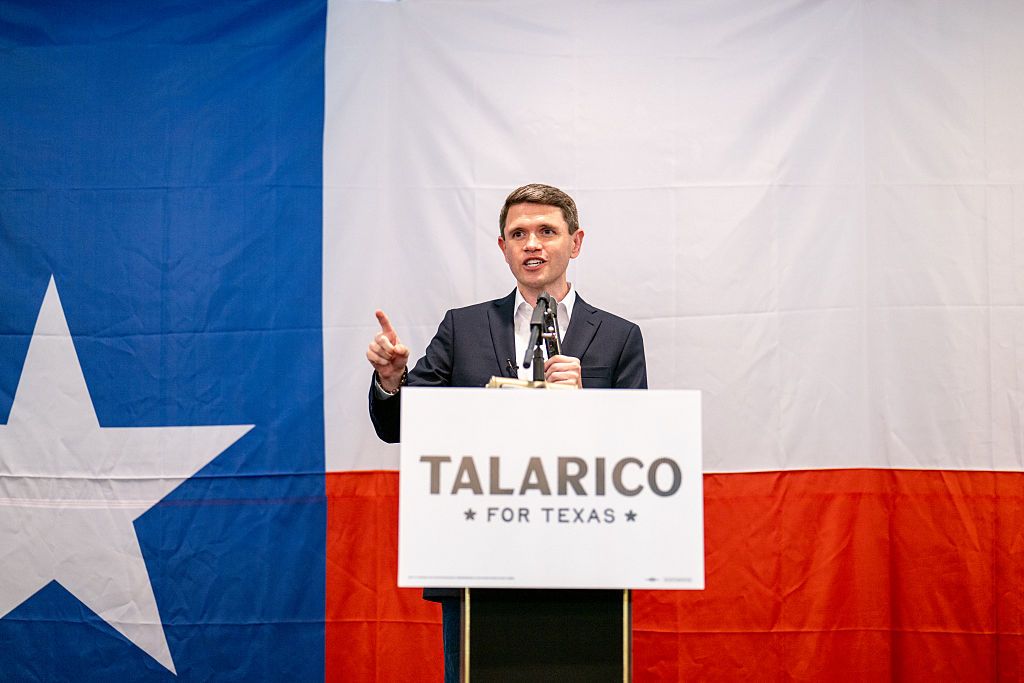



We’ve heard a lot about a “God gap” between Republican and Democratic voters in the United States – and for good reason. The gap between churchgoing conservatives and secular progressives, when measured by voting habits, has become conspicuously wide. In 1980, 40 percent of Democrats attended church regularly, with GOP voters a couple of points higher. Today, Republican church attendance is still in the low to mid-40s, while less than a quarter of Democrat voters are regular worshippers; only 17 percent of Harris voters in 2024 reported weekly attendance. Meanwhile, according to the Pew Research Center, roughly 40 percent of Democrat or Democrat-leaning voters are religiously unaffiliated (atheists, agnostics or “nones”) compared to only 21 percent of Republican voters.
All of which raises intriguing questions about this year’s midterm elections. Does the God gap always work to the GOP’s advantage? Is it an insurance policy against the unpopularity of Republican presidents? Moreover, might the gap actually be narrowed, as Democratic candidates play up their Christian allegiance in order to reach out to fellow believers? This last possibility is being taken seriously at the moment, especially by legacy media journalists amused by the thought of churchgoers pulling the rug from under MAGA. Democrats are “trying to reclaim the issue of faith from the Republican party,” reports ABC News. “In some of the most critical races that will help decide control of the next Congress, several Democrats are openly sharing how their faith shapes them and their politics.”
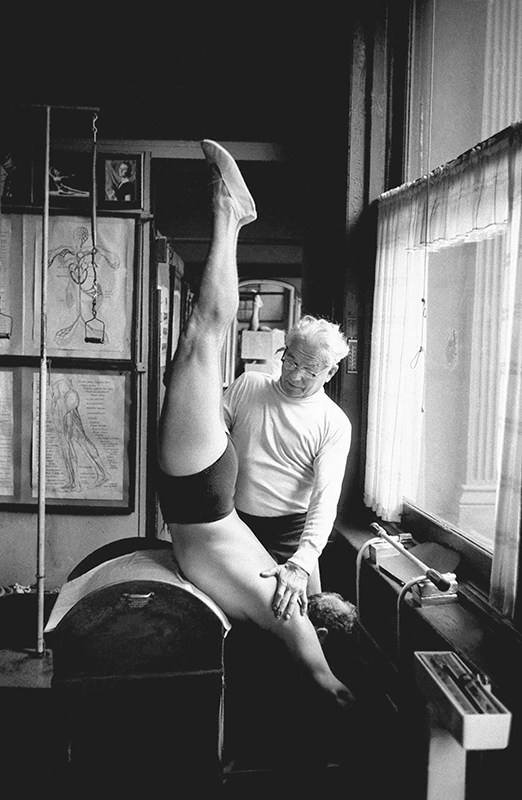
These include Texas Democratic State Representative James Talarico, 37, who is challenging the unpopular GOP Attorney General Ken Paxton in the race for the Senate. Talarico is reading for a Master of Divinity at Austin Presbyterian Theological Seminary. He has the earnest manner and ugly haircut of a Sunday School teacher; he speaks of a “deep hunger for a new kind of politics” rooted in “biblical Christianity.” He brushes up nicely for a conventional electorate. Who better to narrow the God gap?
In Kansas, the Democrats’ senatorial candidate is the Revd. Adam Hamilton, who founded the Church of the Resurrection in Leawood, now the largest United Methodist congregation in the United States. He’s pro-choice, LGBT-friendly and big on social justice – a “woke pastor,” according to his Republican opponent, although in United Methodist circles he’s regarded as a centrist.
Someone who stands a better chance of being elected is the Revd. Sarah Trone Garriott, a State Senator and the Democratic nominee for Iowa’s 3rd congressional district. She’s an ordained Lutheran minister who still preaches at church every Sunday.
But how likely is it that Talarico, Hamilton, Trone Garriott and other progressive Christian candidates can actually close the God gap in the midterms? This is where it gets complicated. Media articles about faith-filled Democrats are working a bit too hard to talk up the story. According to a Wall Street Journal report, “the expansion of far-right Christian initiatives, such as the push to display the Ten Commandments in schools, has inspired a wave of progressive Christians to run for office, analysts say.” Really? There are only about a dozen of these “progressive Christians” running for office in the midterms – hardly a “wave.” And most of them belong to mainline Protestant churches with shrinking congregations. Hamilton may oversee the largest United Methodist assembly in the country, but the denomination itself is in desperate trouble.
We can dispose of the fiction that liberal Christians will influence this year’s midterms or indeed any future election. There simply aren’t enough – and, even if there were, it wouldn’t help. When Democratic candidates try to “do God,” they quickly run into trouble. Talarico has been mocked for describing God as “nonbinary” and suggesting that the Virgin Mary, by saying yes to the angel at the Annunciation, supported the right to choose abortion. It’s hard to overestimate just how liberal the mainline denominations have become. Garriott not only supports gender transition surgery for children; when she was a trainee minister, she participated in the church wedding of two satanists.
The reality is that Republicans can’t rely on the God gap to keep control of Congress. Five years ago the political scientist Ryan Burge published an essay in the New York Times entitled “Why ‘Evangelical’ Is Becoming Another Word for ‘Republican.’” In the 1970s, only 40 percent of self-identified evangelicals voted for the GOP; in 2021 that had risen to more than 70 percent and in 2024 more than 80 percent chose Donald Trump over Kamala Harris. Such an astronomical total suggests that the Republicans can rely on a bedrock of born-again Christian voters in the many swing states where churchgoing is above the national average.
When Democratic candidates try to ‘do God,’ they quickly run into trouble
But not so fast. As Burge says, “evangelical” does not mean what it did in the heyday of the Christian Coalition. Back then, not all Protestants were evangelicals but all evangelicals were Protestants, whether old-style fundamentalists, black Pentecostals or middle-class charismatics. Now we find Catholics, Mormons and, incredibly, some Muslims and Hindus embracing the label. Also, if you drill into opinion surveys, you find voters who think of themselves as “very politically conservative” display a smorgasbord of social attitudes that are surprisingly flexible on abortion and same-sex marriage.
Where they are less flexible is on gender ideology and illegal immigration, two areas in which the mainline Protestant denominations have pushed themselves into a corner. For progressive Methodists, Lutherans and Episcopalians, plus a liberal Catholic fringe overrepresented in official Church bodies, these secular obsessions are aspects of “faith.” These groups presumably imagine their critics are driven by religious bigotry. But the truth is ordinary conservatives hate woke ideology because they think it’s sinister and crazy, irrespective of Bible verses.
The result of the midterms, therefore, could be decided by self-described evangelicals – but not in the way they were decided in the era of the televangelists. These voters won’t be tempted to switch to a Democratic party that’s being hijacked by nutjobs. But nor will they be driven to the polls by opposition to homosexuality and abortion, because they don’t feel all that fervently about them. Faced with a choice between voting for advocates of drag queen story hour or for the party responsible for pushing up gas prices, they may prefer a third option: staying in bed.





Comments