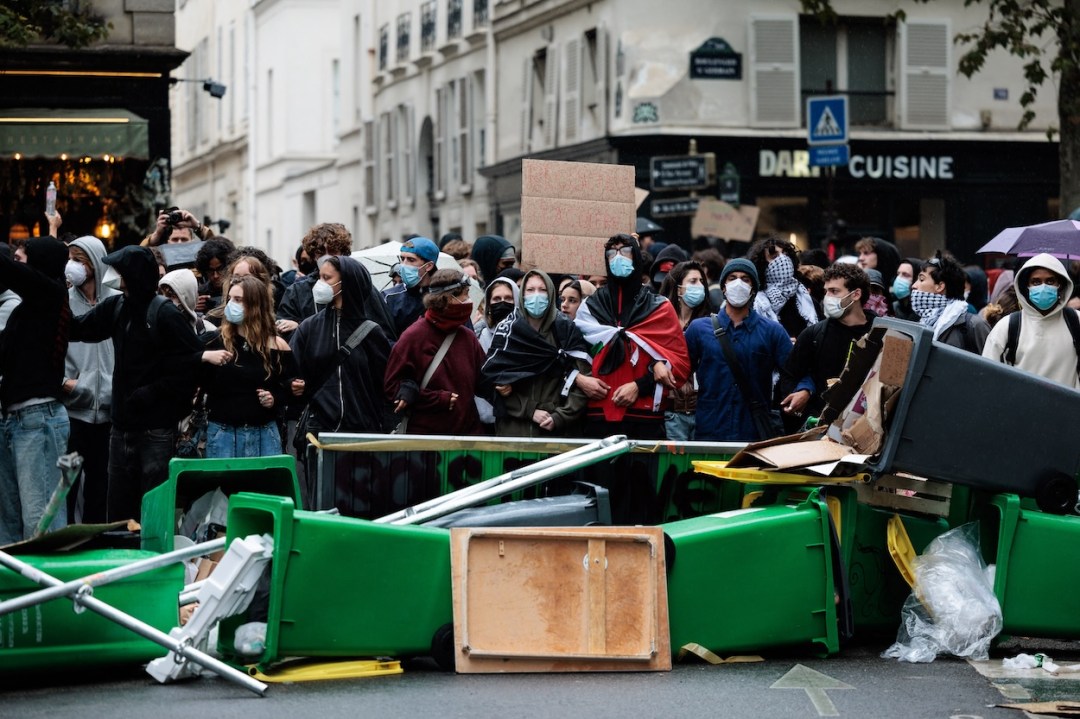
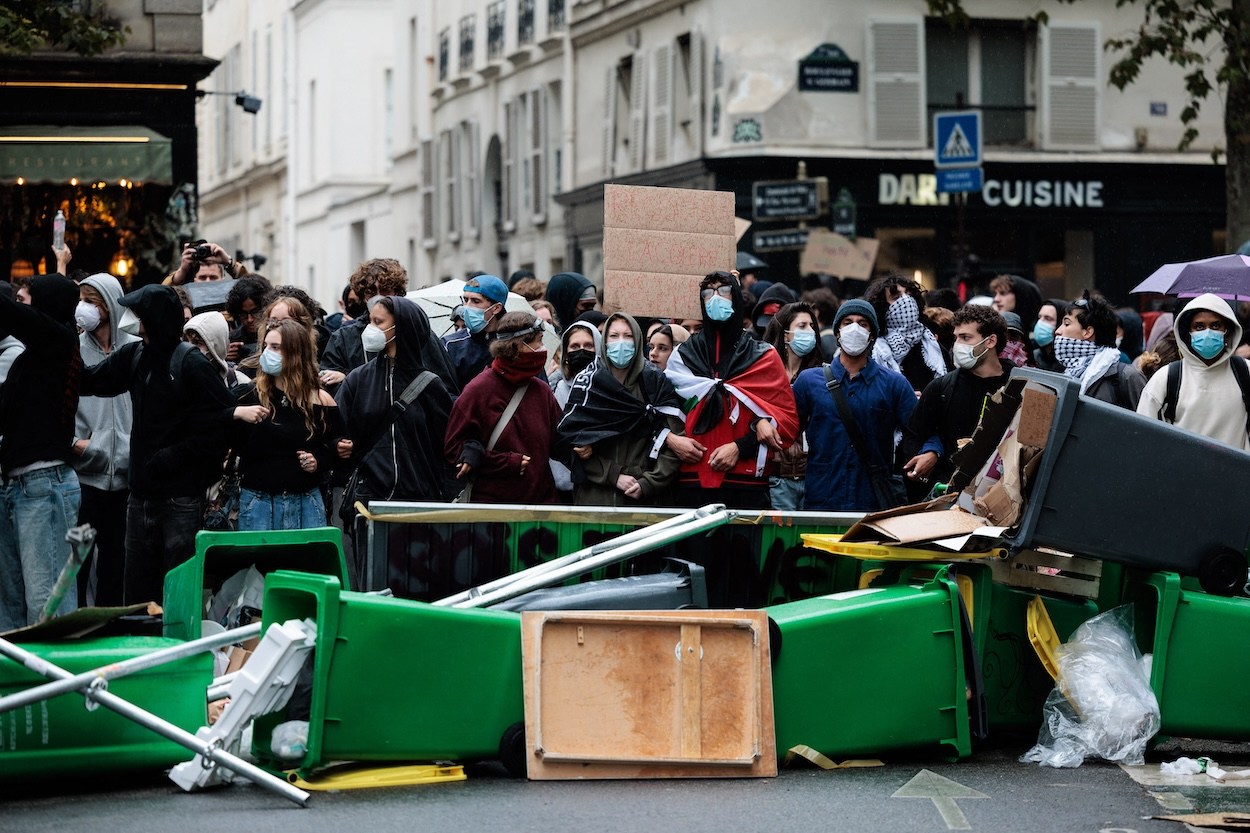
The world is watching alarming scenes in the burnished boulevards of Paris where riot police are using batons and tear gas on protesting students. Here in France, the spectacle of students clashing with police is familiar street theatre.
The mother of all Fifth Republic student revolts was the uprising in May 1968, when riots and strikes paralysed the entire country. The insurrectional violence forced Charles de Gaulle to flee the French capital and even to contemplate abdication. A symbolic reference to those turbulent events was visible this week in slogans inscribed on banners. One was ‘sous les cahiers, la rage’ (‘under our textbooks, rage’ — an allusion to the May ’68 slogan, ‘sous les pavés, la plage’ (‘under the pavement, the beach’). In the past, rebellious French students were dreamily idealistic; today, they are angrily disillusioned.
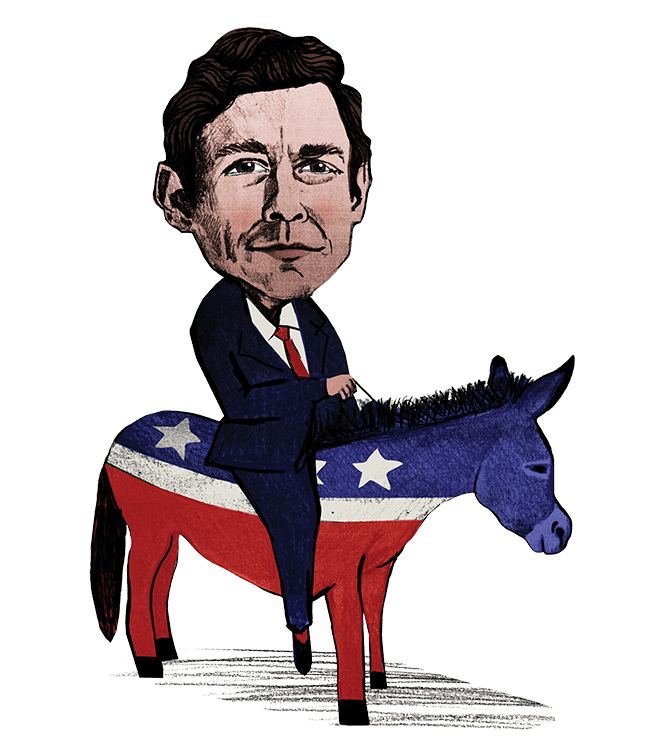
In truth, mass rituals of student unrest in France, past and present, follow the same script in a recurring dramaturgy of upheaval. Student revolts are dramas in five acts whose plot elements can easily be anticipated.
Act 1. A revolt breaks out at one school, often in a disadvantaged area, where students have grievances about overcrowded classes, understaffing and poor physical infrastructure. Sometimes there is wider opposition to a proposed government law or reform affecting students. Student grievances are often sincere and justified. Class sizes in France, for example, are comparatively large and teachers are low paid compared with peers in other European countries. The current student revolt was sparked by protests at a lycée in the Paris suburb of Créteil. Following the familiar pattern, the protest quickly spread to other high schools throughout France.
Act 2. Far-left political parties manipulate student agitation to turn protests to their own advantage. Political exploitation of student protests has a clear agenda: destabilise the government in a frontal show of force. Far-left politicians hypocritically deny that they are orchestrating student protests. This time, however, they have been pro-actively manning the barricades and hurling invectives at the government. They know that with French President Emmanual Macron near a fin de règne after ten years in office, the French government is weakened by catastrophic finances and lurching towards its dissolution after the presidential election next spring.
Act 3. As student protesters take to the streets, France’s big unions join the demonstrations to widen the movement. University students have also joined high school protesters in solidarity. This shifted the battleground from lycées to the elite Parisian university Sciences Po on the Left Bank where students clashed with police. At the same time, far-left non-student groups, notably the so-called Black Blocs, infiltrated the protests to foment disorder. These hardened ‘casseurs’ commit acts of vandalism to wreak havoc and provoke chaos. So far, more than 200 students and 700 police officers have been injured in street clashes. About 6,000 students, most of them minors, have been arrested and detained.
Act 4. Violent clashes with police produce a student ‘martyr’ who is either injured or killed. Four decades ago in 1986, a student called Malik Oussekine died from injuries after he was clubbed by police during protests. This week, a 15-year-old student had his hand blown off by a police stun grenade. Another protester lost an eye. When students are wounded or killed in clashes with police, it puts authorities on the defensive. Protesters denounce police repression and compare it to police brutality in authoritarian states. Some student demonstrators this week could be heard chanting the Italian slogan, ‘Siamo tutti antifascisti!’ (‘We are all anti-fascists’).
Act 5. The government responds to protesters with an offer of dialogue. The goal is to defuse the crisis with the promise of concessions. In the past, the French government has withdrawn proposed education reforms or promised to create more teaching posts. At present, however, the French government finds itself in a particularly difficult situation with a massive debt and a budget that is cutting billions from government spending. Student leaders have submitted a list of ten demands that will cost €10 billion (£8.5 billion). For the government, signing a €10 billion cheque for students, especially at a time when many in France feel overtaxed and are facing exorbitant fuel prices, would be difficult to sell to the public.
Emmanuel Macron, for his part, has ducked the student turmoil
Emmanuel Macron, for his part, has ducked the student turmoil. Far-right leader Marine Le Pen, who is way ahead in polls to succeed Macron in the Élysée Palace, has criticised him for not publicly supporting the police when they are confronted with violent revolts in the streets. Le Pen’s message is clear: law and order. Meanwhile, French Prime Minister Sébastien Lecornu is in the hot seat, though he seems ill-suited to managing a crisis that requires fierce resolve and strong public statements. Lecornu prefers to operate discreetly in the backrooms of power.
Lecornu gave a live television address late Wednesday afternoon to de-escalate the crisis. True to character, he offered student leaders a dialogue and promised to review the €64 billion (£54 billion) education budget next month. Nothing concrete was promised in the immediate term.
It’s doubtful Lecornu’s outstretched hand will satisfy student protest leaders and their allies on the far left. It’s doubtful, too, that another round of demonstrations on Thursday will be called off. More likely, the French will witness more social unrest and political turbulence as the country lurches towards a presidential election with the near certain prospect of a different party in power.



Comments