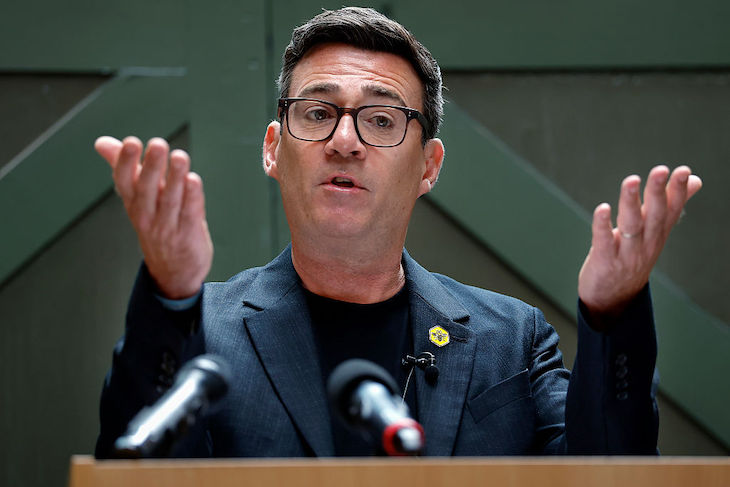
When it became obvious that Andy Burnham would be the next prime minister if he won in Makerfield, it seemed obligatory for any piece about him to include the recycled joke about a Blairite, a Brownite, a Milibandite and a Starmerite walking into a bar. The punchline: “The barman asks: ‘What are you having, Andy?’”.
Burnham’s speech on Monday was the first time he has given any specific steer. But even that was full of generalities
The joke was certainly over-used but it served a purpose. There has been very little that anyone knows for certain about what Burnham actually stands for. One of the most notable aspects of the soon-to-be-PM’s ascent to Downing Street is that it has been accomplished not through a detailed prospectus of what he would want to do as PM – which, in normal circumstances, would be either a manifesto or, mid-term, through his record as a minister and a leadership election – but with nothing other than ill-defined references to ‘Manchesterism’ and hints by his allies of his attitude to different policy areas.
It may be that he has spent his previous decades as a politician learning and that now, for the first time, we are seeing the real Burnham – the mature leader who knows what he wants to do. But a mere matter of days before he will become PM, we still don’t – to adapt Donald Rumsfeld – know what we do or don’t know about Andy Burnham’s ideas.
His speech on Monday was the first time he has given any specific steer. But even that was full of generalities. What, for instance, does this mean?
“I am going to give Britain the circuit-breaker it needs, by building a more collaborative politics in Westminster, by taking power out of the centre and putting it in the hands of the people and places who can use it best and, in so doing, creating a new sense of agency, possibility and hope flowing around the country.”
Every PM since Margaret Thatcher could have said the same and meant it when they took office, albeit with vastly different approaches. You could, for example, mean that you want to tear up regulations and let the market rip.
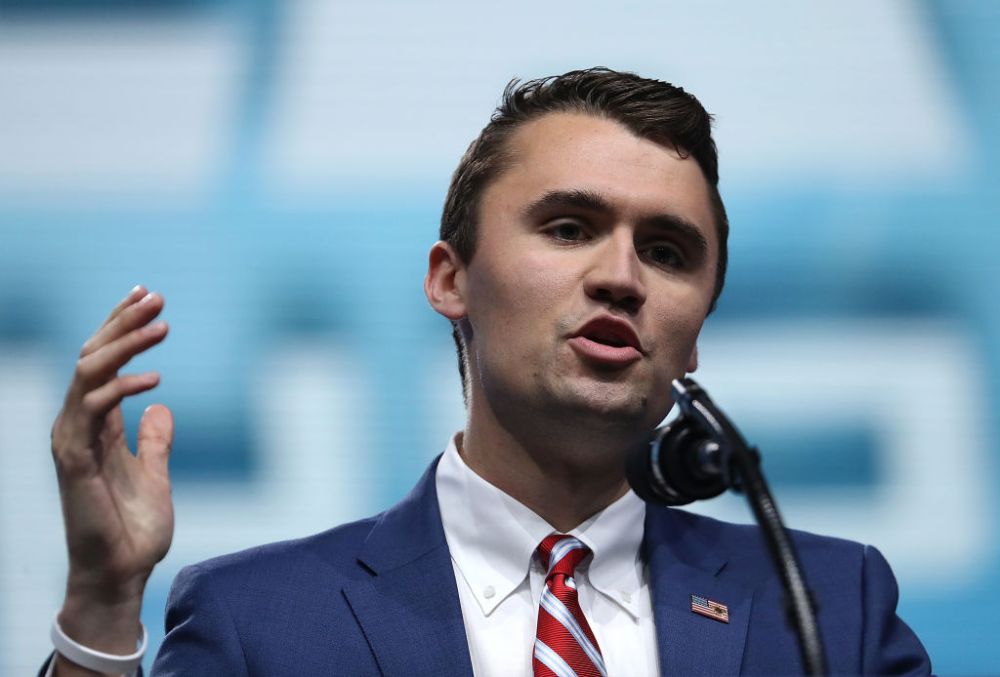
One assumes that’s not what Burnham means. But we can only assume, because Burnham turned up, delivered his speech and then left.
Despite having avoided almost any scrutiny in recent weeks – his by-election campaign was, understandably, carefully controlled – Burnham is about to become PM despite none of us knowing more about his plans than he has been willing to share through one set-piece speech.
In that context, it was bizarre to see so pre-eminent and estimable a commentator as Steve Richards support Burnham’s refusal to take any questions from journalists after his speech. He posted on X: “Wise not to take questions from political editors who use the platform to perform a turn for their viewers/ editors”.
It may indeed be wise of Burnham not to take questions if all he has to offer are generalities in response. But one of the main problems with Sir Keir Starmer as prime minister was the absence of real scrutiny in the run-up to the 2024 election.
Much of the media was as tired of the Tories as voters were and so failed to nail what Starmer actually stood for (or, perhaps more accurately, failed to reveal that the real problem was that he stood for very little beyond thinking he was a better person than his opponents).
It is less surprising that Burnham’s refusal to be scrutinised was supported by former journalists (former being the operative word) such as ex-Sun editor, David Yelland, who now describes himself as a “Leading adviser to business leaders, companies and families in reputation management” and former Downing Street communications director Alastair Campbell.
The Starmer problem is exponentially worse with Burnham. Unless you have been following the minutiae of Manchester politics in recent years, you will have had very little idea what he has said or done. And there is only so much anyone can learn from having that reported now. The only way we – voters – can actually find out more than Burnham wishes to tell us, or even simply have what he wishes to tell us explained in more detail, is if he is questioned about it by journalists.
Ironically, in his speech yesterday Burnham complained that government is “insufficiently accountable”. It’s even less accountable when the PM-designate refuses to take questions. He is, after all, not yet PM; even MPs have not had the chance to question him.
It’s not really that complicated. In a democracy, leaders should be questioned. As it now stands, one question leaps out: what has he got to hide?




Comments