I’ve been on holiday to a country that doesn’t officially exist. It has its own border, passport, flag, currency and army but no one recognizes it – not even its main sponsor, Vladimir Putin. Transnistria is sandwiched between its proper motherland Moldova – which is itself really Romania – and Ukraine, which Putin thinks is part of his motherland. Confused? It doesn’t get any easier.
In 1992 there was a short war between the newly created state of Moldova and separatist, ethnic Russians which resulted in nearly 1,000 deaths and the breakaway “country” (via a peace accord) policed by Russian “peacekeepers.” They are the first troops you see when you reach the Moldova/Transnistria border and collect your 12-hour, flimsy paper visa. Armed but disinterested, they waved us through to the next checkpoint where more soldiers did the same.
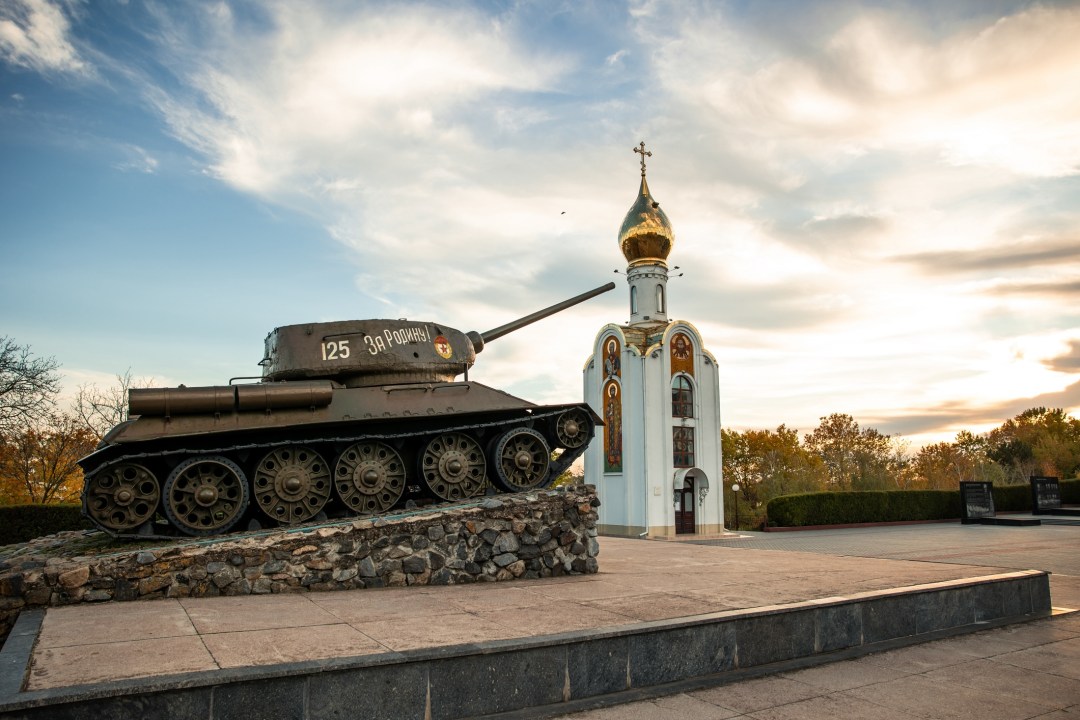
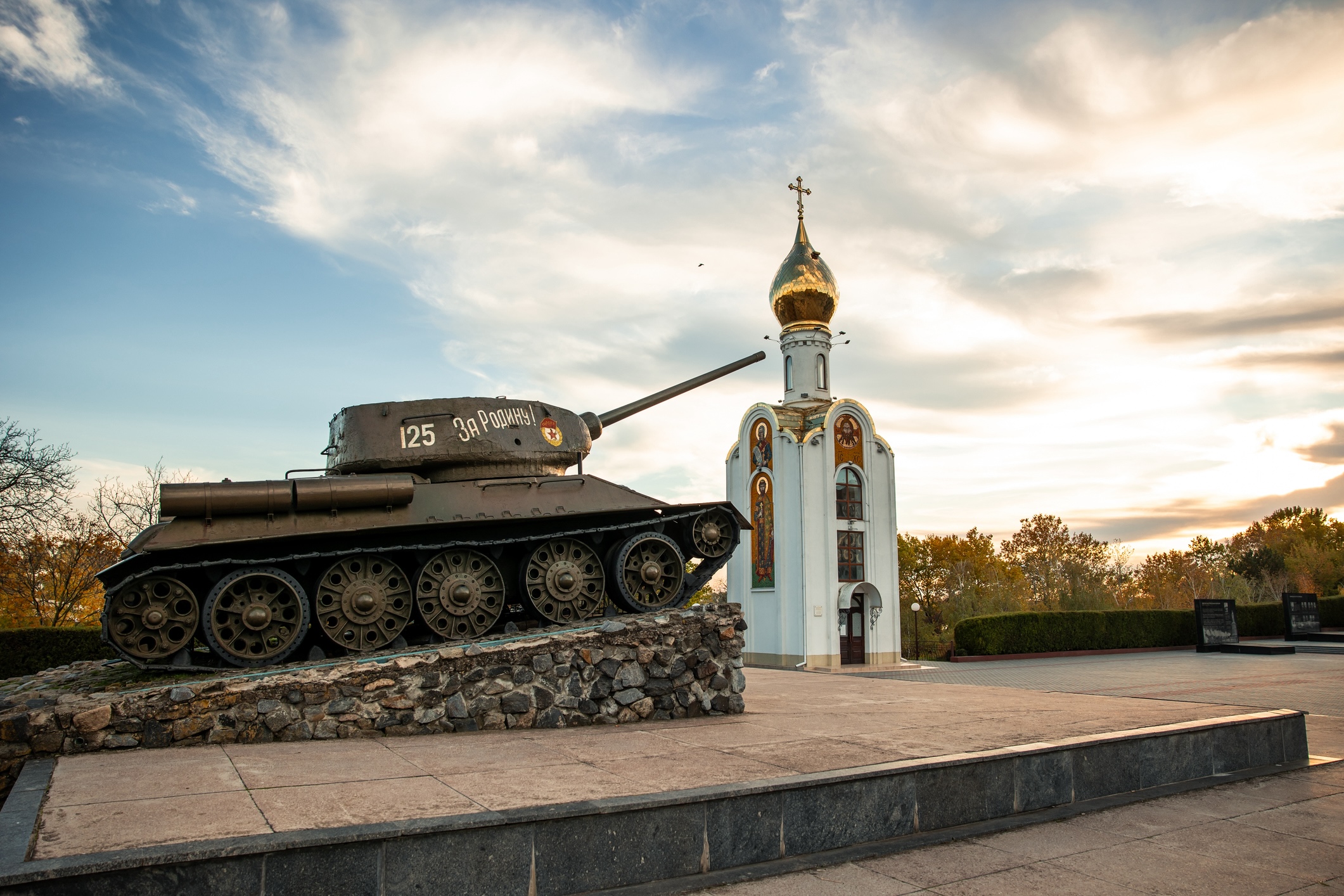
Sadly, I’m old enough to have visited the Soviet Union in the mid-1980s and entering Transnistria is very much like a trip back to the USSR. A smattering of Ladas, officials in Mr. Byrite-esque ill-fitting suits, busts of Lenin, a brutalist Parliament building still called the House of Soviets and a T34 commemorative tank in the capital Tiraspol’s main square are all a throwback to the inglorious days of the first communist state.
To be frank, it’s a weird place. A bacon rasher of land occupying around 1,600 square miles, Transnistria is stuck in a time warp not really of its residents’ making. The communist hammer and sickle and busts of dear old Lenin seem to be everywhere. The red and green flag of Transnistria and Russian tricolor fly proudly over government buildings and in public squares leaving visitors in no doubt they are on Russian soil.
Adding to the weirdness is the presence of a dominant company called Sheriff with its familiar sheriff’s badge logo and distinctive blue-colored marketing. Set up and owned by ex-KGB members turned mini oligarchs, Sheriff owns supermarkets, a distillery, car dealerships, gas stations and a phone network among other enterprises, which are all thriving no doubt due to their commercial acumen rather than their near monopoly position and political links.
Soccer fans may also recall Sheriff’s team in the capital imaginatively called FC Sheriff Tiraspol who play in the purpose-built, gleaming Sheriff Arena you pass on the way into the capital. They became regulars in European competitions from 2010 but their star has waned since Russia’s invasion of Ukraine in 2022.
Appetites were tempered by our driver telling us that the low-ceiling eating area was once a KGB torture center
To change money into Transnistrian roubles, we visited a Sheriff supermarket in the interestingly named town of Bender. Well stocked and staffed by workers in blue Thunderbirds-type uniforms, the store also featured a small fish tank full of live sturgeon to be chosen by customers. It seemed an appropriate metaphor for the plight of Transnistria’s Russian population.
We changed £20 into roubles, the smallest notes I have ever seen – apart from the Monopoly variety. Disappointingly, there were no Transnistrian coins which, like toy money, are made from plastic. This breakaway state is not immune to inflation. Like the USSR and Russia, there are plenty of decrepit high-rise apartment blocks and gleaming, onion-dome Russian orthodox churches. Ladas and older western cars drive side-by-side with new Mercedes, BMWs and battered old trolley buses on wide Soviet-style boulevards.
In downtown Tiraspol we visited two restaurants sporting a plethora of Soviet paraphernalia – communist flags, pictures of Lenin and Stalin, Soviet radios and kitsch ornaments, a Volga car and CCCP signs. Capitalism meets communism if you like. In one of the restaurants under the local police station, we enjoyed borscht, chicken and potato and a can of imperialist Coca-Cola. However, appetites were tempered by our driver telling us that the low-ceiling eating area was once a KGB torture center. Bon appétit.
Walking the streets felt like any other town or city, except for Russian military posters and the occasional citizen sporting an orange and black ribbon – a patriotic military symbol. Government ministries and departments dotted Tiraspol but it felt more like district council offices than offices of state.
We never felt intimidated or unwelcome in Transnistria. It felt like other communist states I’ve visited like the USSR, Cuba and China. Beyond the flags, shiny billboards and slogans, it’s full of normal people struggling to make a living. Our driver said it was a “museum” (albeit a museum from where residents could escape daily to Moldova and return at night) unlike other Russian breakaway states like South Ossetia and Abkhazia in Georgia.
But what will happen to the Pridnestrovian Moldavian Republic (to give it its correct Russian name)? Carved out by ethnic Russians worried about domination by the new Romanian-speaking Moldova, Transnistria has been used as a political pawn by Putin. He hasn’t recognized the state, preferring to keep it as a “frozen conflict” to leverage influence over Moldova. But things are changing. Putin’s military were supposed to sweep south through Odesa and link up with Transnistria but the failed Ukraine invasion means that is not going to happen. Cut off by Ukraine and dwindling gas supplies from Russia have coincided with financial support to Moldova from the EU, squeezing Transnistria.
Our driver and international experts say that will eventually force Transnistria back into Moldova proper. For nostalgia buffs that would be a shame. Our foreign office might say niet to visiting the enclave, but it was a da from me. Time is running out; Transnistria and its Soviet way of life may soon disappear forever.





Comments