“Quiet luxury” is all the rage these days, the social media algorithms tell me. On Instagram and TikTok, Americans inform their followers that clothing with no visible branding is a true status signifier, before extolling the virtues of Barbour jackets and Loro Piana shoes. Aspirational people shouldn’t drive flashy new cars, they argue; instead, they should drive a 30-year-old Range Rover – as if the inevitable engine rebuild wouldn’t cost more than most people would spend on a car. When decorating, millennial gray is wrong, garish and uninteresting; everything must be sage green with brass accents. There is nothing more quiet and luxurious than the B&Q color-matching desk.

Fortunately, one Instagram influencer, latching onto the “quiet luxury” trend, informed her followers of her favorite hidden gems in the region. Farther down the Dalmatian coast than Dubrovnik, situated at the southern side of the beautiful Bay of Kotor, lies the little Montenegrin town of Tivat. A cursory Google search told me that the town – the youngest in the region, yet with settlements dating from the Middle Ages – had undergone a rapid recent redevelopment, and now was attempting to position itself as the “Monaco of the Balkans,” a title that Tito surely would have been proud of. I had to visit.
While “quiet luxury” was what I was expecting upon my arrival, Tivat airport took it one step further with “completely silent luxury.” The EasyJet flight decanted me and my fellow visitors onto the scorching tarmac where we waited for what felt like an eternity before being allowed to enter the terminal to collect our luggage.
Once out the other side of border control, I found myself on yet more tarmac – more crumbling and dilapidated, this time – as I attempted to find an Uber to take me the five miles into the town center. Unfortunately, there is no Uber in Montenegro, despite it being indispensable 50 miles up the road in Dubrovnik, and the country’s own version, MonteGO, did not appear to have a single vehicle. Not to worry: just across the street were a gaggle of helpful and animated taxi drivers beckoning us over, and a prominent sign displaying their rates: €2 ($2.30) per kilometer. Somehow, this still amounted to €35 ($40) for a five-mile journey, after haggling and taking an additional passenger, who also had to pay. “You see the traffic – very busy!” the driver told me, once we had set off. I asked him if there was a particular reason it was like this. “No, always busy,” came the reply.
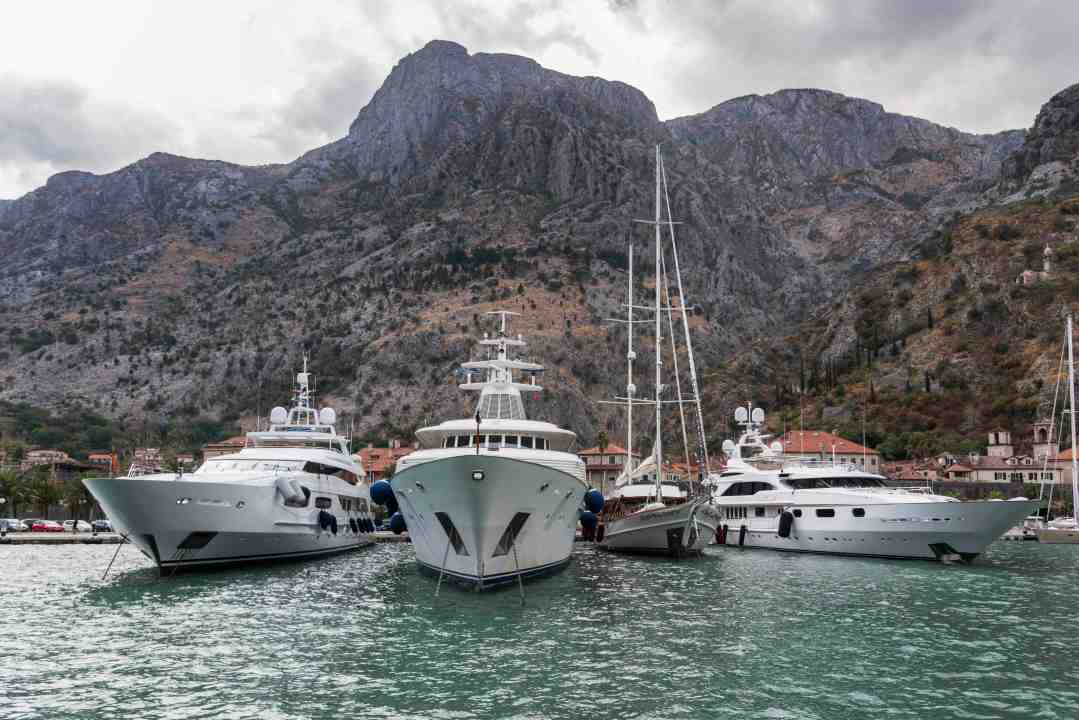
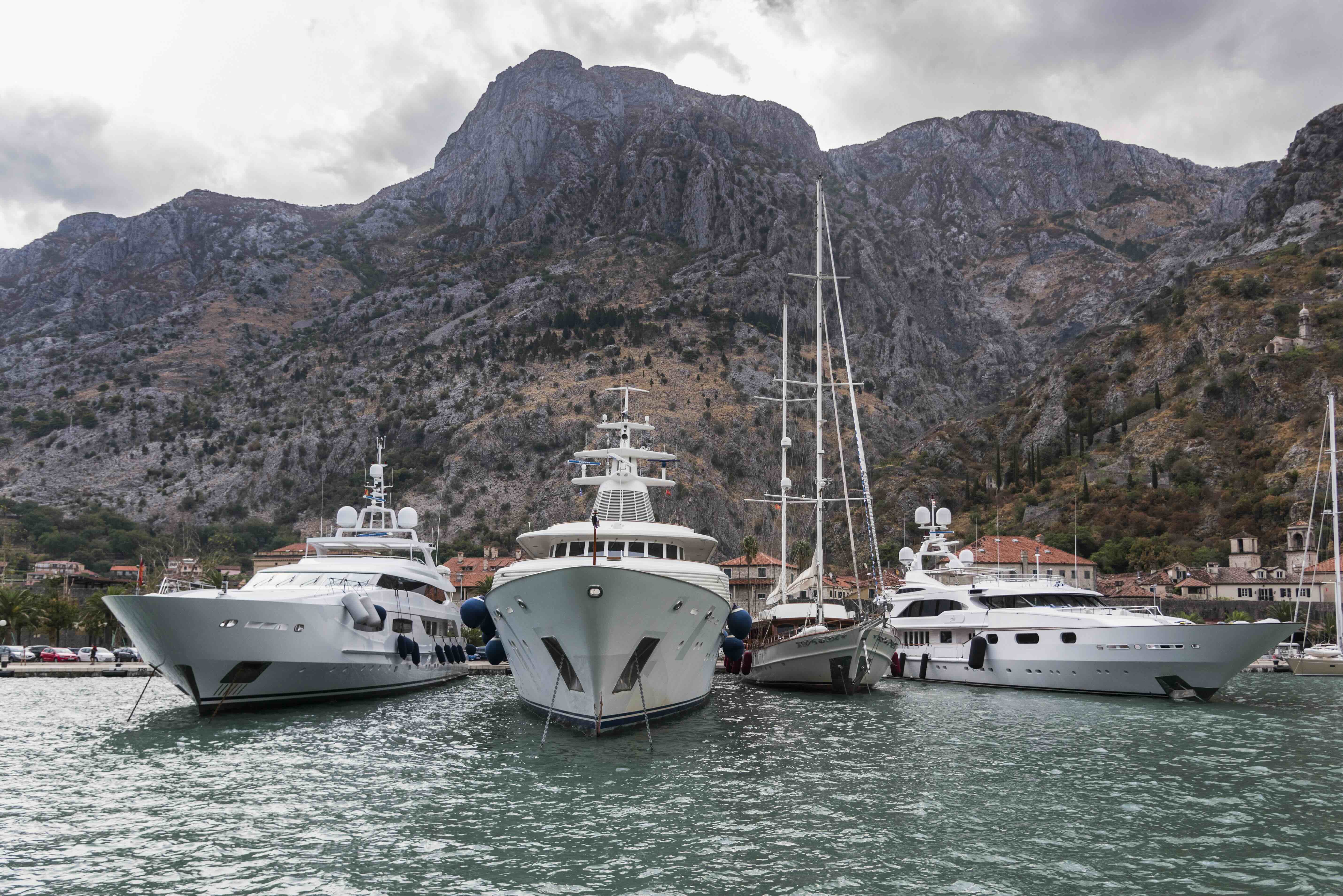
Once in town, “luxury” became more apparent. The waterfront had been developed into an impressive marina area named Porto Montenegro, with berths bedecked with superyachts, enveloped on three sides by pristine high-rise residential apartments, premium fashion boutiques and al-fresco dining. The streets were spotless, and the breaking of the water on the bows was drowned out only by the occasional roar of an airplane overhead.
Away from the immediate vicinity of the marina, however, the similarities between Montenegro and Monte Carlo were reduced to little more than the first half of their names. There were casinos, but these were more of the kind that one would find on a neglected British high street than Monaco. The beaches, stone or concrete rather than sand, rented out sunloungers for upwards of €50 ($58) for an hour, while bathers and nearby pedestrians alike were treated to the finest Buddha Bar–adjacent Spotify playlists played altogether too loudly. A submarine once belonging to the Yugoslav Navy was prominently displayed in the marina car park but if this was a tourist attraction one could enter, it was not obvious how.
Tourists were primarily from the Balkan region and farther eastward into Eastern Europe; every other woman had a little dog and large stilettos, while the men exclusively wore shorts and sneakers. I heard few English accents and, thankfully, not a single American one, marking a pleasant deviation from my other sojourns on the Adriatic.
Unlike the taxis, bars and restaurants were without exception high quality and reasonably priced. Although in many cases the menus appeared like time capsules from 2017, as if the entire hospitality industry was being held hostage by truffle salesmen. Caviar was everywhere, too, but consisting more of the taramasalata kind of roe than that from the sturgeon, leading to somewhat disappointing plate presentations. While from a cursory glance the wine lists may seem offputting, consisting largely of Dalmatian wine rather than the usual staples from Burgundy and Bordeaux, this region does have some beautiful producers making exceptional wine from indigenous grapes.
Montenegro was celebrating its Statehood Day during my stay in Tivat, commemorating when the former Principality of Montenegro was first recognized as an independent state in 1878, only 17 years after the Principality of Monaco was first established. To celebrate, every shop and supermarket in Tivat closed for three days during the height of the tourist season, leaving many parched travelers frustrated and dejected, paying over the odds for bottled water outside restaurants. The relative peace of the marina was extinguished as a stage was erected in front of a topsail schooner and Hari Mata Hari, the Bosnian act at the 2006 Eurovision Song Contest, treated everyone to a performance.
There is no denying the natural beauty of the Bay of Kotor, and the ongoing evolution of Tivat is a promising display of the economic and social success of Montenegro following its independence not so long ago. Still, there is yet some distance to go before it is on a par with Monaco when it comes to luxury and extravagance. Perhaps that is a good thing. For those more conscious of budgets, there may be some time still to enjoy its unique, majestic sunsets over the Adriatic before the town finds itself prohibitively exclusionary. “Quiet luxury,” it may not be, but if your aim is simply to say, “Oh, you won’t have heard of it,” then Tivat is for you.




Comments