There is a delightful moment at the end of this book when Frank Ashwood is out looking for soil-dwelling invertebrates in his adopted New Zealand home. Suddenly he proclaims: ‘I notice something and my heart skips a beat. A velvet worm.’ He goes on to tell us that the discovery of two of these rare organisms in one day is ‘a thing of dreams’.
Far from scoffing at his excitement, the reader has long come to share his enthusiasm for the extraordinariness of velvet worms. They are, after all, lozenges of blue and orange stripes rolled in tiny sequins. That we have also come to see the full beauty, abundance and sheer weirdness of the whole subsoil realm is a measure of Ashwood’s wider achievement. Under his guidance we encounter a world that is ever- present but almost completely unknown.

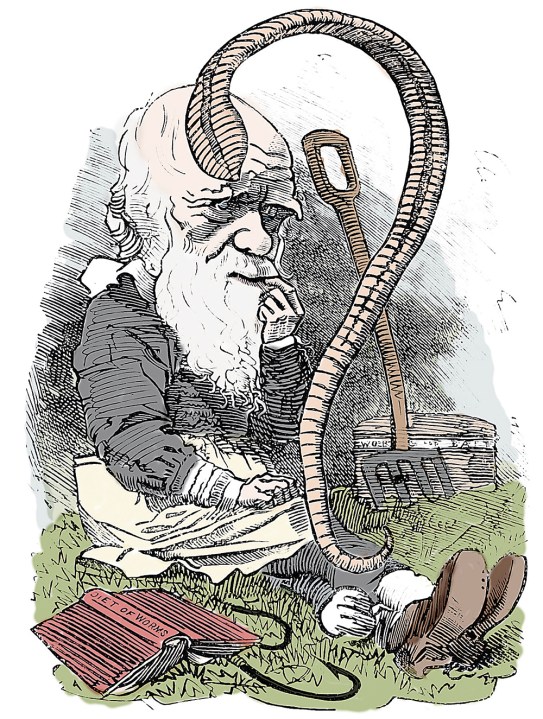
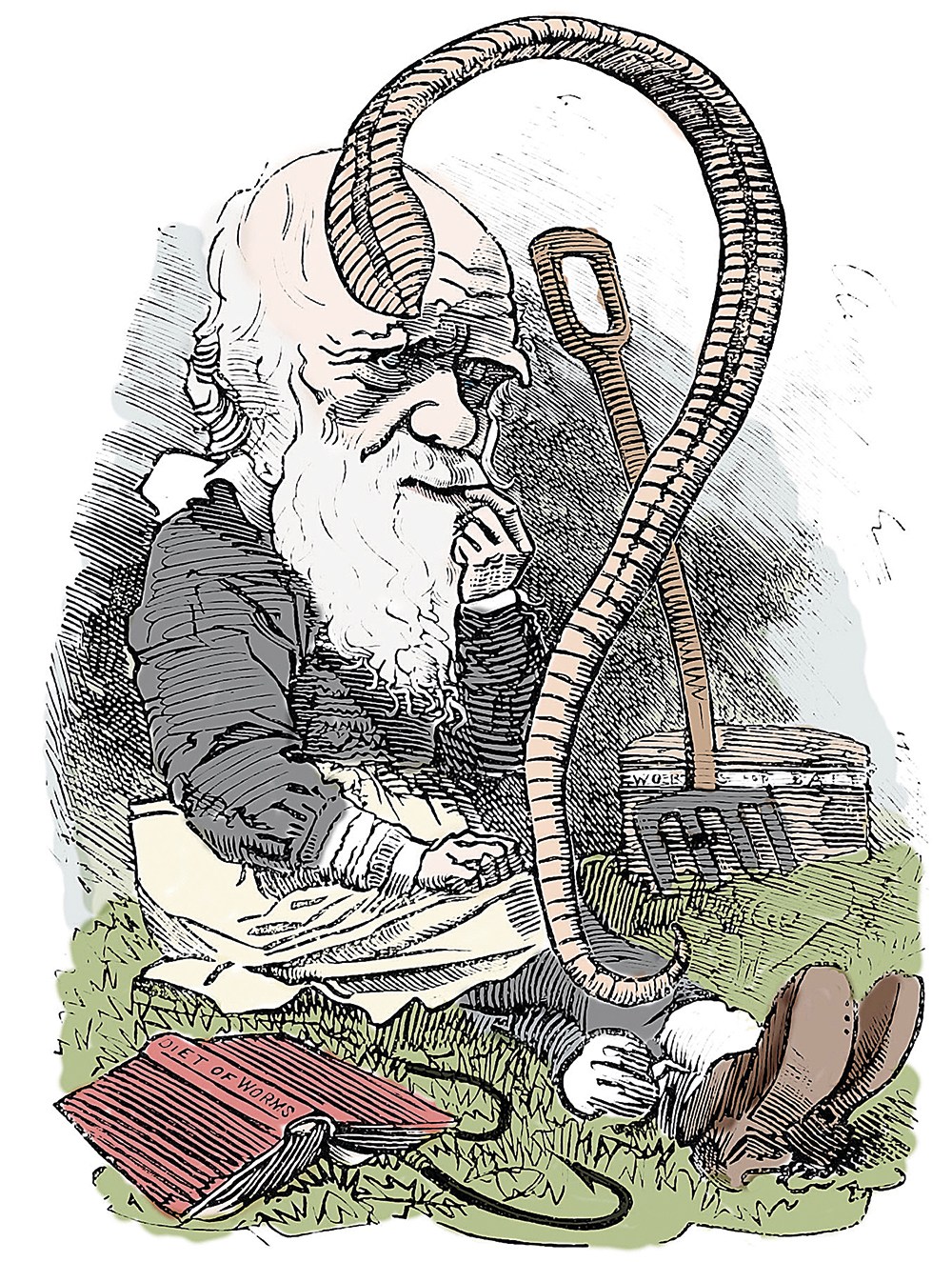
If we are ignorant, then it has long been thus. Charles Darwin was one of the first people to explore and realise the central role of earthworms in the creation of soil. Before that, Victorian gardeners and farmers had been accustomed to kill them as unwanted pests. Ashwood, while turning briefly to Darwin’s work, devotes much of the book to the latest discoveries, which have revealed soil as the last unexplored province on Earth.
He first takes us on a gentle excursion through the soil scientist’s essential vocabulary, as well as the stock characters of the underworld. We meet detritivores, the myriad beasts that consume leaf litter as it falls at an average rate in European woodland of 3.5 tons per acre; and microscopic animals such as pseudoscorpions, oribatid mites, nematodes and springtails.
Nematodes are voracious predators and the most numerous animals on Earth, with one individual specimen in Siberia thought to have survived for roughly 46,000 years. They outnumber humans by 60 billion to one, although in terms of biomass we still just outweigh them. Mercifully, most are less than a millimetre long and are themselves routinely lassoed and eaten by fungi.
Springtails are equally remarkable. Many types have a coiled mechanism for escaping predators that allows them to jump 100 times their body length. Yet it is not athletic prowess so much as ecological success that are the springtails’ strongest suit. It is the cumulative mass of these minuscule animals which really determines their overall importance. Ten square feet of ordinary healthy soil supports 50,000 springtails, 100,000 mites, 300 earthworms, 1,000 potworms and five million nematodes.
These figures bring into focus the monumental life forces that go into ordinary soil production and maintenance. Because of their abundant root systems, temperate grasslands have one of the richest soil faunas. The below-ground animal life can amount to 40 tons per acre, a greater biomass than all the mammals which graze its surface vegetation.
Ashwood takes us to places with the most productive of all soils. Bizarrely, we have seen something of them almost nightly on the news: the eastern Ukrainian war zone is underlain by a form of earth called chernozem. Comparable soils are only found in a small number of other regions, including the Canadian prairies and southern sections of Amazonia, where it is known as terra preta, black soil. The Ukrainian chernozem area occupies less than 6 per cent of the planet’s land surface but feeds 400 million people. In 2010, the total black-soil regions of the world produced almost a third of our wheat and a quarter of all potatoes. Yet Ukrainian topsoil is being lost at a rate of around 500 million tons a year.
Such statistics bring to focus our absolute reliance upon soil and also the gathering crisis in its treatment. But Ashworth is upbeat in his approach to the issues which he meticulously lays before us. In China, for example, the government declared an emergency as long ago as 1978, erecting a stabilising barrier to protect the northern soils that encircle the Taklaman Desert. A similar Great Green Wall of trees now spans 11 sub-Saharan nations in an effort to stabilise the advance of the desert. But the central message is clear. Soil is astonishing in its complexity and fundamental to all life. It is also under threat, and we can no longer treat it like dirt.






Comments