
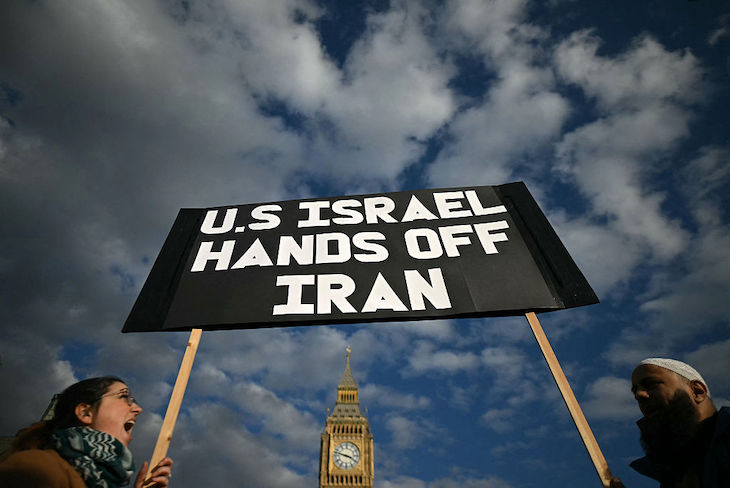
I’ve been thinking a lot about the phrase “unprovoked war.” It’s been rolling off leftist tongues since the explosion of hostilities in Iran. This week, Jeremy Corbyn, Zarah Sultana and scores of hoary peaceniks wrote a letter to the Guardian insisting Britain should have nothing to do with America and Israel’s “unprovoked war” in Iran.
Trump’s noisy doubters and Israel’s legion haters are using language as a weapon
Here’s my question: is the rape and murder of Jews not a provocation? Was the worst anti-Jewish atrocity since the Holocaust – 7 October – not a provocation? The tyrants of Tehran were the paymasters of the jihadist brutes who carried out that slaughter. They lavished guns and training on that army of anti-Semites that invaded Israel by air, sea and land not even three years ago. That wasn’t a provoking act?
Is it not a provocation to rain thousands of missiles onto a neighboring country? Is it not a provocation to subject a nation to a ballistic swarm that causes the displacement of tens of thousands of civilians and the deaths of scores of innocents, including 12 Druze kids playing football? That’s what Hezbollah has done these past three years. Hezbollah received hundreds of millions of dollars from the Islamic Republic to pursue precisely such violent badgering of the Jewish state. That isn’t a provocation?
You can say many things about America and Israel’s war in Iran. Some say it’s valiant, others that it’s reckless. But one thing you can’t say, not if you want to be taken seriously, is that it is “unprovoked.” Unless, of course, you think the mass murder of Jews should have no repercussions. That, just like in the 1930s, or the 1490s, mobs of anti-Semites should be free to kill Jews with impunity. If I were you, I’d keep that view to myself.
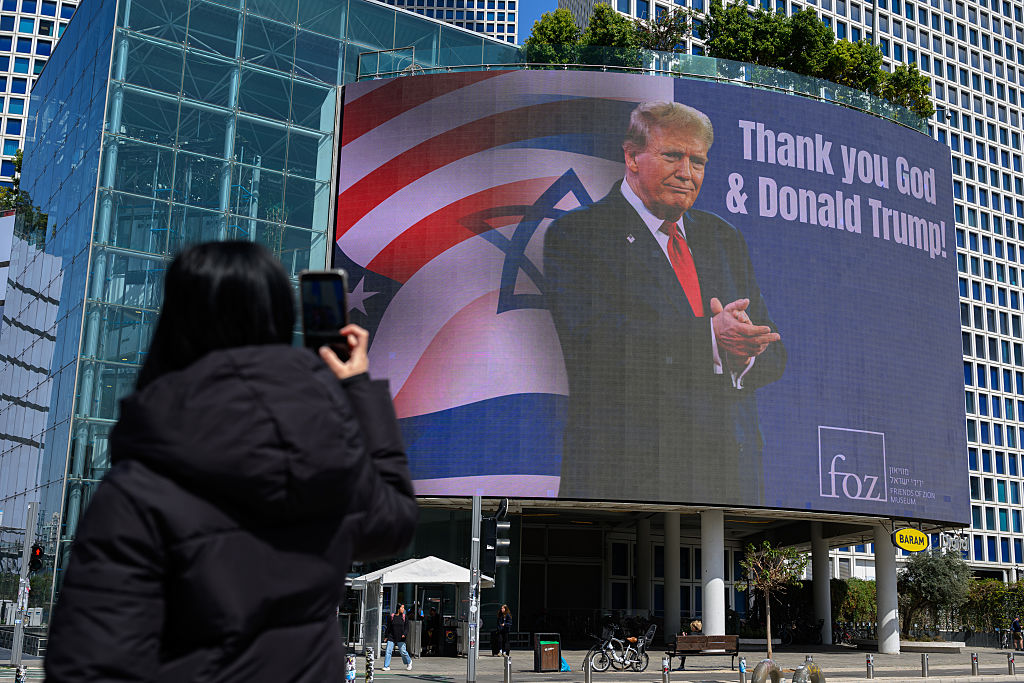
Traditionally it was the pursuers of war who engaged in linguistic trickery to justify their actions or disguise their true motives. Tariq Ali calls it the “grammar of deceit.” Today, such semantic duplicity is more readily found among war’s opponents.
Indeed, President Trump, in contrast with his predecessors who dolled up their warmaking as “peacekeeping,” has spoken with uncommon frankness about the nature of war. He has told of the “death, fire and fury” that will be visited upon the Iranian regime. Ugly, but honest. It’s the other side, Trump’s noisy doubters and Israel’s legion haters, who are using language as a weapon not of clarification but of concealment.
“Unprovoked war” – that isn’t only factually wrong, it’s intentionally dissembling. It draws a thick veil over the events of the past three years. It absolves the Islamic Republic of its sins of violent anti-Semitism. It memory-holes the war crimes funded by that regime and conditions us to think of Iran as an innocent party under “imperial” assault by the Jewish State and its American lackeys. It is a lie masquerading as a critique.
Then there’s “illegal war.” Says who? Who made the media into the judge, jury and executioner of when nations are permitted to fight? My view is simple: if it is against international law for the world’s only Jewish state to pursue the Islamist despots who funded the rape and murder of its citizens, then that law is an ass. Worse, it’s anti-Semitic.
Like others, I’m worried about this war. But I’m more worried about the opposition to it. There is a willful refusal to grapple with what is at stake in this theater of tension. This is not “another Iraq.” That calamity was fueled by untruths about Saddam’s threat to the West. The Islamic Republic *is* a threat. It has rained hyper-violence on our ally of Israel. Its barbarous proxies drag mayhem across the Middle East. Its theocratic intolerance stretches into the West, where it has funded terror.
In infantilizing this Islamist tyranny, depicting it as a victim of those dastardly Jews, the left and much of the media have made themselves into agents of obfuscation. The first casualty of war is truth, they say. Now it’s the first casualty of anti-war, too.
There’s a moral defeatism around this war that I find deeply troubling. There’s a kind of gleeful fatalism. You can feel it. Right now the nightly BBC News comes off as one long smirk at the troubles America has brought upon itself. You get the impression some people would even like to see America and Israel “taught a lesson.” To me it feels like cultural self-loathing in the drag of pacifism – a sentiment that is less the heir to the peace movements of old than a malignant outgrowth of the anti-Westernism that runs riot on our campuses and in our institutions.
I fear these people fail to appreciate how catastrophic it would be if the Islamic Republic were to emerge emboldened from this conflict. Both regionally, where the Jewish homeland would face a renewed threat, and globally, where Islamism would gain a new lease of life, it would be disastrous for humankind. I get it: war is ugly, “regime change” is destabilizing and Trump is nuts. But for all that, I can say with no qualms whatsoever that I want America and Israel to win this war, and to win it decisively.


Comments