“If they shut down the internet, you know it’s serious,” said a well-informed observer of Iran to me yesterday morning. The internet blackout came yesterday afternoon – along with over a million Iranians marching in streets across the country. Strikes are continuing in bazaars and the cries for the end of the Islamic Republic are becoming more brazen.
A video was sent to me before the blackout from Iran’s upscale northern suburbs, home to the sons and daughters of the regime elites, in which the cries of “death to the dictator” could be heard loud and clear. “We are excited,” was the caption to the video. And this morning there came unconfirmed reports that the National Bank of Iran had implemented a ban on people withdrawing cash, a potentially huge moment in events. With the internet blackout still in force across the country, however, it is difficult to contact people and put a number on the protesters or verify the videos somehow making it out. What is clear, though, is that the unrest is spreading.
The Islamic Republic’s elites remain united behind their exhausted revolution
Masoud Pezeshkian, Iran’s president, attempted to offer an olive branch to the bazaar, from whom the Islamic Republic has enjoyed decades of support (with a few tiffs along the way). He specified that he would be willing to speak to the “representatives of those protesting,” a rhetorical sleight of hand designed to exclude the “rabble” of youngsters and Iran’s marginalized ethnic groups: the Kurds, the Baloch and the Lur. Ayatollah Ali Khamenei, for his part, has stuck to his script: never give an inch. It is highly likely that today at Friday prayers he will continue to eschew conciliation and double down on his portrayal of the protesters as Israeli or US lackeys, corrupt youths and foreign agents hellbent on destabilizing Iran. Any deviation from this line would be a significant shift and of real note.

For despite a few squeaks of irritation, the Islamic Republic’s elites remain united behind their exhausted revolution. There might be gold on flights heading to Russia. There might even be a few opportune holidays being planned by Iran’s oligarchs and clerics. But so far, no one has jumped ship. Not even the Basij or the police or intelligence service. One suspects that the point at which cracks started to appear in these regime-loyalist edifices would be fatal for Khamenei.
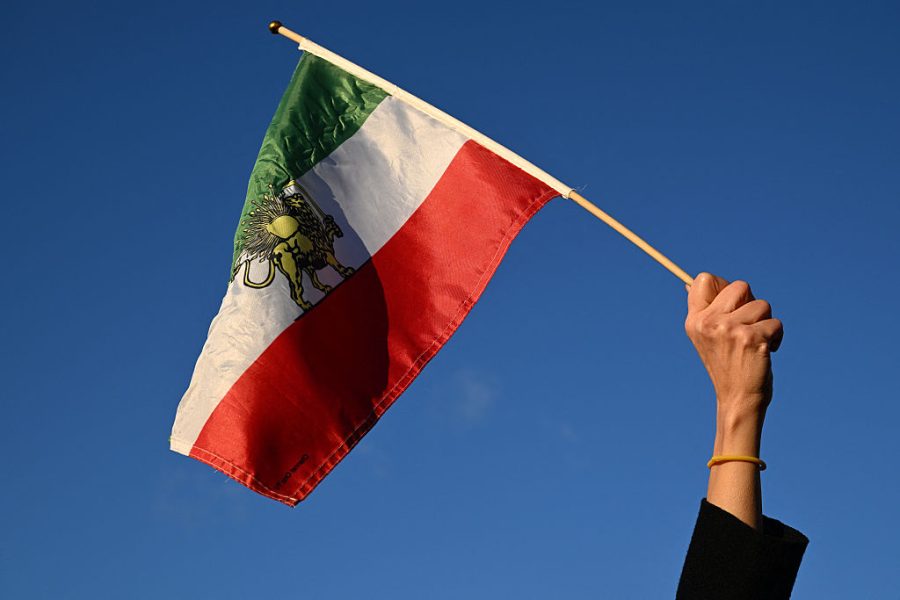
From the US we are hearing that Donald Trump, whose increasingly bellicose rhetoric is simultaneously a cause for concern and optimism in Iran, is coming under pressure to meet with Crown Prince Reza Pahlavi in what might be interpreted as a blessing of sorts from the world’s most powerful man. I’ve been consistent in all I’ve written that Pahlavi – son of the last Shah of Iran – is likely not the man to unite a fractured opposition and that he is unlikely to want to sit on the peacock throne as was once his destiny, but there is a segment of the Iranian population who are calling for him to do so.
A Trumpian blessing would be hugely damaging to Reza Pahlavi’s cause, for it could cut across an Iranian nationalism that is built on a suspicion of foreign interference. Israeli prime minister Benjamin Netanyahu discovered this over the summer when his calls for a revolution fell flat. There are many in Iran who have been reduced to penury by Trump’s maximum economic pressure campaigns. People rarely forget such things.
And yet, this issue of opposition leadership is perhaps the most crucial element driving what could happen in a post-Islamic Republic Iran. Overnight, we have seen Kurdish elements claiming huge successes in pulling people out onto the streets to call for an end to the regime. I have heard unsubstantiated rumors of Mujahedeen-e Khalq (a controversial opposition grouping with a questionable track record) doing Mossad’s bidding inside Iran.
There is the real risk that Iran sees ethnic fractures in the wake of a worsening security situation in the country. The Islamic Revolutionary Guard Corps itself was born to crush separatist elements in those fragile post-revolutionary days and the early years of the Islamic Republic were characterized by assassinations of Iranian-Kurdish separatists. An Iran that splinters would present a huge regional challenge, equal to the chaos of post-2003 Iraq.

Comments