
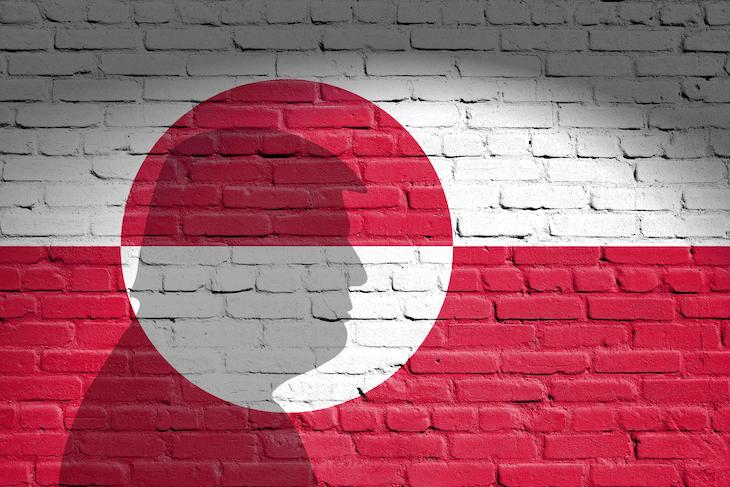
As Donald Trump weighs up taking control of Greenland, Britain and the EU has fallen back on a familiar strategy: talk tough, and do nothing. The UK joined France, Germany, Italy, Poland, Spain and Denmark yesterday in making a joint statement affirming that “Greenland belongs to its people.” Arctic security, it said, must respect “sovereignty, territorial integrity and the inviolability of borders.”
Invoking it Article 5 the United States would expose NATO’s limits rather than overcome them
If Donald Trump decides to take Greenland, Europe’s initial response would be loud, formal and legally impeccable. Europe and the UK would protest loudly, threaten, – and then do almost nothing at all. There is no mechanism legal, military or political capable of preventing such a move once Trump decides it’s strategically necessary. The uncomfortable truth is that Europe has spent three decades outsourcing its security to the United States while pretending this arrangement came without consequences. Greenland would be the moment when that pretense finally collapses.
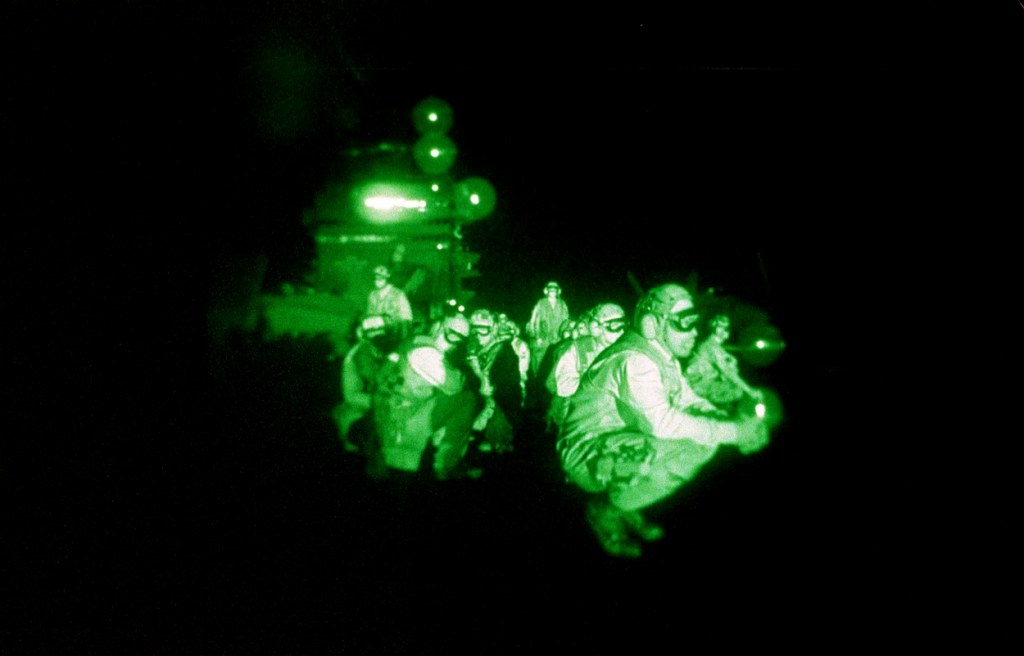
The mechanics would be brutally simple. The United States already maintains a permanent military presence on Greenland. American forces wouldn’t need to invade a hostile territory or fight their way in. They’d already be on the ground. Control of airspace, ports and communications could be asserted within hours. There’d be no battlefield, no campaign, and no meaningful resistance. The issue is not whether Washington can take Greenland, but whether anyone could prevent it.
NATO would be the first refuge of Europe’s outrage, and the first illusion to fall away. The alliance is not an organization capable of disciplining its most powerful member. It’s a pact built around American power, American logistics, American intelligence and ultimately the American nuclear guarantee. Article 5, which holds that an armed attack against one member in Europe or North America is considered an attack against all, was designed to deter external aggression, not to restrain the state that underwrites the entire system. Invoking it against the United States would expose NATO’s limits rather than overcome them.
Trump would not present such a move as conquest. He would frame it as necessity. The language would be familiar and carefully chosen. Greenland would be cast as a security liability neglected by a distracted Europe, a strategic asset exposed to Russian and Chinese encroachment, and a territory whose future required decisive stewardship rather than institutional paralysis. Any arrangement would be dressed up as protective, stabilizing and economically beneficial. Consent would be asserted rather than demonstrated.
International law would offer no refuge. The legal case against a unilateral American move would be clear enough. Greenland enjoys recognized status within the Kingdom of Denmark, and its people possess the right to self-determination. A forced transfer of sovereignty would violate the UN Charter and the most basic post-war norms. None of this would be controversial. Even a Security Council Resolution condemning the invasion wouldn’t happen, the US would simply veto it. None of the legalities would be decisive.
International law depends on enforcement, and enforcement depends on power. When a hegemonic state decides that compliance no longer serves its interests, the law does not assert itself. It recedes. The United States has acted outside international legal constraints before and absorbed the diplomatic fallout without lasting strategic damage. Europe may invoke law as a shield, but it no longer possesses the means to wield it as a weapon.
Denmark, meanwhile, would find itself painfully exposed. It cannot defend Greenland alone, and it cannot compel its allies to do so on its behalf. The European Union has no military capacity capable of substituting American power in the Arctic. Talk of strategic autonomy dissolves quickly when confronted with geography, logistics and military might. What Greenland would expose is not Danish weakness, but European self-deception.
This does not mean Europe would not respond. There would be retaliation of a sort. Symbolic sanctions would be discussed and selectively applied. Access arrangements for American bases might be reviewed, if not meaningfully altered. The EU would accelerate existing defense integration projects and revive familiar language about strategic autonomy. None of this would be trivial, but none of it would be decisive. Each measure would be carefully calibrated to avoid triggering broader retaliation. Europe would act, but only within limits it has already internalized.
The rhetoric would be fierce. Danish prime minister Mette Frederiksen has warned that a US move “would mean the end of NATO.” Greenland’s prime minister Jens-Frederik Nielsen has said that “enough is enough. No more fantasies about annexation.” Even Keir Starmer, usually cautious in his handling of Trump, has said that he would tell the US leader: “hands off Greenland.”
But words alone won’t alter the outcome – and Europe is in no position to escalate matters. Sanctioning the United States would amount to sanctioning itself. Defense procurement, intelligence sharing, financial markets, energy security and technological supply chains remain tightly bound to American systems. A rupture would not be a clean assertion of sovereignty. It would be a self-inflicted crisis. European leaders understand this, which is why outrage would remain rhetorical and action carefully constrained. Behind closed doors, the priority would be containment rather than confrontation.
Europe sanctioning the United States would amount to sanctioning itself
Trump’s role in such a scenario is often misunderstood. The temptation is to treat any renewed interest in Greenland as evidence of recklessness or impulse. In reality, it reflects a brutally rational assessment of leverage. Trump has already pointed out that Greenland sits astride the Arctic routes that will shape future trade and military positioning. It offers proximity to Russia, leverage over China’s polar ambitions and access to resources of growing strategic value. From Washington’s perspective, its importance is obvious. And from Trump’s perspective, Europe’s inability to resist is equally clear.
European outrage would be priced in from the outset. Trump understands asymmetry. He understands that dependence limits escalation, and that the louder the public condemnation, the stronger the private incentives to avoid rupture. This is not adventurism. It’s leverage applied to a partner that has spent decades reducing its own capacity to resist.
Greenland matters because of what it would reveal. For decades, Europe has comforted itself with the belief that the post-war order was self-sustaining. That alliances, institutions and legal frameworks could endure even as the material foundations beneath them eroded. Greenland would demonstrate that sovereignty without power is conditional, and that guarantees without capacity are fragile.
The real shock would not be that the United States could do this. It would be that Europe could not stop it. After the protests faded and the summits adjourned, the same reality would remain. Power once outsourced is not easily reclaimed. Dependence always comes due.



Comments