As The Spectator goes to press, a great fleet of American war machines is whirring through the skies toward the Middle East. More than 50 fighter jets, plus stealth bombers and support aircraft, are joining what Donald Trump called an “armada” of US naval forces in the Arabian seas.
The White House continues to say that it is pursuing a diplomatic solution with Iran. It’s possible that this latest military escalation is another of President Trump’s elaborate bluffs, designed to pressure the Iranian regime into accepting American and Israeli demands.
But the President has been unusually mute about the situation on Truth Social. It’s fair to assume that the movement of such significant assets – the biggest deployment of US forces in the region since the invasion of Iraq – means the Trump administration is serious about starting another war.
A new war in Iran could resolve itself quickly. It is just as likely to turn into another horrendous quagmire
Reports suggest that Trump is fed up with Iran’s intransigence and that the Pentagon is braced for a sustained military campaign. Vice President J.D. Vance talks of diplomatic “red lines” that must be respected, echoing President Obama’s rhetoric on Syria.
Yet it’s increasingly clear that Washington, Tel Aviv and Tehran are talking at cross purposes. America insists that Iran cannot, under any circumstances, build a nuclear weapon. Iran’s leaders, meanwhile, seem willing only to renegotiate the speed of its uranium enrichment program. They are betting that Trump would prefer to avoid an unpopular conflict ahead of the midterms.
The western world watches on, hoping Tehran will fold so as to avert an escalation that could close the Strait of Hormuz, sending oil prices spiraling and triggering a global recession.
One possible outcome is another largely performative war. We may see something similar to the 12-day clash between Iran, Israel and America that followed last summer’s bombing of Iranian nuclear sites. Such an exchange of fire and fury could enable both sides to claim success while leaving the ultimate balance of power unchanged.
The theater of war, however, cannot not be simply about dramatics. Trump’s preference for spectacular actions, followed by triumphant declarations of victory, is not a formula for stability. After Operation Midnight Hammer last June 22, he and his cabinet officials insisted that Iran’s nuclear ambitions had been “utterly obliterated” as they frantically pooh-poohed a Pentagon leak that suggested otherwise. Just seven months later, Trump finds himself on the brink of another war to stop the mullahs getting the bomb.
As protests across Iran intensified in January, Trump told the country’s leaders not to execute their opponents – or else. He promised protesters that “help is on its way.” Tehran largely ignored the warnings, turned off the internet and set about crushing dissents in its brutal way. Trump duly abandoned the humanitarian talk and is now reframing the Iran question as a matter of preventing nuclear proliferation in the national interest.
His inconsistency compounds the belief that what America says and what America does are two very different things. Moreover, observers inside and outside America who say the Commander-in-Chief is in hock to Israel will feel increasingly vindicated.
Trump began talking about the Iranian protests after Benjamin Netanyahu visited his home in Mar-a-Lago over the New Year, only to ramp up America’s military presence in the region after Netanyahu came to see him again in Washington on February 11.
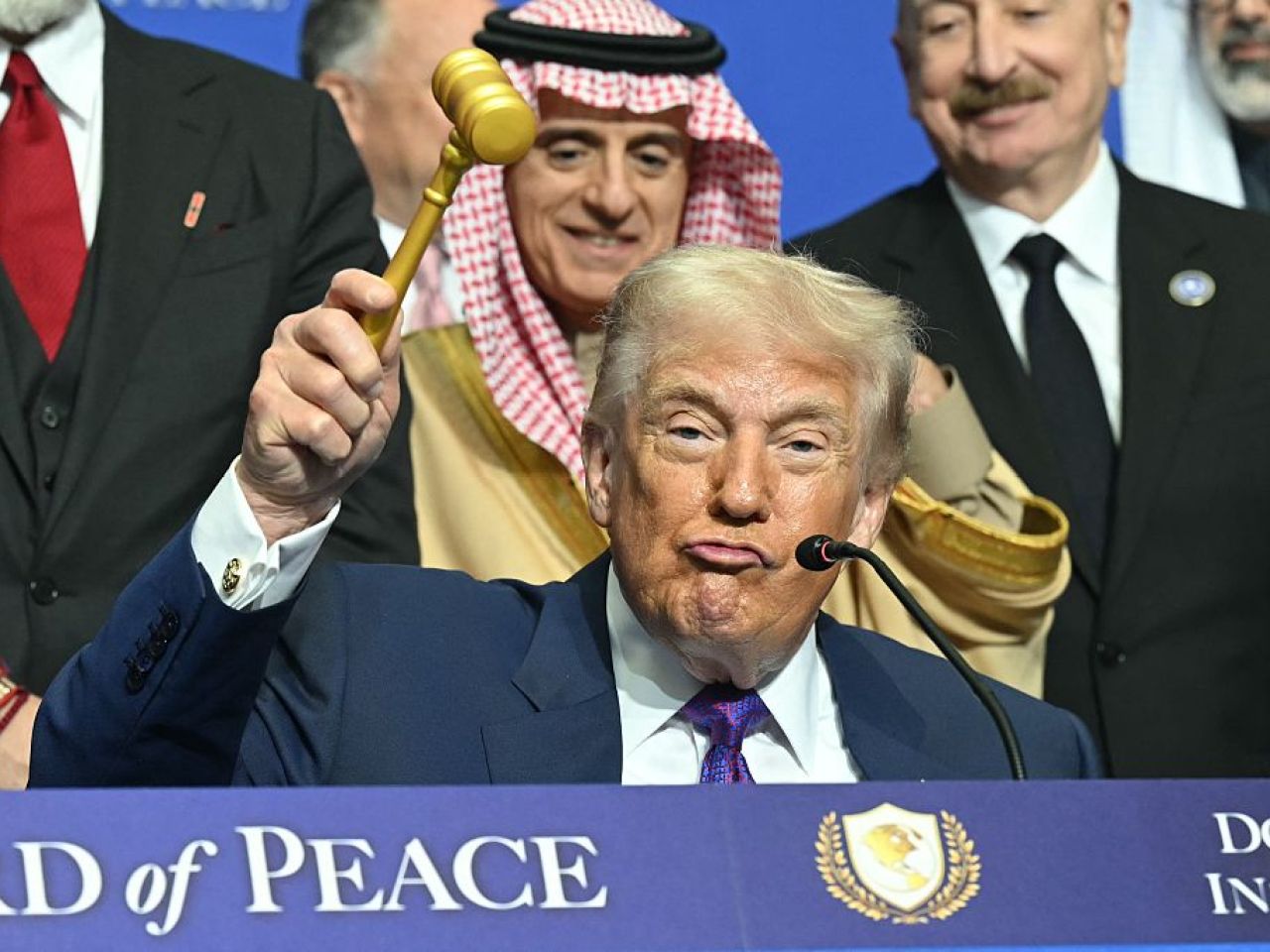
There is a growing problem with anti-Semitism on the American right. But voters who have misgivings about America’s closeness to Netanyahu’s foreign policy ought not to be confused with nasty internet trolls. The America First movement, which Trump leads, came to prominence in 2016 in large part because of ruinous wars in the Middle East. Now, the President’s appetite for conflict appears to be growing, even as he inaugurates his “Board of Peace” for global statesmen to sit on.
Just over a year into his second term, Trump has initiated strikes not just in Iran but Syria, Somalia, Iraq, Yemen, Nigeria and Venezuela, too.
Trump’s internationalist cheerleaders believe he is carving a new path away from the hawkish delusions of neoconservatism and toward an equally bold – yet more realistic – agenda to enhance freedom.
In his widely praised speech to the Munich Security Conference last weekend, Secretary of State Marco Rubio assured world leaders, “We do not want our allies to be weak, because that makes us weaker… And this is why we do not want allies to rationalize the broken status quo rather than reckon with what is necessary to fix it. For we in America have no interest in being polite and orderly caretakers of the West’s managed decline.” Fine sentiments, no doubt, but recent decades have proved that the Middle East is not an arena in which the western order can reassert itself.
A new war with Iran could, in theory, resolve itself quickly. In practice, it is just as likely to turn into another deep and horrendous quagmire, similar to Iraq or Libya or Syria. We know how these wars proceed: a vile regime is toppled, only for vast reserves of western blood and treasure to be spent creating more chaos – as well as waves of refugees.
“War is the realm of uncertainty,” said Carl von Clausewitz. Instinctively, Trump appears to understand that. Let’s hope his growing enthusiasm for looking tough on the international stage doesn’t overwhelm his more admirable sense of caution.

Comments