
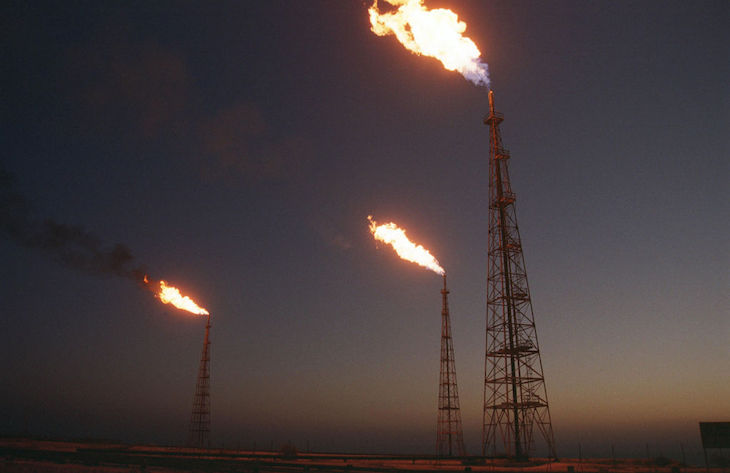
The United States has carried out what President Donald Trump described as one of the most powerful bombing raids in the history of the Middle East, striking Iran’s most important oil export hub on Kharg Island as the war draws to the end of its second week.
Iran has attacked tankers and threatened to close the route entirely
In a statement posted online, Trump said U.S. Central Command had “totally obliterated every MILITARY target” on the island, which he described as Iran’s “crown jewel”. Kharg Island, a five-mile-long outpost about 19 miles off the Iranian coast, accounts for roughly 90 per cent of the country’s oil exports.
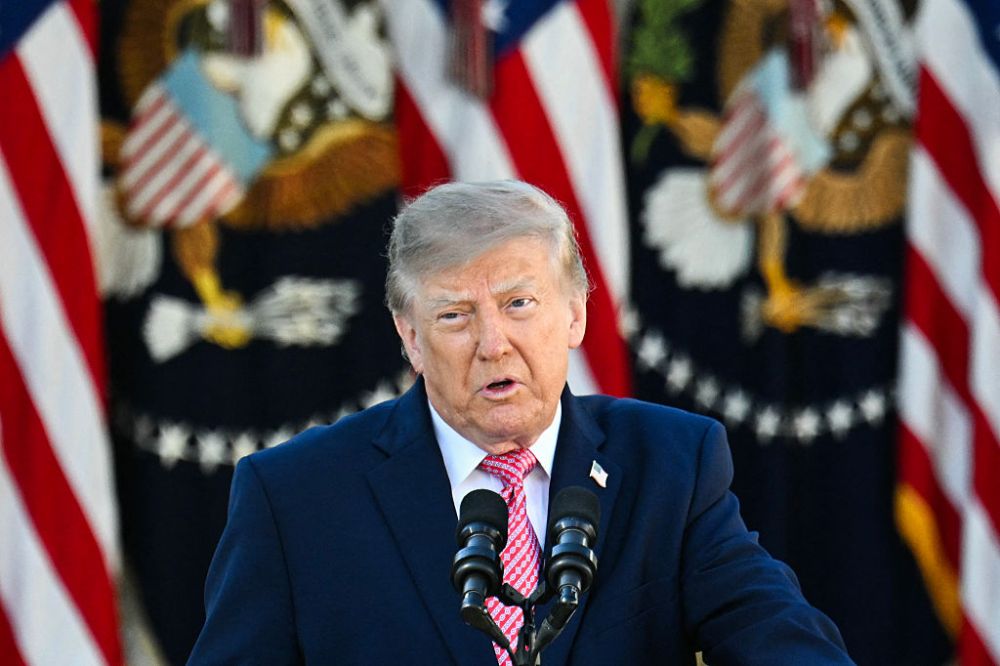
Despite the scale of the attack, Trump said he had deliberately chosen not to destroy the island’s oil infrastructure. “For reasons of decency,” he wrote, the United States had refrained from wiping out the facilities. But he warned that restraint could end quickly. Should Iran interfere with the free passage of ships through the Strait of Hormuz, he said, he would “immediately reconsider this decision”.
The strike underscores the central role of the strait in the conflict. Normally about a fifth of the world’s oil and liquefied natural gas passes through the narrow waterway between Iran and the Gulf states. Iran has already attacked tankers and threatened to close the route entirely. In a statement attributed to Mojtaba Khamenei, the country’s new supreme leader, the regime has vowed to shut the strait down.
Meanwhile, European governments are scrambling to secure energy supplies as the Strait of Hormuz remains effectively closed. France and Italy have opened talks with Iran aimed at restoring the safe passage of ships through the waterway.
Washington, meanwhile, says the war has already devastated Iran’s military capabilities. Speaking at the Pentagon, Secretary of War Pete Hegseth said the combined air forces of the United States and Israel had struck more than 15,000 targets across Iran since the conflict began – more than 1,000 a day.
According to Hegseth, Iran no longer has functioning air defences, an operational air force or a viable navy: “We fly over the top of Iran all day, fighters and bombers picking targets as they choose,” he said. “The IRGC and the Iranian regime see only two things on the side of aircraft: the Stars and Stripes and the Star of David, the evil regime’s worst nightmare.”
Iranian missile launches have fallen dramatically, with the volume of missiles fired down 90 per cent and the use of one-way attack drones down 95 per cent, according to his briefing. Hegseth also said Iran’s ballistic-missile production capacity had been “functionally defeated”, with factories, production lines and defence research centres destroyed.
General Dan Caine, chairman of the Joint Chiefs of Staff, said American strike packages were launching every hour and that Friday saw the heaviest volume of strikes yet. The operation is targeting Iran’s missile and drone forces, its naval capabilities, particularly mine-laying operations in the Gulf, and the country’s defence industrial base.
Long-range artillery has played a major role. U.S. Army and Marine units operating outside Iran have fired Army Tactical Missile Systems, Precision Strike Missiles and HIMARS rockets against targets deep inside Iranian territory. The campaign has already seen the first combat use of the Precision Strike Missile, while ATACMS launches have sunk multiple vessels, including a submarine.
European governments are scrambling to secure energy supplies as the Strait of Hormuz remains effectively closed
Despite all this, Iran still retains the capacity to strike back. Early on Friday morning an Iranian missile hit homes in the Arab village of Zarzir near Nazareth in northern Israel. Thirty-eight people were wounded, including 17 children, though all were reported to be in ‘light condition’. Several buildings were heavily damaged and vehicles were set on fire.
Across the region, Iran has also targeted U.S. forces and equipment. Five American refuelling aircraft were damaged on the ground at Prince Sultan air base in Saudi Arabia during an Iranian missile attack. The tankers were hit but not destroyed and are being repaired. No fatalities were reported.
The incident brings the number of U.S. refuelling aircraft damaged or destroyed during the conflict to at least seven. Earlier in the week, two KC-135 tankers collided during a combat mission over western Iraq, causing one aircraft to crash and killing all six crew members aboard.
Iranian missile activity has once again spilled into Nato territory. Turkey’s defence ministry said a ballistic missile launched from Iran was intercepted in Turkish airspace by Nato air and missile defence systems deployed in the eastern Mediterranean – the third Iranian missile fired toward Turkey. President Recep Tayyip Erdoğan said Ankara would not be drawn into the war by “provocations”.
The conflict has also continued in Lebanon. Israel says more than 350 Hezbollah fighters have been killed since the start of Operation Roaring Lion, including several senior commanders from Hezbollah and Iran’s Quds Force operating in the country.
Inside Iran itself, pressure on the regime appears to be growing. According to reports, Israeli strikes on the regime’s internal security apparatus have been aided by information from ordinary Iranian citizens identifying Basij positions, which are then targeted by Israeli drones. Even so, senior figures have appeared in public. President Masoud Pezeshkian and national security chief Ali Larijani both joined Al-Quds Day marches in Tehran, surrounded by supporters of the government. Their open display of defiance was deliberately protected by the presence of civilians around them in the streets, making an Israeli or American strike highly unlikely.
Washington continues to escalated pressure on Iran’s leadership, though. The U.S. State Department is offering a $10 million reward for information about Mojtaba Khamenei and other senior Iranian officials, including interior minister Eskandar Momeni and intelligence minister Esmail Khatib.
Washington appears to be preparing for the next phase of the war rather than winding it down. Trump has ordered the deployment of 5,000 Marines and sailors, along with additional warships, to the Middle East. The president has warned that the United States intends to hit Iran “very hard” in the coming days.
Tim Shipman, Adrian Wooldridge and Sophie Winkleman discuss the most recent developments over the Iran crisis on the latest Edition podcast:





Comments