Sir Keir Starmer’s position on the US bombing of Iran is inglorious, but one should suspend disapproval to understand how he must have been thinking politically. His party had just lost the Gorton and Denton by-election to the Greens (backed by a strong Muslim vote). His leadership had never seemed weaker. So he calculated that he could not unequivocally back the actions of Israel and Donald Trump. He will have had the Iraq war in mind, particularly the role of the attorney general. Over Iraq, the then attorney general, Lord Goldsmith, was criticised for seeming to change his legal advice to Tony Blair in order to legitimise British participation in the invasion. Sir Keir’s Attorney General, Lord Hermer, is much more central to the administration than an AG ever should be. We can be certain, from his much-aired views, that he opposes the US attack. Given his own political weakness, Sir Keir could not have risked falling out with his great friend, provoking Hermer’s resignation; besides, his own lawyerly views are probably similar to Hermer’s. The government therefore declined to cooperate with the attack on Iran. Given the need to contain American rage, however, it had to find some means of helping, so it belatedly grasped the ‘defensive’ justification that a couple of Iranian drones aimed at the British base in Cyprus would authorise British use of force. Inglorious, as I say, but probably the least worst position for Sir Keir’s immediate political future.
Tony Blair says, in a recent documentary, that any British prime minister would have decided as he did over Iraq, given the importance of Britain’s relationship with the United States. He does not explicitly say that he felt this particularly strongly because, as a New Labour prime minister, he was always guided by the need not to be trapped by his party’s left, but that was his thinking. Breaking with this position over Iran, Sir Keir is duly trapped by his party’s left, perhaps more irrevocably than any previous Labour prime minister. The combination of Hermerism and the Gaza/Islamist faction is what Labour activists want. By maintaining his Iraq position against the left, Blair lived to fight another day and win the next election. Poor Starmer probably lives only to fudge another day and to lose another election (if indeed, he is even allowed to fight one).
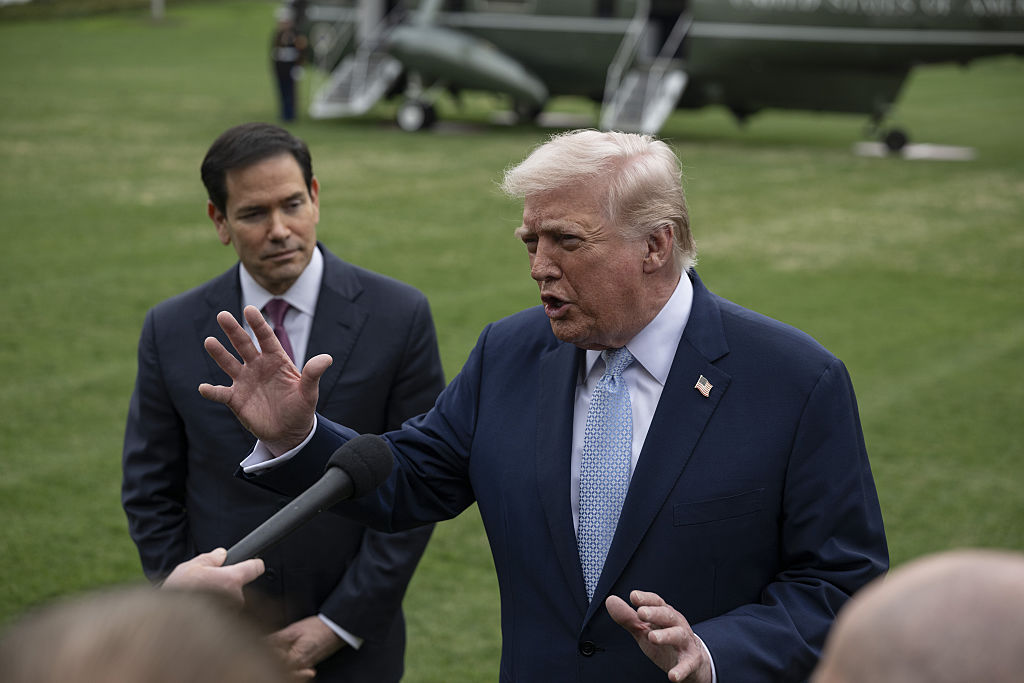
Trump has spotted this, of course, and will goad ‘no Churchill’ Sir Keir from now on. Note that his disapproval of Starmer’s Chagos deal is expressed as irritation at a fait accompli: ‘It would have been much better on the legal front if he just kept the ownership of the land.’ Trump is reserving the right to complain, rather than promising to block. Goad and complain he will. Again, that might help Starmer with his party. But the Chagos affair will solidify Britain’s emerging role as an ally not worth having.
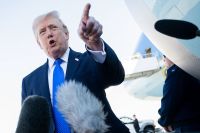
What of Trump’s political thinking in relation to his attack? So much of his mind seems to be engaged in constant comparison with his predecessors, all of whom he obsessively wishes to outclass. Ever since the taking of the US embassy hostages in November 1979, the United States has repeatedly been humiliated by Iran. From Jimmy Carter then, to Barack Obama and Joe Biden in this century, American presidents have tried and failed to tame the beast. Cunningly encouraged by Benjamin Netanyahu and Israel’s brilliant success against Hamas and, even more, Hezbollah, Trump saw his chance to get rid of Ayatollah Khamenei – and took it. Those wiseacres who now say that ‘containment’ of Iran is better than assault fail to recognise that it has been contained, most ineffectively, for 47 years. From the hostages and the mass murder of US marines in Lebanon, through the Salman Rushdie affair and the JCPOA, right up to and including the atrocities of 7 October, Iran has outwitted and damaged the West. President Trump has struck the best blow against the regime yet. The trouble is, we do not know that it will prove fatal; nor does he.
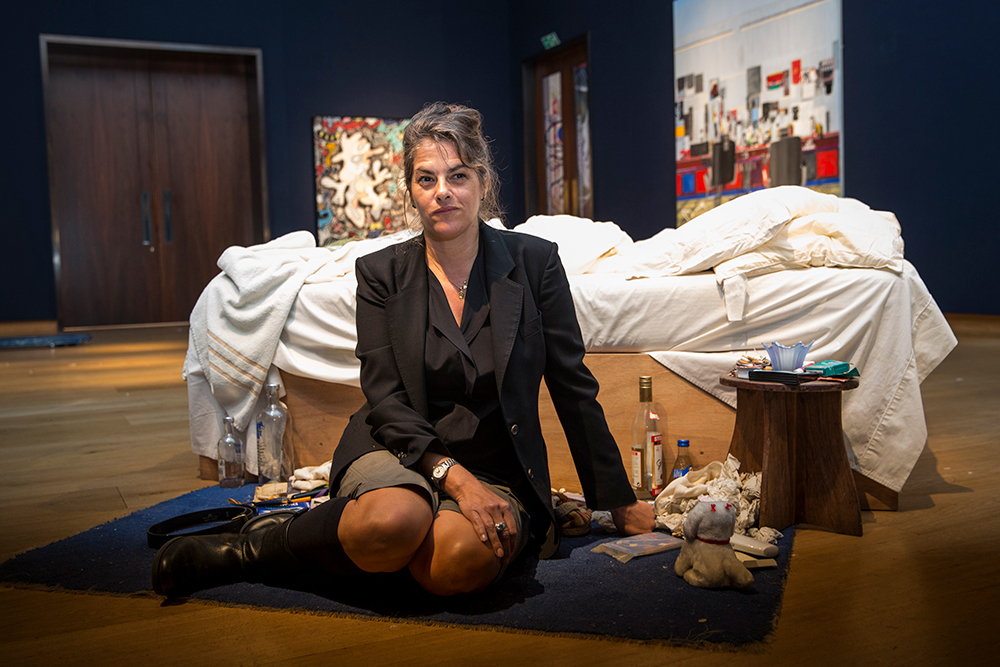
Dame Tracey Emin says that if she were to remake her famous artwork ‘My Bed’ today, ‘it would be ridiculously clean, with very, very beautiful sheets, very clean and very tidy… It would be so boring, actually.’ The sheets would have a 1,600 thread count, she adds. How I wish she would create this, not just talk about it. The 1998 original was the boring one. With its cigarettes, condoms, alcohol, dirty underwear and a copy of the Guardian, it was exactly what you would expect of any YBA artist of the period. With advancing age, she has become much less clichéd, bolder, more honest. Let her remake her bed today – with hospital corners, those expensive sheets perfectly ironed, a hot-water bottle neatly placed between them, the Telegraph crossword sitting on the bedside table, and perhaps a complimentary mint on the pillow – and let her lie on it. It would be so still and therefore, paradoxically, so moving.
Rupert Lowe’s Restore is the latest movement in the ferment of the right. Like Lawrence Fox’s earlier Reclaim, its name sounds like a patent remedy for male-pattern baldness. Both presage disappointment.
You still meet people who proudly say: ‘I was the first person in my family to go to university.’ I heard it, for example, in a recent maiden speech in the House of Lords. Now that university is a place to which you are admitted chiefly on class grounds (the lower, the better) rather than merit, at which you accumulate debt, and which you leave with a degree that makes you unemployable, how much longer will such a boast be made? People will soon be saying, ‘I was the last person in my family to go to university’, rather as women used to speak of their time at finishing school or, if they were Chinese, of having their feet bound.


Comments