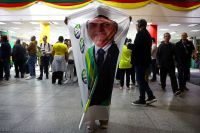
On Sunday evening Miami’s Freedom Tower filled with Brazilian expatriate supporters of Flávio Bolsonaro, there for an election watch party. The headliners were Eduardo Bolsonaro, the candidate’s brother, and Paulo Figueiredo, a popular Brazilian YouTuber. Both men effectively live in exile in the United States, since going home would mean facing the courts.
For the Bolsonarists the setting was appropriate. In the 1960s the tower processed Cubans fleeing Castro, and for many in Miami’s Cuban community the building is their Ellis Island.
The room was buoyant. Flávio had finished first in the first round, and he would surely pick up the dissident right who had backed smaller conservative candidates three weeks earlier. The early numbers favored him. Then the count turned, Lula pulled ahead, and it was over. Much of Florida’s Brazilian community is wealthy, successful and right-wing. This was not the evening they had hoped for.
Expect a fourth Lula term to lean further towards Beijing
Earlier this month I wrote in these pages that Flávio was on the brink of winning. I was wrong. Whatever the Bolsonaros say about the extension, the 80-year-old Lula is the man Washington will have to deal with for the next four years. So what does this mean for the region?
On Monday Washington broke its silence. “I didn’t take sides, but it looked like another rigged election frankly,” President Trump told reporters, adding that it “looked so corrupt.” He offered no evidence, and Lula’s vice president, Geraldo Alckmin, called the remarks unfounded. Donald Trump Jr had already attacked the extension, and some analysts on the right, such as Daniel Di Martino, compared it to tactics Nicolás Maduro used in Venezuela. Democrats such as Ro Khanna have urged the President to respect the result.
Yet Trump does not intend to act on his suspicions. Asked whether he would do anything, he replied: “I’m not running for Brazil, I’m running for the USA.” He even added that he likes Lula. With the midterms looming, Trump’s attention is elsewhere. But in its last two years, his administration will still look to play an active role in Latin America – and this will, inevitably, mean engagement with Lula’s Brazil.
The first issue will be the “Shield of the Americas,” also known as A3C, a pan-American anti-cartel alliance promoted by the Trump administration. Flávio Bolsonaro was going to sign Brazil up; the question now is whether Lula will even consider joining, or stay out for political reasons despite the drug-related crime that still plagues much of the country.
Colombia’s new president, Abelardo de la Espriella, had backed Flávio, just as Lula had openly backed his left-wing rival, Iván Cepeda, in Colombia’s election. Within hours de la Espriella framed respect for the result as a matter of national sovereignty: “Neither does Lula decide for Colombians nor do I decide for Brazilians.” He still named narco-terrorism, illegal mining and the Amazon as shared priorities.
He was not alone. Chile’s José Antonio Kast, who had been close to Flávio, phoned Lula and promised to keep working on economic integration and the fight against organized crime. Panama’s José Raúl Mulino – another rightist – congratulated Lula and said the two countries would keep cooperating. Ecuador’s Daniel Noboa wrote that the region has common enemies and much to gain from working together. Santiago Peña of Paraguay, Keiko Fujimori of Peru and Rodrigo Paz of Bolivia said much the same.
These governments disagree with Lula on almost everything, but they understand the cost of a diplomatic spat with the region’s largest economy. MAGA’s hemispheric project depended on Trump-aligned presidents. Sunday night showed that, when it counts, even those presidents put national interest ahead of Washington’s ideological priorities.
At home, the Brazilian right was at first in no mood to move on. Paulo Bilynskyj, the Liberal deputy who in August conceded to me that Lula had played the sovereignty card deftly, now says the decision by a court to extend the voting by two hours – taken by Supreme Federal Court Justice Zanin, Lula’s former lawyer – decided the race. He told me the party supported the effort to annul the result “because we know that the election was stolen.” He offered no evidence beyond the extension, and Brazil’s electoral court has already confirmed the result. As for the foreign leaders who rushed to congratulate Lula, Bilynskyj believes they “have no real information about what happened in Brazil.” Within a day, Flávio had dropped the annulment bid, reportedly talked down by allies including the Governor of São Paul Tarcísio de Freitas, and said he would instead ask the electoral court to strip Lula of his mandate for abuse of power.
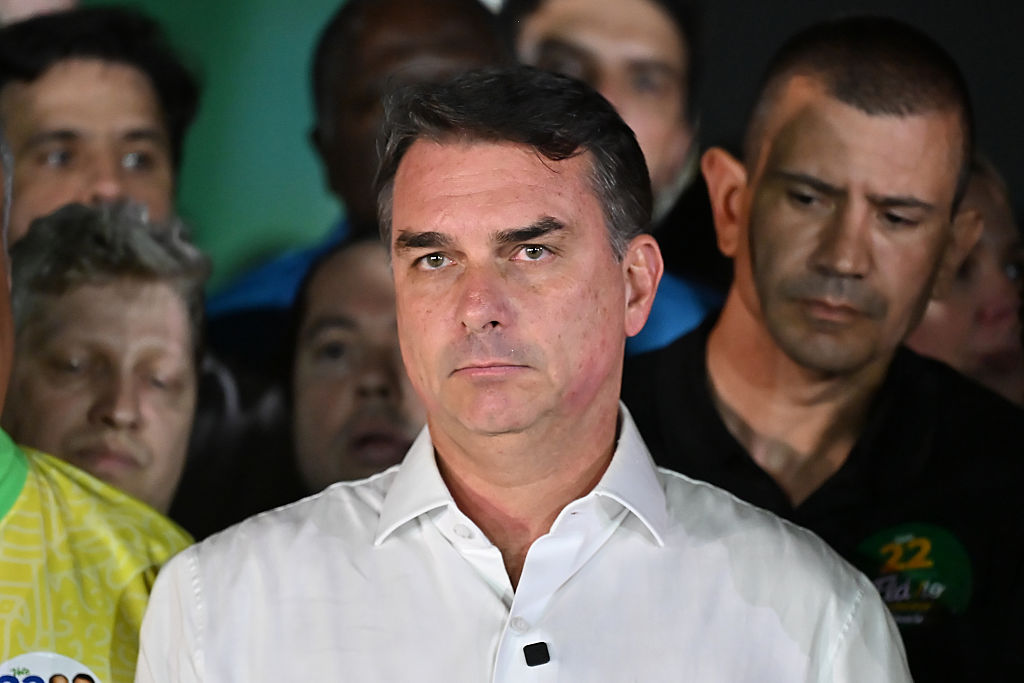
Bilynskyj’s prognosis for the Bolsonaro family is bleak: Flávio, he says, “will probably be arrested.” Within a day of the vote, police stopped Flávio outside his father’s house in Brasília with an order from Justice Alexandre de Moraes cancelling his passports and barring him from leaving the country. The order, which remains sealed, is part of a money-laundering investigation involving Flávio and his friend, the lawyer Willer Tomaz. Both men deny wrongdoing. Flávio says the order was prompted by Eduardo’s suggestion that he leave Brazil if he lost, and calls it intimidation. He is also caught up in a federal police investigation into the funding of Dark Horse, a film about his father.
By Tuesday events had taken a strange turn. Infobae, the Argentine news site, reported that Flávio had crossed into Argentina and boarded a private jet for the United States. His campaign coordinator called the report false, and Argentine President Milei’s spokesman denied that Flávio had entered the country. Brazil’s federal police have asked Argentine authorities to check.
It is hard not to feel for him. In the space of three days Flávio has lost an election he led after the first round, watched the foreign leaders who courted him telephone his rival, and heard the American president who hosted him in May say he’s not getting involved. His father, 71, is under house arrest. One brother is in exile in the United States. Now he seems to be on the run from the law. Whatever one thinks of the Bolsonaros, few political dynasties have collapsed so quickly or so brutally. Flávio may be the loneliest man in Brazil this week – if he is even there.
Latin America’s new right-wing governments cannot afford a spat with the region’s largest economy
A few holdouts remain. Milei has yet to recognize the result. In July he called Lula a “thief” at a Flávio campaign event in São Paulo; Brazil responded by recalling its ambassador from Buenos Aires. So far Milei has only reposted complaints about prisoners voting and the market reaction. An alliance that included both Brasília and Buenos Aires would have been Washington’s grand prize, but it was not to be.
Nayib Bukele of El Salvador has also said nothing, though he has a more pressing problem. Four Salvadoran aviation technicians serving with the international force in Haiti were kidnapped by gangs a week ago, and he has launched a military operation to rescue them.
Meanwhile, the “BRICS” powers are celebrating. Xi Jinping congratulated Lula on Tuesday and promised to expand strategic cooperation. The Kremlin praised his work on promoting the BRICS alliance – a bloc that has always been more theatre than reality. Still, expect a fourth Lula term to lean further towards Beijing. China is already Brazil’s largest trading partner: in the first half of this year Brazil exported three times as much to China as it did to the United States. Last year Brazil received more Chinese investment than any other country. On election night Lula declared that Brazil would not be “anyone’s backyard.” The contest over who will be Latin America’s “partner of preference” – as the Deputy Assistant Secretary of War Joseph Humire puts it – has begun in earnest.


Comments