It’s hard to know where to start – or finish – when explaining the formidable Lilian Hochhauser, due her centenary birthday card from the King next month.
Over more than 75 years, she and her husband Victor, who died in 2019, were Britain’s most respected musical impresarios. Their net ranged wide – from Gracie Fields and Mario Lanza in the 1950s to Chinese acrobats in the Noughties – but they will undoubtedly be best remembered for a unique ability to negotiate with stonewalling Russian bureaucracy and winkle out some of the Soviet Union’s greatest talents.
‘I worked hard, I loved music and I loved what I was doing. It’s as simple as that’
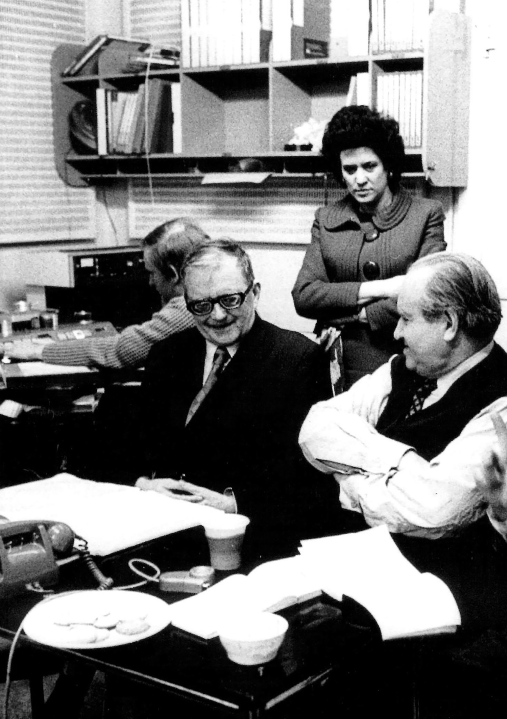
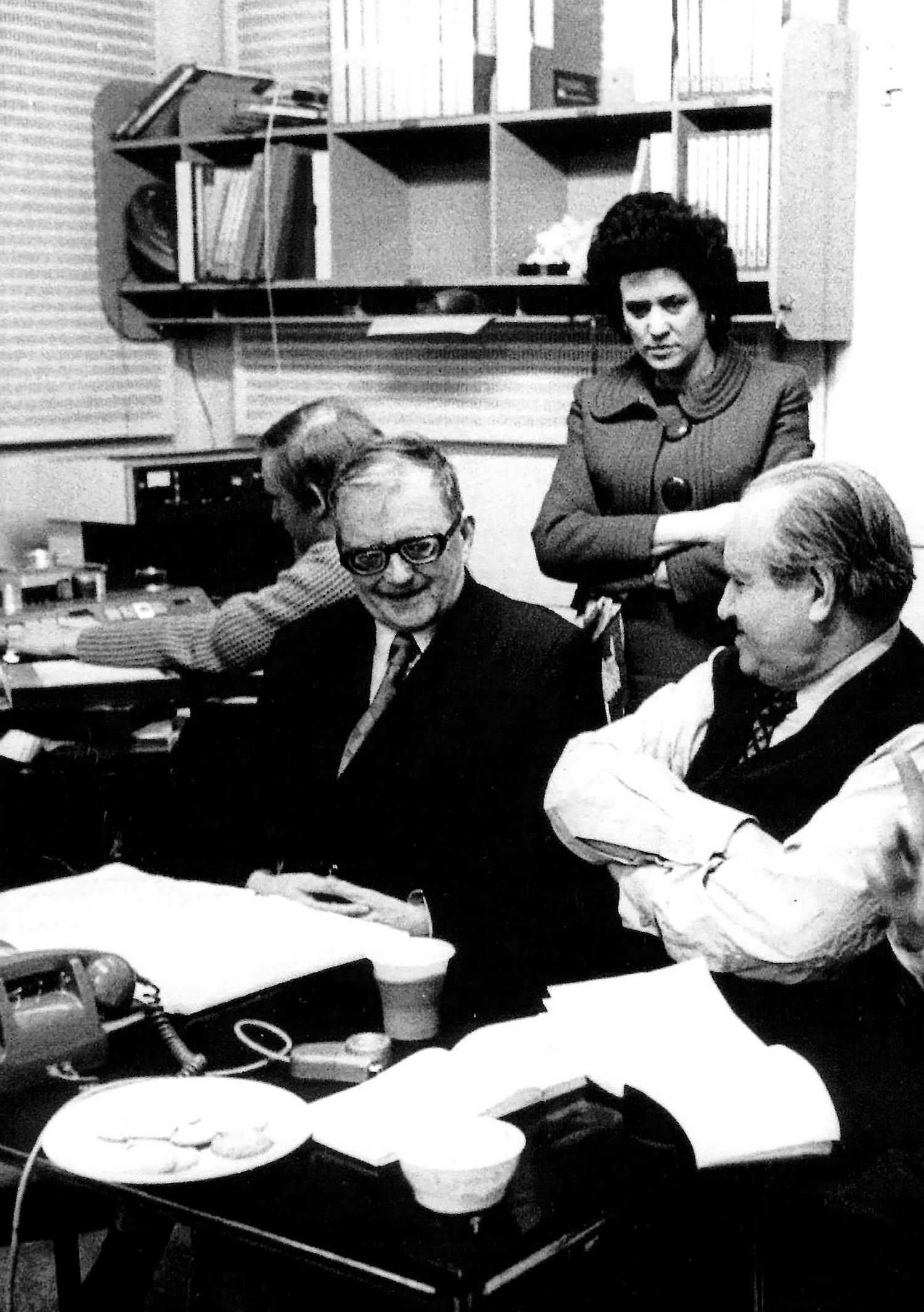
From the mid-1950s to the mid-1970s, their diplomacy charmed the regime to permit the likes of Dmitri Shostakovich, David Oistrakh, Emil Gilels, Sviatoslav Richter and Msistlav Rostropovich, the Bolshoi and Kirov (now the Maryinsky) ballets, as well as the Red Army Choir and the Moiseyev folk dancers, to perform in Britain. Communism may have indelibly blighted Russia’s post-war reputation, but the Hochhausers’ enterprise reminded us that there was more to the country’s soul than its political apparatus and its granite-faced masters.
After 1974, when the couple were abruptly blacklisted by the Kremlin for sheltering the recently defected Rostropovich (as well as their support for Israel), they changed horses to promote 12 seasons of ballet at the London Coliseum starring another celebrated defector Rudolf Nureyev. When perestroika brought fresher faces and open doors, they resumed their relationships with the Bolshoi and Maryinsky, promoting biennial visits to Covent Garden in alternating years until the confluence of Victor Hochhauser’s death, Covid and the war with Ukraine forced their activities to a tragic halt. Most remarkable of all, perhaps, was the Hochhausers’ ability to make such business pay without a penny of subsidy from the taxpayer or private investment. Everything the couple presented came at their personal financial risk, and there were times when they ran close to the wire.
Still comfortably ensconced in the large home-cum-office in Hampstead in which she’s lived for nearly half a century, Lilian Hochhauser remains in fine fettle, and she’s looking forward to greeting her many admirers at a celebration at Covent Garden marking both her great age and achievement. Her charm, warmth and wry humour are irresistible – the ballet star Xander Parish told me that she could make ‘even small talk after a performance seem inspiring and genuine’ – but she’s no soft touch: beneath the velvety exterior lies the hide of a tough negotiator.

The Hochhausers were never empire-builders, lusting after endless expansion. They employed only a minimal staff and kept a beady eye on every last detail. They were neither sentimental nor extravagant, operating instead on an upfront basis of charging or receiving flat fees, without profit shares or shady sponsorship deals. Their margins were narrow – they only began to break even when they hit 90 per cent of audience capacity, a target that required expert marketing. So there was no freeloading to gussy up performances they promoted – no champagne receptions, no goody bags – and older members of the press will wryly remember how sparing they were in distributing complimentary tickets. ‘I had to drive a hard bargain everywhere,’ Lilian recalls. ‘Hotels, airlines, coaches, restaurants, rehearsal rooms.’ Nothing was wasted.
She reckons that over the years she must have made some 100 trips to Moscow – once being ushered through the airport without a visa when she decided to fly in at short notice for Richter’s funeral. Russia was no holiday, and the hotels they stayed in were ‘pretty ghastly’. One particularly gruesome memory is ‘the Lenin suite’ at the so-called swanky Metropol. ‘It had a fridge in the middle of the room, but no bath plug.’
It was the slight thaw in the Cold War after Stalin’s death in 1953 that gave the Hochhausers the entrée they needed. Most of their dealings would be with Gosconcert, the official agency for the export of Russian culture, but they also came into the orbit of the fascinating Ekaterina Furtseva, minister of culture and the only woman in Krushchev’s politburo – ‘rather beautiful, and someone with genuine sympathy for artists and their ambitions. It helped that Victor spoke excellent Russian, and I learnt a tolerable amount too, but we always used an interpreter. We never discussed politics, and always made it clear that Russian music and musicians were our only concern. But we certainly gave no sign that we approved of the Soviet way of life, because we didn’t: it clearly wasn’t working.’
Negotiations could be very frustrating. ‘Endless filling in forms and luggage going missing and people not turning up and the freezing weather, and you knew that everything you said in any meeting was being secretly recorded. Sometimes you thought you’d tied everything up and then nothing would happen at all: you’d sit in the hotel for three days and not hear a word from anyone.’
Did she come to love Russia and the Russians? ‘Not really, no. But we got very emotional about them all, very involved. And of course there were some marvellous individuals’ – the violinist David Oistrakh being one she remembers with particular fondness. The two supreme Russian pianists Sviatoslav Richter and Emil Gilels were chalk and cheese, and needed careful handling. Richter, a poet and a dreamer, sublime in Schubert, ‘always insisted on playing with a score spotlit on the piano surrounded by total darkness. He was very eccentric, terrified of flying, and had a habit of cancelling at short notice, which meant that we couldn’t insure him. But we always went ahead anyway because he was a genius and his concerts were worth any amount of trouble.’ Gilels was a bear of a man, less prickly sensitive, and a majestic interpreter of Beethoven, ‘but he suffered in comparison to Richter, who had a sort of mystical aura around him that he didn’t have. He never felt comfortable in London.’ Rostropovich was much more fun and extravert, ‘but you felt you were sharing him with a million other people’.
‘Did I like Nureyev? Well, no, and yes. He was highly intelligent and had amazing energy’
Unable to import from Russia during the 15 years in which they were blacklisted, the Hochhausers turned to another celebrated Russian émigré, Rudolf Nureyev. ‘Another difficult man. He didn’t speak very good English and he was so busy it was often impossible to get his full attention. He had ideas about what he wanted to programme that simply wouldn’t sell seats. Did I like him? Well, no, and yes. He was highly intelligent and had amazing energy.’
Come perestroika, the Hochhausers were brought in from the cold and for a blessed decade or so, doing business in Russia was ‘comparatively easy, one might almost say normal, before they descended into gangster mode and there was a new set of problems’. Undaunted as Victor’s health declined, Lilian shouldered more and more of the responsibility herself, focusing her efforts on bringing the Bolshoi and Maryinsky to Covent Garden for an opera and/or ballet summer season.
She has no ambivalent feelings about the man who ruled the roost here – conductor Valery Gergiev, Putin’s consigliere, who had long controlled the Maryinsky and has now been granted supreme power over the Bolshoi as well. ‘And from what I hear neither of them are happy places. Not a nice man at all. I couldn’t count the hours I have spent waiting for him outside his office.’
Nevertheless, agreements were reached until force majeure intervened. ‘Victor died in 2019. We had the Bolshoi that year, that was our last. The Maryinsky was scheduled for 2020, but Covid put paid to that. I had hoped to bring the Bolshoi back in 2022, but then Putin marched into Ukraine. So that was that.’
The Hochhausers had four children who have flourished in other spheres, leaving Lilian without a professional successor. So if and when peace with Russia comes, there will be nobody with the experience to organise those visits from the Bolshoi and Maryinsky that would inevitably contribute to the diplomatic détente. Yet Lilian feels fulfilled: she has no regrets at all. ‘I was never interested in making money. If I had been, there would have been easier ways to make it. I worked hard, I loved music and I loved what I was doing. It’s as simple as that.’
Lilian Hochhauser’s 100th birthday will be celebrated at the Linbury Theatre on 14 November.




Comments