
Plenty of critics have mocked Trainspotting – the musical (with lyrics and music by Irvine Welsh and Stephen McGuinness, respectively) but the producers know their audience’s mind. They want to see live theatre without taking the risk of a new play, which might be gruesome, and they prefer a dead-safe replica of a glamorous movie to something by Chekhov or Pinter. Reviewers admire novelty and inventiveness so they tend to punish theatre-makers who reheat leftovers. The show follows the book more closely than the film, where Renton was the central figure, and here he blends in with the community of wasters and criminals who mope around Edinburgh trying to raise cash for smack.
The characters are reduced to simplistic gestures, as easy to read as hand signals. Begbie is a cocky thug. Spud is a twitchy clown. Sick Boy is a handsome nobody. Renton, smirking throughout, is a star looking for a clear night to shine in. The women are even less appealing. The young girlfriends are shrieking pests and the older ladies are fretful gossips and scolds.

The show meanders along with no suspense at all because Renton announces in his opening speech that his destiny is to swap Class-A drugs for suburban nihilism. Perhaps he should have kept that to himself. The narrative coalesces into a slogan only once: ‘Heroin loves misery and misery loves company,’ says Renton, and he repeats it later, in case you weren’t listening. Maybe you weren’t.
The production would work well on a cruise ship or in a night club with waiters weaving between the tables and serving cocktails to viewers chatting among themselves while keeping half an eye on the stage. No shame in that. The songs are a disorganised array of angry punk anthems and electronic disco tunes. Every half hour, a classic hit pops up. ‘Bitter Sweet Symphony’ or ‘Perfect Day’. The cast should make a bigger effort to get the crowd singing along.
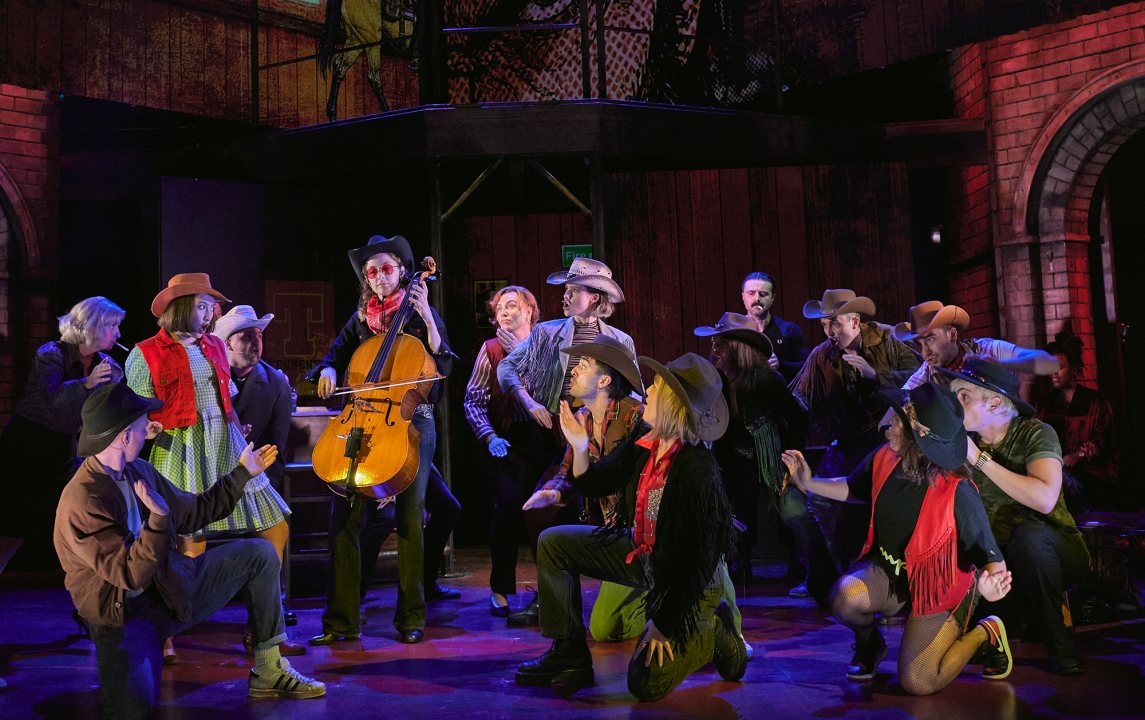
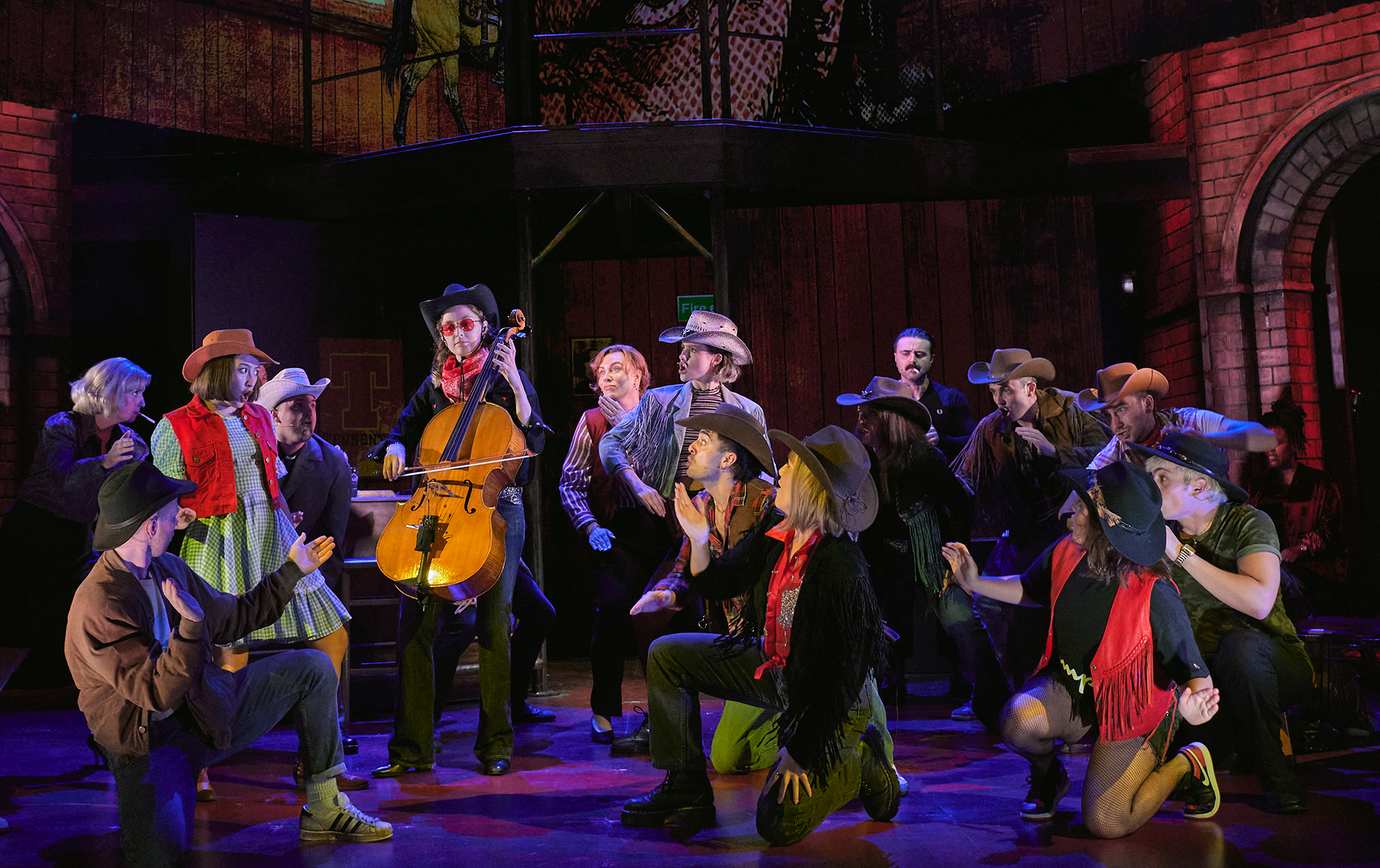
At the start of Act Two, all the actors trot on to the stage in cowboy costumes and perform a country-and-western number. No irony is intended. The song is meant to inject the second half with zest and merriment.
After its West End run, the show embarks on a national tour, and the design is well suited to life on the road. The cheap costumes don’t need folding or ironing. There’s little furniture on stage, just a few lightweight chairs that Begbie throws around when he gets cross. The rear walls are lit up with video projections, which are much cheaper than painted flats but they make the production feel flashy and impermanent, like a catwalk show. This corny version is nowhere near as good as the film but it may get you out of the house.
Hit Machine at Soho Theatre shows signs of greatness. It follows the rivalry between two songwriters, one rich and successful, the other highly talented but ill disciplined. They’re also siblings. Wes has made millions from the music industry and he receives a visit from his impoverished brother Alex, who wants to restart his career. Earlier in life, Alex passed up the chance to earn a fortune in royalties because he prized his artistic purity. Now he regrets it. ‘I want to sell out,’ he cries. ‘But I don’t know how to.’
This corny version is nowhere near as good as the film but it may get you out of the house
The brothers improvise a hit in Wes’s sitting room, adding layers of sound with a computer, and making up the lyrics as they go along. A play about music that places the act of creation on stage is nothing new. But it’s still riveting. While they work, the brothers make bitchy comments about pop stars and they do impersonations of Adele, Ed Sheeran and Tracy Chapman. Wes dismisses Adele’s work with a single word. ‘Earnest’. This is not inaccurate.
The scene changes as a new rap star, Defy the Leader, swans into the house and asks Wes to give him a hit for his next album. Will Wes use the new joint composition or will he edge his brother out of the action? The scene is tensely hilarious because Wes has to fawn over Defy the Leader, whom he barely knows, and Alex is painfully aware that Wes’s deferential manner is all an act.
The dark, creepy relationship between the three creatives has a lot of potential. But the writer, Jonathan Caren, fails to pursue the journey. Then what? The show runs out of ideas. Wes and Alex weep over their troubled childhood and not much else happens. The play ends with a rap solo that lacks drama.
Very disappointing. The first 60 minutes are golden. Josh Radnor (Wes) is a great foil to Noah Galvin whose nervy, self-lacerating and adorable Alex is the highlight of the production. This show could go somewhere interesting but it needs a stronger chassis and better fuel.






Comments