


For someone who likes to present the general public with the idea that he doesn’t have a personality, Sir Keir ‘I don’t dream’ Starmer has actually provided plenty of insight into who he really is. From his occasional flashes of fury when thwarted in the Commons to his chronic lack of authenticity when out bothering voters, a picture emerges of a man who doesn’t much like the ‘people’ side of politics. Perhaps the most revealing example was when, in opposition, he unhesitatingly told Emily Maitlis that he preferred Davos over Westminster. By his own revealed preferences and statements, Starmer is an aspirant technocrat, not an enthusiastic democrat.
In the source of his success, Sir Keir has sown the seeds of his own demise
This preference partly explains the Prime Minister’s success. For all his failings, Jeremy Corbyn was a man of the Labour party’s wider membership. Starmer achieved success internally by putting distance between his style and that of his predecessor. Ditto, as Tory governments ran into trouble, so Starmer repeatedly crowed about his comparative suitability for the role of PM. However, like a character in an ancient tragedy, it seems that in the source of his success, Sir Keir has sown the seeds of his own demise.
As we begin a year in which his premiership looks more likely than ever to shuffle into oblivion, it’s worth considering how we got here. The PM has tried to govern on his default setting, through legalism and lawfare. Starmer believed (indeed, he endlessly told us) that his time as director of public prosecutions made him uniquely equipped to lead the country. In the build-up to the general election, his line was that after decades of Tory cabinet ministers clashing with the courts, he would enable the machinery of the state to work smoothly. Yet Starmer is being undone by his own fatal flaw – a kind of lawyerism and proceduralism – which he thought would make governing easy in the first place.
Most popular
Max Jeffery
Criminal candidates, grooming gangs and petrol bombings – welcome to Oldham

Take the Chagos deal. Making the surrender of British territory a ‘do or die’ mission for the government speaks of his topsy-turvy priorities. Now, hilariously, the deal struck by Starmer faces attack from his own tribe. Last month it was condemned by a UN committee, showing that the ‘international law’ argument was never as clear cut as Starmer implied. And it potentially faces another blow from a looming High Court ruling, responding to a judicial review by native Chagossians.
Elsewhere, Starmer’s enemies have realised that they can use his own causes against him. One of his own MPs, Karl Turner, is threatening to resign to trigger a by-election if No. 10 persists with attempts to scrap jury trials. Reform UK has promised to launch another judicial review after the government cancelled local elections in areas where Labour was predicted to lose. It would be grimly comical if the politicised use of the court system and overmighty judicial review helped undo the man who perfectly embodies those tendencies.
Starmer’s contempt for Westminster, once seen as a strength which could elevate him above the terminally unpopular House of Commons, is also proving his undoing. Many things that weren’t in the 2024 manifesto, due to Starmer’s legalistic machinations and attempts to sneak them through by other means, are now causing trouble. Given the government’s catastrophic discipline problem, it sometimes struggles to pass things that were manifesto pledges, let alone policy changes that were never put to the public. Backbench MPs with no hope or, now, desire for a promotion find themselves being marched up and back down hills that few would choose to die on. Much of this comes from the fact that Starmer does not clearly represent any ‘wing’ of the party. Pooh-poohing the party’s clans and nailing his flag to the cause of international procedural law might well have helped him evade Labour’s previous civil wars, but it will guarantee there is nobody who thinks he’s worth fighting for in the next one.
Even when the government is nominally not involved, Starmer’s management of party and parliament has proved catastrophic. The underhand way in which he tried to bring about assisted suicide, through a government bill in everything but name – as a recent leak to the Guardian all but confirmed – is also coming back to bite. A newly invigorated House of Lords, mindful of the slipperiness it faces in the lower chamber, feels empowered to savage a bill which Starmer never imagined he needed to bother thinking through.
His catastrophic failure as a parliamentary manager can be seen in his regular absences from Westminster, his cabinet’s addiction to leaking and in the government’s broader failure to bring legislation in good time to parliament. Last week, this latter trait irritated the Speaker so much that he visibly sided with Kemi Badenoch at PMQs. Starmer’s core political belief, that international law should bind parliament and domestic government, is itself under attack as the pretence of order dissolves on the world stage. Starmer might prefer Davos to Westminster, but Davos isn’t calling the shots any more and it is at Westminster that his fate will be decided. On neither front do things look good for the man who made slavish devotion to the principles of one and naked contempt for the procedures of the other his calling cards.
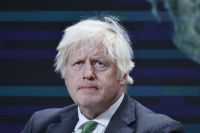
Ironically, the PM whom Starmer most resembles is the one he most affects to despise. Boris Johnson might seem like Sir Toby Belch to Starmer’s Malvolio, but both are victims of circumstances entirely of their own making. Just as Boris was brought down by lack of loyalty, one of his defining traits, so Sir Keir may be felled by lawfare and wannabe technocracy, the two mistaken creeds which made him.
Watch the latest of Madeline Grant on Quite right!


Comments