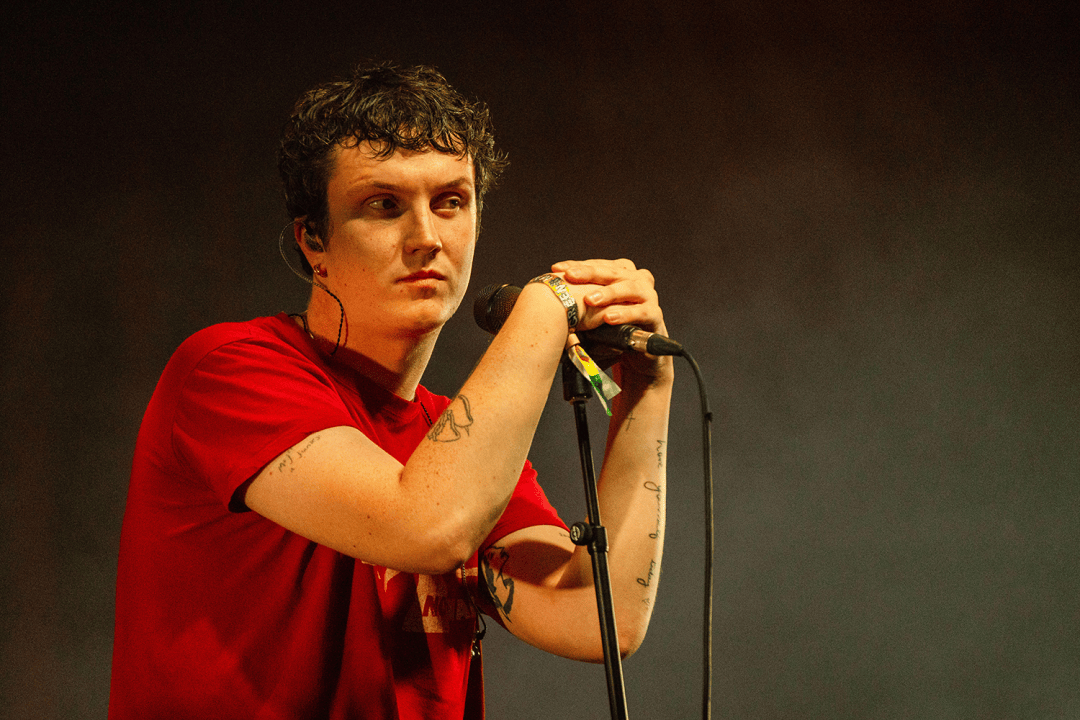
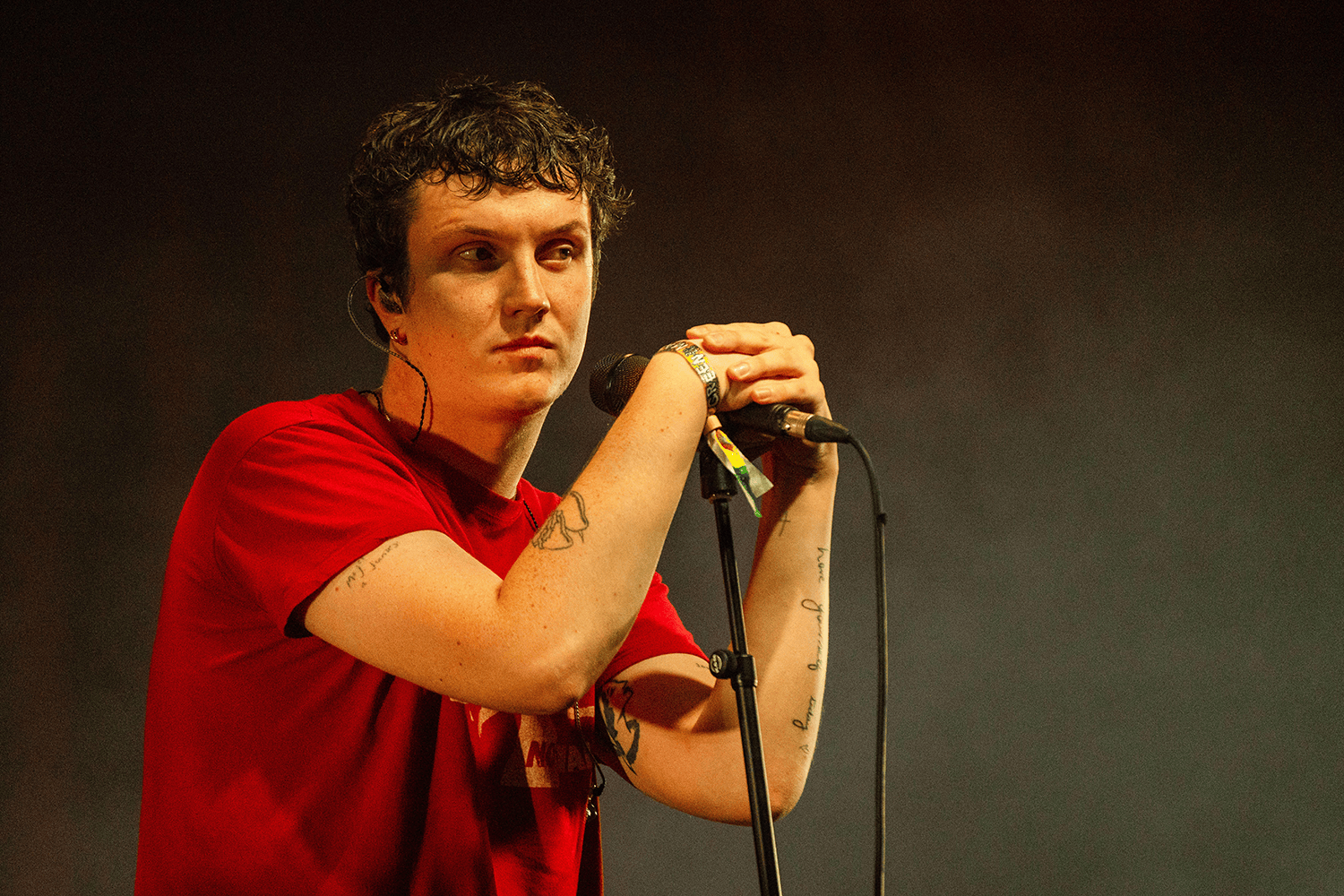
Madra Salach did a good chunk of my work for me at the Electric Ballroom. I’d been wondering how I was going to avoid mentioning the Pogues, since it does seem a lazy point of comparison for any young Irish folk group that’s a bit different, especially as Madra Salach’s drone folk appears to have very little in common with their fierce melodicism. Then their singer Paul Banks, a burly young man with a charming line in cocky self-deprecation, started talking about how much they loved the Pogues, and introduced a cover of the one Pogues song that suits their style, ‘Turkish Song of the Damned’. No circumlocution required.
What reminded me of the Pogues, though, wasn’t the Irishness (and, really, the Pogues were one of the three great London groups, alongside the Kinks and Madness), it was the same sense of purposeful excitement. I used to go to see the Pogues as a teenager in 1984 and 1985, and while my youth might have exaggerated my perceptions, I still think of them as the most dangerously exciting shows I have ever seen. The first time I saw them was in Reading, and afterwards several dozen young men walked the streets outside the Hexagon singing songs about the Brighton bombing. I don’t think they were IRA sympathisers; they were just young and pumped up with rebellion.
Madra Salach’s show wasn’t wild like those Pogues gigs were, but they had sold out two nights – with no album yet out – to a young crowd who knew every word and had included the kind of newish folk songs the Pogues used to do. Just as the Pogues had made me capable of reciting the work of Australian songwriter Eric Bogle, so this crowd knew all of ‘Murphy Can Never Go Home’, a song written by Mick Curry.
They also have a gift for writing songs that don’t feel fixed in time, that seem to mix past and present – much like the Pogues. Banks isn’t as striking a writer as Shane MacGowan – few are – but ‘Ribbon Factory’ (at this point, their biggest hit) is one of those songs that exists in a timeless space, which is a pretty startling achievement.
At some point, though, and probably not too far in the future, Madra Salach are going to have to make a fundamental change. Where the root of the Pogues sound was James Fearnley’s accordion, with Madra Salach it’s Maxime Arnold’s harmonium. Whereas the accordion, played well, is melodic, the harmonium is not. It summons one mood, imminent wheezing death, better than any other instrument. At other moods, alas, it is less adept. At this stage, that’s not a problem; they are exciting enough. But if one member of the group decides to write a song with key changes, for example, it will become an issue. I nevertheless recommend Madra Salach unreservedly.
It felt like music to dance to – and that’s not a feeling Thom Yorke has ever given me
It had always seemed obvious to me that Radiohead were a prog band. Even early on. They’ve continued the prog tradition by pursuing a bazillion solo projects and side gigs (only bass player Colin Greenwood remains a refusenik of the solo record), and their guitarist Ed O’Brien was at the Barbican with a crack band, including the brilliant guitarist Dave Okumu, to perform from his pair of solo albums.
O’Brien is an amiable man with the guileless confidence we graduates of state schools recognise and envy. You can tell where he ranks within Radiohead from the fact that no one was shouting for him to condemn Israel, which frequently happens to Thom Yorke and Jonny Greenwood. But O’Brien wasn’t trying to make any great statements himself: a good chunk of his set was made up of songs about how great going to Brazil is. It’s not very relatable but at least it’s not plunging you into existential misery. The music – at times a sort of pastoral English-Latin folk – was gorgeous, like Radiohead at their most gentle, i.e., at their most appealing.
On the face of it, the Barbican seems like the ideal venue for a Radiohead solo project, and I will never complain about being allowed to sit down for the evening. But the night was sufficiently joyous that it might have benefited from a club setting rather than a concert hall: it felt like music to dance to – and that’s not a feeling Thom Yorke has ever given me.





Comments