Special counsels have proven themselves, more often than not, to serve a hungry press corps happy to report salacious and unproven details, and not serious, independent investigations that produce meaningful consequences or assure the public that accountability can be achieved.
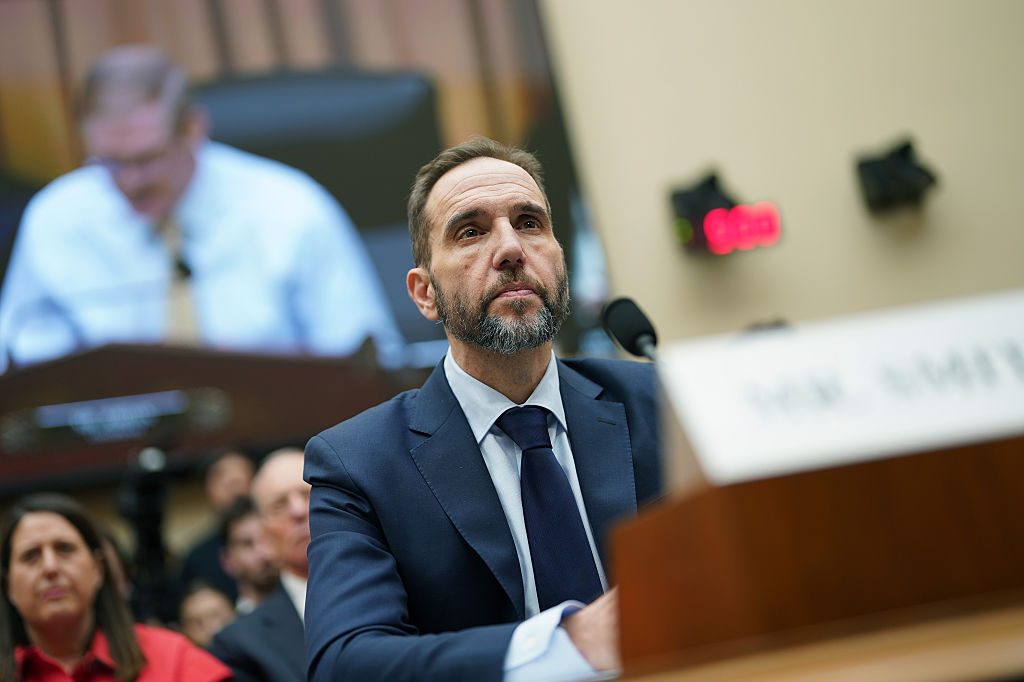
The latest press catnip is over allegations of misconduct by Jack Smith who was appointed special counsel by Attorney General Merrick Garland on November 18, 2022, the same week Trump announced his new presidential bid. His remit was to investigate Trump’s efforts to overturn the 2020 election and his retention of classified material at Mar-a-Lago. A Republican-controlled Congress now has to decide what to do with a special counsel who may have perjured himself while testifying about those investigations. Senator Chuck Grassley says his own messages were among those of 44 members of Congress reviewed by Smith’s team, despite Smith’s explicit testimony that no such review was taking place.

The naked politics of the original investigations, and now its oversight, undermine the very reason special counsels exist: to remove conflicts of interest and political chicanery from investigations of high-level executive-branch wrongdoing. That failure has a long pedigree. Ken Starr’s 445-page report, the product of a five-year tenure, ended in the impeachment of a president over a lie about sex. The inquiry that began in 1994 over a failed Arkansas land deal called Whitewater had morphed by 1998 into a tawdry tale of an intern and a stained blue dress. Debasing and entirely unnecessary, but perfectly within the limits of the machinery Starr commanded: subpoena power, unlimited time, a mandate that could metastasize into anything.
The investigation and report garnered endless round the clock news coverage. Monica Lewinsky, the beret-wearing intern in question, has a podcast today based on nothing more than the fame achieved from the Special Counsel’s decision to investigate her dalliance with the President.
Congress, watching what that kind of unleashed mandate could become, let the “Ethics in Government” law expire in 1999. And yet here we are. The current DoJ regulations that authorize Special Counsel investigations have devolved into the same thing it was supposed to prevent: a political hatchet job dressed up as an investigation free from politics. One which feeds a press that no longer draws careful distinctions between allegations and fact.
The animus towards Clinton that many say underlay the Starr investigation looks quaint next to the fury or “Trump Derangement Syndrome” aimed at the current President. Robert Mueller spent the better part of two years and $32 million to produce a report that found no provable criminal conspiracy between the Trump campaign and Russia, a conclusion cable news had broadcast nightly as a near-certainty for three years before the report landed. John Durham’s investigation, appointed by Trump’s own Justice Department to probe the FBI’s handling of that same Russia inquiry, was the right’s answer in kind. Point a special counsel at your political foe, and press coverage does the rest — tying up your opponent and generating headlines for free.
Reporting unvetted allegations as quasi-fact gets eyeballs and clicks
The real story of the modern special counsel era, is less about the investigations themselves than the political utility of the press covering them. Reporting unvetted allegations as quasi-fact gets eyeballs and clicks. I watched enough MSNBC in the Mueller years to remember when “Trump is a compromised Russian asset” wasn’t speculation – it was Tuesday-night programming, delivered with the certainty of a weather report. When the actual findings arrived, thin gruel and far less interesting than advertised, there was no equivalent media storm. Corrections don’t trend. Retractions never generate the traffic of the original accusation, and cable news, podcasters, and social media all know it.
True, some special counsels have worked reasonably well – Patrick Fitzgerald’s Valerie Plame investigation, or Robert Hur’s inquiry into President Biden’s classified documents. But even Hur’s probe was tangled up in anti-Trump politics: it became necessary largely because, after the Mar-a-Lago raid, the revelation that Biden had kept unsecured classified material of his own – in the garage, by the Corvette! – looked awkward for anyone trying to prosecute Trump.
Smith’s own tenure shows the fragility of the whole enterprise. He brought two indictments against Trump, and neither reached a jury. The documents case was dismissed by Judge Aileen Cannon, who ruled Smith’s appointment itself unconstitutional; the election case was dropped once Trump won re-election, under DoJ policy against prosecuting a sitting president. Smith resigned days before the second inauguration, leaving two collapsed prosecutions, a sealed final report, and now a perjury allegation that will generate endless copy.
The rationale for a special counsel falls apart when the public, who funds these expensive investigations, only sees the bare-knuckled political brawling. Smith was appointed by a Biden attorney general to investigate Trump; whether or not he abused his powers, and if so, whether he will face any consequences for his conduct now falls to Trump’s AG. That isn’t oversight or independence. It’s a political leash that gets yanked according to election results. The special counsel was invented to answer to the law. In practice, it now answers to the news cycle.




Comments