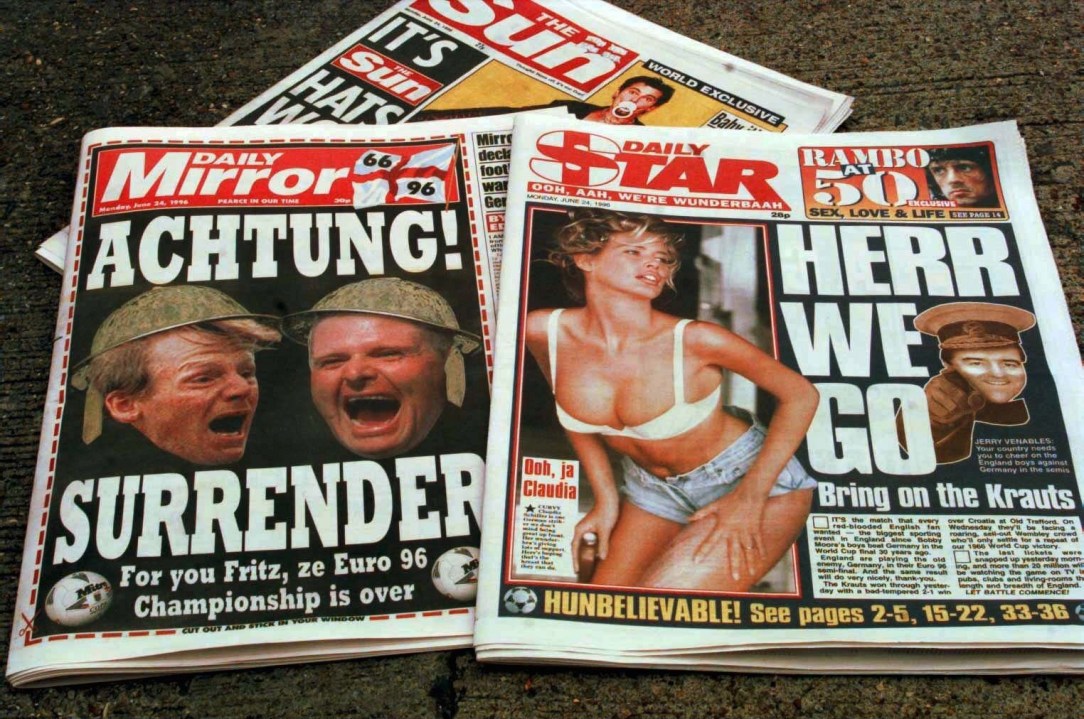
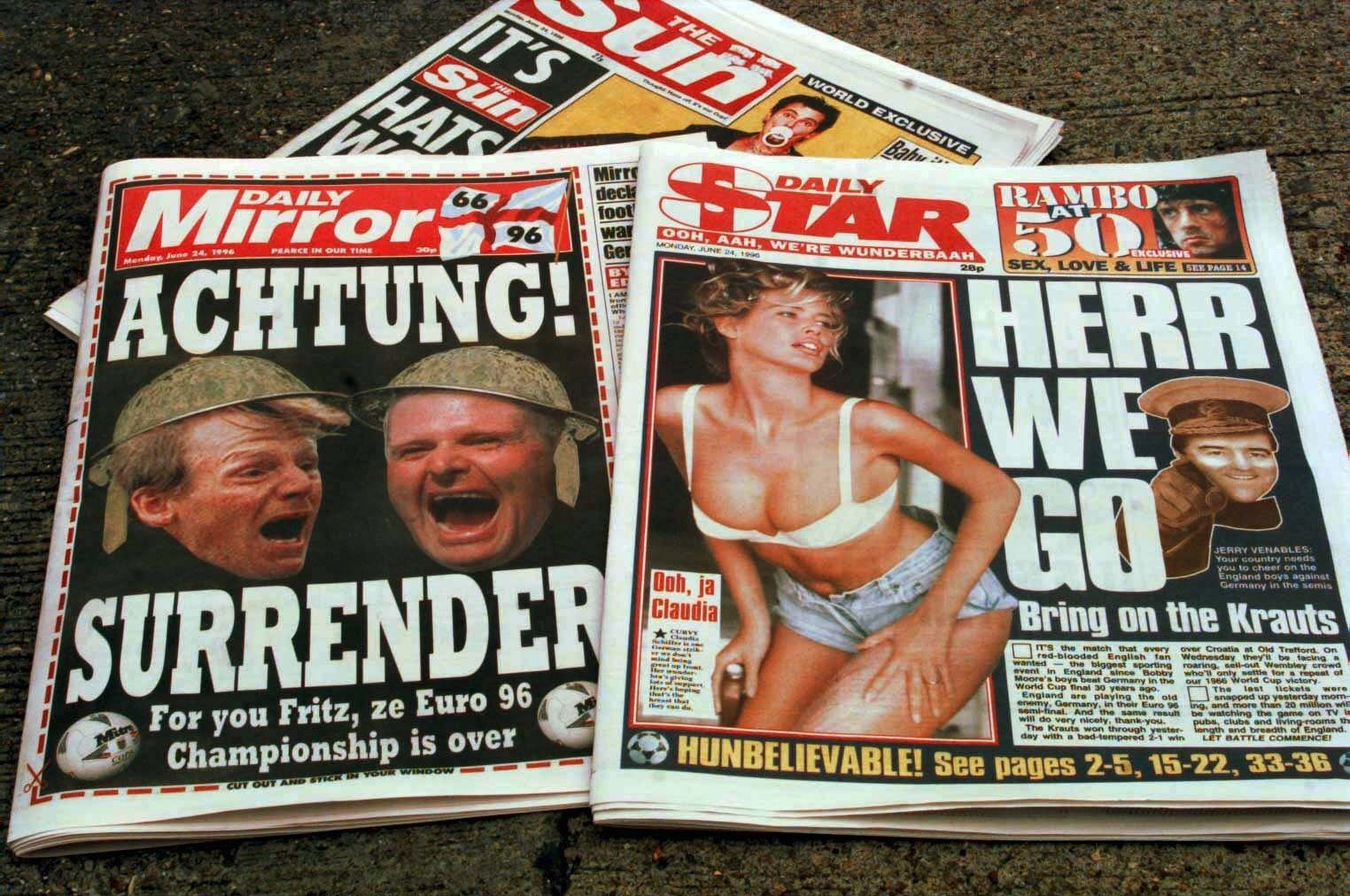

Before we routinely bored our friends to death with our hyper-optimised workflows, Strava personal bests, and alcohol-free lager, British people didn’t take themselves quite so seriously. Not so long ago, you couldn’t step five paces without a tabloid newspaper bunching around your ankles. The Sun and the Daily Mirror, their frontpages splashed in frantic red ink, served up a daily diet of love rats and busty babes often embroiled in something called ‘coke shame hell’.

With them vanished a magnificent dialect: Tabloid English—a compressed, bawdy, semi-literate poetry understood by barristers and bricklayers alike. Those newspapers flaunted their own vernacular: a rhythmic, gutter-level blank verse in which prisoners were lags, babes were busty, sex was a romp and unfailingly steamy. With the death of print, we didn’t merely lose newspapers. We lost a language. We lost Britain’s last great folk poetry.
This was a language forged not by academic committees or sensitivity readers, but by the brutal physics of the printing press. Headlines demanded punchy Anglo-Saxon words to fit tight layouts. All of the complexities of human nature were hammered down to their blunt Germanic roots. If a government minister disagreed with a Treasury policy, he didn’t riot in today’s airy Latinate language and ‘express extensive reservations regarding implementation models,’ he sparked fury in a bid to oust his boss. Today’s therapeutic language marshals its bloodless Latin and Greek roots to soften blows, avoid liability, and obscure reality. A philandering celeb doesn’t cheat on his wife. He engages in a temporary uncoupling.
Tabloid English was over the top. But at least it attempted some semblance of the truth. A typical story followed the hero’s journey. A typical headline went like so: ‘Sleaze MP Exposed in Steamy Romp’.
Over the next week, millions absorbed daily developments in this sorry saga. In cafés, pubs, and salons they’d debate the finer points. By Sunday’s edition, our fallen hero broke his silence. The sleazy MP revealed his shame. He wept. He apologised. His hero’s journey ended, ultimately, with the slate wiped clean.
In today’s post-tabloid culture, redemption is in short supply. So too is shame. Few lament the passing of Tabloid English excess—those linguistic pitchforks and throaty primal screams—but it served an instinctual social function. What replaced it is far from humane.
For want of a better term, I’ll call it Therapy English. Today’s shamed celeb stands little chance against the dreary syringe pumped with therapeutic buzzwords. Today’s wrongdoer doesn’t confess to being an ardent shagger or piss artiste. They issue a statement pockmarked with allusions to trauma and other therapeutic loopholes. They’re on a journey. They’re prioritising their inner child. Scepticism from the judgemental amounts to gaslighting or not holding space.
In today’s post-tabloid culture, redemption is in short supply. So too is shame.
Therapy English may congratulate itself on its compassion and humanity, but its genetic aversion to plain-speaking strangles both. Under Therapy English, our disgraced hero condemns himself to rolling a Sisyphean boulder. He may confess his flaws, but a confession dripping in therapy speak is not a confession, but a series of prefabbed words and phrases pressed together in sentence shapes.
This semantic shift plays out in the gladiatorial arena of social media. On X and Instagram, public shaming is no longer channelled through traditional media gatekeepers, but through algorithmic mobs steeped in TikTok therapy reels. When Jada Pinkett-Smith revealed her ‘entanglement’ outside of her marriage with Will, the online mob cleaved into opposing Swiftian tribes, each branding the other as narcissist or gaslighter.
The old red-tops trafficked in biblical transgressions of the flesh—greed, lust, wrath, and pride. Sins we intimately understood because everyone had committed minor variations of them. We knew what ‘booze-crazed night of passion’ involved, even if ours didn’t make the front page.
Therapeutic language, opaque by design, and administered like a prescription-only sedative, prevents the vital features of public shaming: catharsis and redemption. Tabloid English got it all out on the table. Sure, it was embarrassing and uncouth, but at least it wasn’t fatal. Equally, Tabloid English worked on the expectation that we would all fuck up now and then. If we said sorry and at least appeared to mean it, all was once again well.
Ironically, in a therapeutic culture obsessed with journeys and compassion, there is little redemption. Convicted by a pitiless show trial jury, the confessor shakily signs their permanent exile papers. When we traded the flawed character for the trauma-informed narrative, we didn’t just change our vocabulary but our grasp of reality. Tabloid English, bawdy and crude though it was, dressed in overalls and worked for a living. Rooted in the language of the plumber and the nurse, it was deeply suspicious of pomposity, humbug, or plain old bullshit. Tabloid English refused the putting on of airs.
Therapy English, by contrast, is the language of the HR department, the corporate away-day, the NGO workshop, the elite university, the lanyard class. It excludes and obscures rather than includes and informs. It replaces the robust, laughing judgment of the pub with the corrosive passive-aggression of the HR seminar.
Back in the early 2000s, in a flickering newsroom, an editor typed ‘love rat shame’ for the last time. He was crude. He was painfully nosy. He was possibly drunk. But he understood human nature better than most. And Great Britain is less fun, less liberal, and less humane for it.





Comments