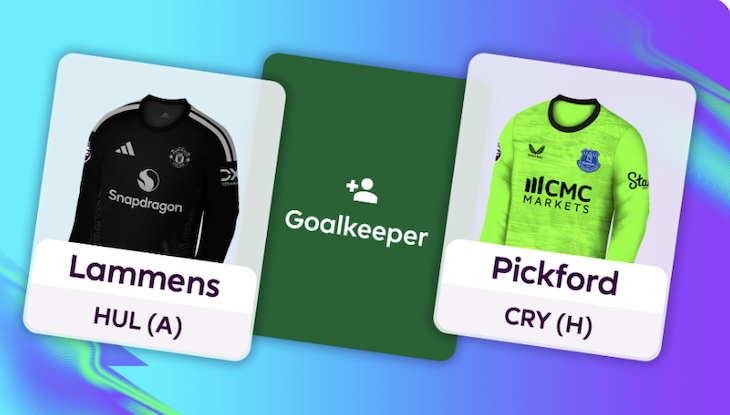
It’s 3.19 am and my brain cells are ricocheting. Nothing to do with the usual sleep-wreckers of money, sex or work but this: how to fit Antoine Semenyo, Bruno Fernandes and Morgan Rogers into my Fantasy Premier League (FPL) team before the season starts on 22 August, without exceeding my budget?
It would be nice to live in a world where FPL doesn’t stop my son calling his team “Saka my Balls FC”
4.24 am: I pore over dozens of players’ stats and watch several FPL influencer videos on YouTube, then try various permutations.
5.26 am: I crack it. I pack my defence with cheap workhorses from lesser teams like Hull, Ipswich and Coventry and can now fit in all Three Midfield Musketeers.
If you don’t know what I’m on about you are probably in the minority. There are now more three million FPL managers in the UK – an estimated 4.3 per cent of the population – and if those three million are anything like me they will probably have mentioned it to the remaining 95.7 per cent of you. Or, in extremis, rendered you briefly catatonic. (“You won’t BELIEVE what happened with my Fantasy team the other day…)
A basic summary: every FPL manager picks a squad of 15, worth a maximum of £100 million. A star like Semenyo costs £8.5 million; a journeyman from Hull, £4 million. You win points when your players score, assist, keep clean sheets or contribute defensively. And you can change one player a week.
It’s like Tolkien’s ring: it gradually takes you over, then eventually devours you. But some devotees, perhaps understandably, resent this.
In The Spectator last year, Angus Colwell bemoaned the fact “every moment of football becomes consequential”. He meant you end up watching EVERYTHING – even Hull v Coventry on a Tuesday night – when you could be reading, watching a film or doing something useful, because three of your FPL team are involved.
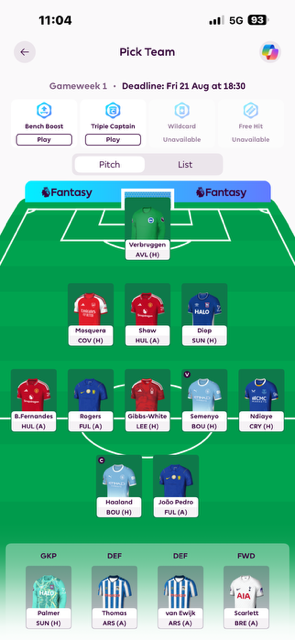
Typically, your train of thought will go something like this: “Eight minutes of injury time already blow the whistle ref if it stays 0-0 I will get 18 points from my three defenders what with each getting six points for keeping a clean sheet I am going to go from 34th to 28th in my league OH NO!!! FUCK!!! Coventry have scored NO WAY WAS THAT A GOAL I now have just the 12 points still never mind 12 is good OH NO NOW HULL HAVE SCORED!!! WOULD YOU BELIEVE IT now I have only six points, why didn’t I pick Leif Davis of Ipswich his game just finished he got 12 points own that’s twice as many as my three defenders combined and I could have played him!! He is in my squad!! But I left him on the bench! Why didn’t I play him!!??”

Sorry Angus, but this all-pervasive upsurge in interest is what does it for me. Life is an endless quest for meaning and FPL provides some of it.
It makes what was previously meaningless, meaningful. Every second matters. It’s an all-consuming distraction from death and boredom.
And balm for the uber competitive and easily addicted. Once you’ve had a dopamine surge from an unexpected 20-point haul by an unfancied Fulham midfielder, who you picked last minute on a whim, you desperately want more.
It’s also a force for good. It’s improved my relationship with my occasionally challenging 15-year-old and given us something to bond over. He was on holiday in France last week and we posted screenshots of our FPL teams to each other, triggering many enjoyable discussions.
We have further bonded over the so-called “Scunthorpe Problem”: that is, trying to outwit the FPL algorithm which weeds out allegedly offensive team names. Sometimes mistakenly, simply because of letters contained therein. “Mikel’s Artesanal”, an ostensible homage to the Arsenal manager, fell prey to this.
As a result – Free Speech Union take note – ludicrous red pencil decisions abound. Why ban “Sunderland COVID-19”? Or “The Mongooses”? Or ”Filthy Richy”?
I can understand, but not approve of, nixing “For Fuchs Sake” (named after former Leicester defender Christian Fuchs) or “Fred West Ham” or “Adam Johnson’s under 11s” (The former England striker was jailed for sexual activity with a minor).
But it would be nice to live in a world where FPL doesn’t stop my son calling his team “Saka my Balls FC”, in (part) tribute to the Arsenal winger. Ditto “Aaron One Ball Sack FC”, in honour of former Manchester United defender Aaron Wan-Bissaka.
“Notah Begay 111”, named after the American golfer, got biffed – it’s assumed – for containing “not be gay”, which were considered homophobic. But was it a cheeky attempt to get one over the censors, or a genuine tribute to said golfer? Probably the former. But even then, so what? Who would have been offended?
Congratulations, though, to the lawyer in my league this season who got “Palmer You Off” over the line.
For young people especially, FPL is a great way to develop mathematical, analytical and strategic skills. Just ask chess legend Magnus Carlsen. In 2019, he reached #1 in the global FPL rankings, out of seven million players, thanks to a mixture of intense preparation, data analysis and gut feeling. Three things any kid needs to succeed.
And – I hope my son is reading – it’s 100 times better than watching endless brain rotting TikTok videos.
Rewarding then, and in more ways than one: although there are no cash prizes in the pure form of the game, there are hundreds of thousands of leagues around the world, some of which pay the winner more than $1 million (£740,000).
My league pays a more modest £200 to the winner. Last season, I came sixth out of 98 but very much hope to do better this time. Indeed, I think of little else.






Comments