
Almost two-thirds of people think that Britain’s social contract is broken. A majority believe that diversity is eroding our national identity, while a third think that some sort of communist revolution is needed. My sense from reading history is that this didn’t turn out too well on previous occasions, but it’s hard to dispute that there are reasons for public discontent.
The case highlighted one of the central questions of our time – what makes someone British? If el-Fattah is British, then anyone is British, and no one is
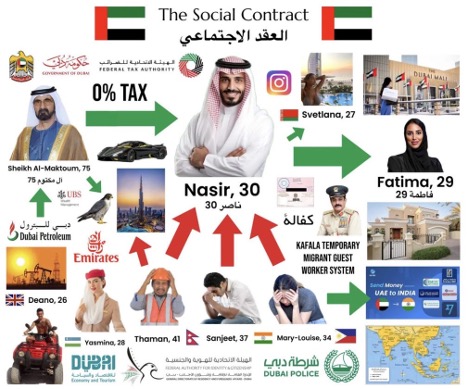
Most people will be aware of a popular meme that first appeared in 2020, called the Social Contract, which illustrated a system designed to make a young taxpayer support old people, welfare recipients and immigrants. Poor ‘Nicolas, 30’ pays for everything and gains nothing in return. The meme was in existence for a few years before becoming the subject of various comment pieces in 2024; it’s now gone into the annals of meme history, but it was popular for a long time because it succinctly expressed an obvious truth – that the social contract has broken three unwritten rules.
A social contract should distinguish between citizens and foreigners, it should reward hard work and punish freeloading, and it should serve as a compact between the generations. Instead, it has become a Ponzi scheme which allocates resources based on supposed need.
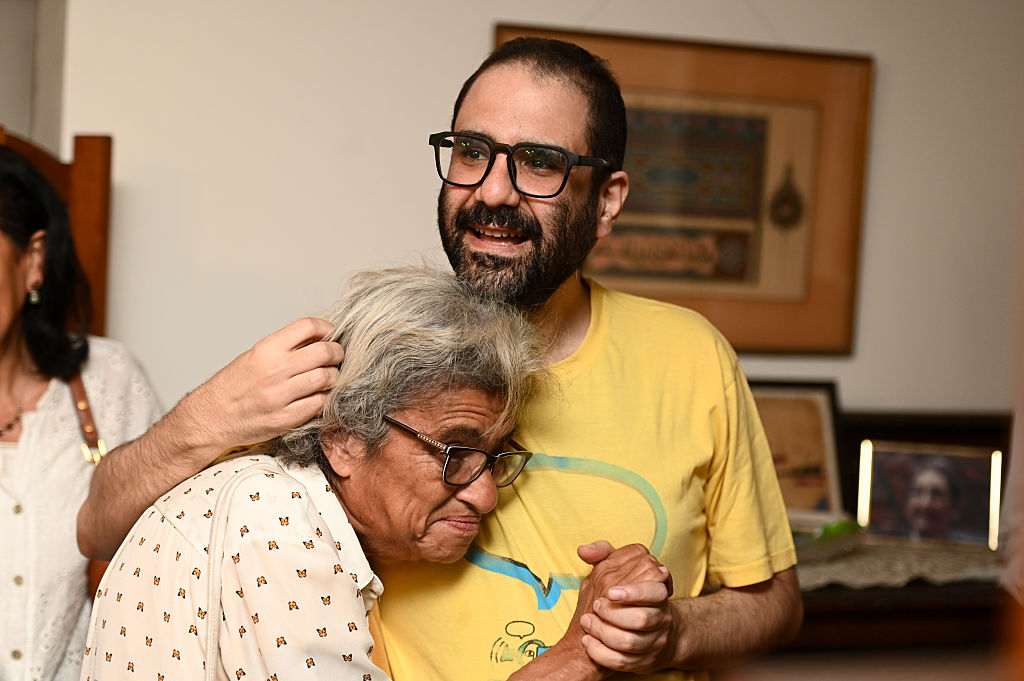
Many can recall various individual cases, but there was one at the very end of last year which perfectly epitomised the problem. It was like a right-wing fever dream, except real. Just after Christmas, Prime Minister Keir Starmer and his team announced with great excitement the securing of ‘British’-Egyptian ‘democracy’ activist Alaa Abd el-Fattah from a Cairo jail. El-Fattah is not in fact British in any sense. He was born in Egypt, has lived in Egypt his whole life and showed no interest in our country until taking out British citizenship while in jail, through a tenuous link. His grandmother had given birth here, before soon returning home, and we never bothered to tighten the loophole.
El-Fattah seemed to have held extreme views in the past, previously expressing open hostility to the British, referring to us as ‘dogs and monkeys’. He had urged people to burn Downing Street. He joked about taking over British towns and ‘rap[ing] ur women’. He wrote that the British ‘police are not human’, and that ‘we should just kill them all’. He called for the ‘random shooting of white males’ and spoke of ‘hating white people’ on a number of occasions.
I’ve no doubt that some, if not most, of this was trolling, but many noted that considerably milder rhetoric had led many actual British citizens to be jailed by the same government. The same regime that had placed Lucy Connolly in prison was desperate to get a hostile foreigner with far more vitriolic views out of one.
Yet Starmer boasted that ‘Alaa’s case has been a top priority for my government since we came to office’, and that ‘I’m delighted that Alaa Abd el-Fattah is back in the UK’, an odd thing to say considering he had probably never been to Britain before. And now he’s part of the British social contract, and poor Nick, 30, is going to pay.
Starmer willingly spent political capital on the case, boasting about this achievement, but the worldview is not confined to him. El-Fattah might have been prevented from coming by the ‘good character’ clause in British immigration law, but a European Court of Human Rights ruling in 2019 overruled this, following a legal challenge by a foreign murderer; the judges thought it ‘unlawfully discriminatory’. The Tory government then removed the good character clause from the Nationality Act.
In 2024, over 100 parliamentarians wrote to the foreign secretary urging him to bring el-Fattah to Britain, even though his views were all there for everyone to see. They were either too slow-witted to learn more, or they did and didn’t care; neither explanation is exactly reassuring.
El-Fattah begrudgingly apologised for some of his tweets upon liberation, or at least stated that they had been blown out of all proportion; a No. 10 spokesman accepted his apology as ‘fairly fulsome’, although which definition of the word they meant we can’t tell. In an amusing coda, the Egyptian hadn’t been in the country 24 hours before he was retweeting criticism of Starmer. I can’t believe I gave a scorpion a piggyback across the river and the scorpion stung me!
The case highlighted one of the central questions of our time – what makes someone British? If el-Fattah is British, then anyone is British, and no one is.
British citizenship is actually a relatively recent concept. We have no revolution marking the arrival of the citizen, as the Americans and French celebrate each July. Citoyen is a word we associate with the revolution of 1789, although it is much older, denoting a freeman or member of a city. Civilisation, civilised and indeed civic all share the same etymology; the idea of a compact based on behaviour is implied in the word.
Until the 1948 British Nationality Act there were no British citizens, only subjects of the crown. It was only with this law that the concept was introduced, a clumsily-drafted law that unintentionally allowed for the settlement of migrants from the ailing empire. But the British were getting in on the citizenship craze just as it was starting to decline as a real idea.
Over the following decades the thing that underpinned the basis of citizenship – the nation-state – began to fade in importance, slowly and then dramatically. It’s common to blame all this on the liberal elite, and I’ve certainly done so myself, but much of this was technological: printing, the telegraph and railways tended to solidify a sense of national identity, while television and the internet weakened it. This is inevitable, and much of it is welcome – globalisation is generally a force for good: the problem is that the social contract has not been updated to deal with a changing world. It was held together by a sort of unspoken glue, the hormone oxytocin, and now it’s supposed to be held together by laws, some of which have the opposite effect; most egregious are the human rights law which have come to supersede the social contract.
Much has been said about declining patriotism among elites, but the real problem is that they believe in the nation for all the wrong reasons. As Eric Kaufmann put it, they believe in ‘missionary nationalism’, which in our case means spreading ‘British values’. They care about their country’s image. They feel shame when it is seen as an international pariah, by breaking liberal norms. To people like Starmer, the embodiment of the human-rights worldview, this is what drives them to make our country materially and spiritually worse. They would do a much better job for their citizens if they didn’t believe in anything at all, and just treated the country like a business.
This is true of all western countries, to a certain extent; they all have their version of Nicholas, 30, the same Simon and Lindas, and Karims, the same resulting erosion of the social contract, the same polarisation, the same tax burden, the same human rights laws.
There is, however, an alternative version of the meme, this one set in the United Arab Emirates, in which a smiling ‘Nasir, 30’ sees all the fruits of the system go his way, so he that he can spend on his wife Fatima, 29 as well as ‘Svetlana, 27’. There is even a little British figure in the diagram, representing the modern-day Essex man who has decamped to a country which offers a far better social contract, with not just lower tax but far lower levels of crime, another basic obligation of the state.
It was notable how little sympathy there was in many quarters for these expats during the Iran conflict in March, with many British politicians and commentators giving the impression that they regarded them as traitors for seeking a life elsewhere. But why should they feel obliged to pay for a system that supports the likes of el-Fattah? How else can one release oneself from a contract that has been broken by the other party, except by leaving? Outvoted at each election, it is Nicholas’s only escape.
The greatest pressure on the social contract is not globalisation or any of the other forces eroding national identity; it’s that the original idea has been replaced with a needs-based society, one in which there is no relationship between behaviour and rewards. This is as true for British-born people as it is for new arrivals, but it’s especially grating when done by outsiders, whether it’s men arriving on small boats or someone who has the nerve to use one of our passports as a get-out-of-jail card.
This article first appeared in Ed West’s Wrong Side of History Substack.




Comments