Keir Starmer, spooked by Andy Burnham, apparently wants to leave a legacy, in much the same way that a herd of buffalo, scenting a lion, leave a legacy on the prairie. The Prime Minister has settled on banning children from social media, and possibly also installing some yet-to-be-invented software that will prevent under-16s from viewing porn or taking and sending photos of their naked bodies. Childrens’s Commissioner Rachel de Souza has further mooted extending these provisions to include 16 and 17-year-olds.
Labour is planning to give 16-year-olds the vote, while simultaneously forbidding them to scroll through Instagram
So, Labour is planning to give 16-year-olds the vote, while simultaneously forbidding them to scroll through Instagram. Why is Labour so excised by social media in particular? And where will the social media crackdown stop? Does the government intend to include messaging platforms, like WhatsApp or Snapchat, in the ban? Something about this smells.
I do not dispute that there is an almighty problem with kids accessing porn, and with ‘sextortion’ offences involving kids. I flinch at the idea that noticing that is having a moral panic. In general, I think flashing distraction boxes of nonsense are bad for developing brains, and perhaps not all that fantastic for fully grown ones. But my suspicion is that the device itself is the problem – and, even then, only because it has exposed the rottenness of the wider culture and concentrated it, as the sun is concentrated by a burning glass.
Why is Labour – and the Tories for that matter – so bothered by social media? The direction of travel here offers one answer; banning kids from these apps means that adults will need ID to access them. That will enable the state to monitor adults using them, and what they say. All of this ‘what about the children’ feels like a convenient fig leaf to achieving that ultimate aim. Online anonymity can be a real pain, but it is also often the only way dissenters can safely speak out. Anyway, the crackdown is unlikely to work: kids will, as they have in Australia, find their way around the restrictions.
There are confusions, too, about what Labour is actually proposing. A technically-minded friend (on condition of anonymity, tellingly) informs me: ‘They don’t know what they’re doing. The two proposals I’ve seen – to ban social media use for under-16s and to prevent devices even taking nude photos – are being treated as one policy, but they have totally different implementations, and target different providers. A social media ban is more manageable, given that specific providers can provide IP limitations. The other policy isn’t really possible on a lot of hardware, short of OS-dependent client side scanning of known material saved on a device. It would, aside from anything else, end open-source software in this country; it would mean a de facto ban on any independent operating system.’
She goes on: ‘If it’s a parental setting that’s opt-in and if the info is only retained locally, fair enough. But I doubt that’s what it will be, if the government get their hands on it.’
This is the nub. Politicians would dearly love to shut people up; as we have seen in the last couple of weeks, in particular, what I call gammon management – the fear that low-status whites may notice the effect of progressive policies and get angry – is one of their major concerns. I’m reminded of how Napoleon’s control of information was so total that some French people only found out about the battle of Trafalgar ten years after the event. How Keir Starmer must wish for the same level of control over information. He, and his brethren, would love to muzzle their political opponents.
We have seen how politicians concealed the Afghan resettlement scheme. And today, the Daily Telegraph exposed a suppressed report which said that £28 billion pounds of public money – yes, you read that right – was siphoned to terrorists, hostile states and gangsters between 2015-21. Politicians didn’t think the public had a need to know such things. This is their instinct, and introducing digital ID by the back door, via concern about children, hands them even greater power to control what we know.
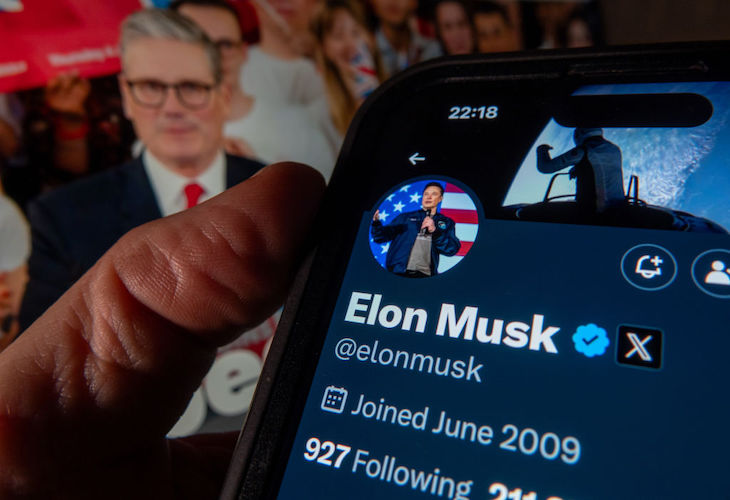
I could well be accused of cynicism here. But I don’t think it’s unreasonable to be suspicious of the government’s motives. If there had been a holistic approach to child protection, I might give them the benefit of the doubt. But you will note that nobody was mooting these bans when Twitter, or X, was run by their ‘side’; when it was equally – perhaps more – full of unpleasantness; and when it was throwing people off for having the temerity to say that men are not women. But people are being terribly rude to Chris Bryant now, you see, so it’s suddenly become urgent.
Likewise, there is the ‘division’ Labour keep fretting about. Actually, they don’t mean racial division at all, as Labour has done more to whip that up than Nigel Farage could manage, even if he wished to. ‘Division’ actually means noticing what politicians are up to. As for protecting kids from paedophiles, Labour turned a blind eye to the abuse of countless little girls by the Pakistani rape gangs. You will forgive me if I scoff at their current hand-wringing, given this record.
Of course, the Tories are hardly any better on all that. Kemi Badenoch saying much the same stuff about social media bans, though with more nuance and understanding, is alarming. Parliament is always at its most dangerous when the big parties are all saying much the same thing – see net zero, gender ‘reassignment’, etc – and rushing towards legislation that takes years to unpick.
So yes, I am cynical. I think of how Starmer repeatedly boasts, like a Romanian kleptocrat in 1938, that the country has ‘a long and proud history of free speech’ while people are thrown into prison after tweeting things the powers that be didn’t like. If the kids’ social media ban is to be Starmer’s legacy, it’ll be entirely appropriate: it is hare-brained, unworkable and won’t achieve anything except hand more power to the state. But that is probably the point.


Comments